[00:00:01] Speaker A: Inside the feral zone.
Greetings, listeners. Welcome back. Inside the Feral Zone of the Troubled Men podcast. I am Renee Komen, operating under cover of darkness from Snake and Jake's Christmas Club Lounge here in the heart of the Clempire.
Now, many of you may know that the Feral Zone is the sister podcast of the Troubled Men podcast. It appears in this space from time to time.
Circumstances call for tonight's One of those Nights.
And he's still missing in action, but we soldier on nonetheless.
And tonight we have an illustrious co host here. Guest co host. He's the.
Many of you know him as the emperor of the Clempire. He's a terrific bass player. Played with many bands like Sex Dog, Johnny J and the Hitman.
The Rockaby's on and on the Iguanas, too. The Iguanas, yes, yes.
Before my time. All right, and he is the great Mr. Dave Clements. Thank you. Welcome, Dave.
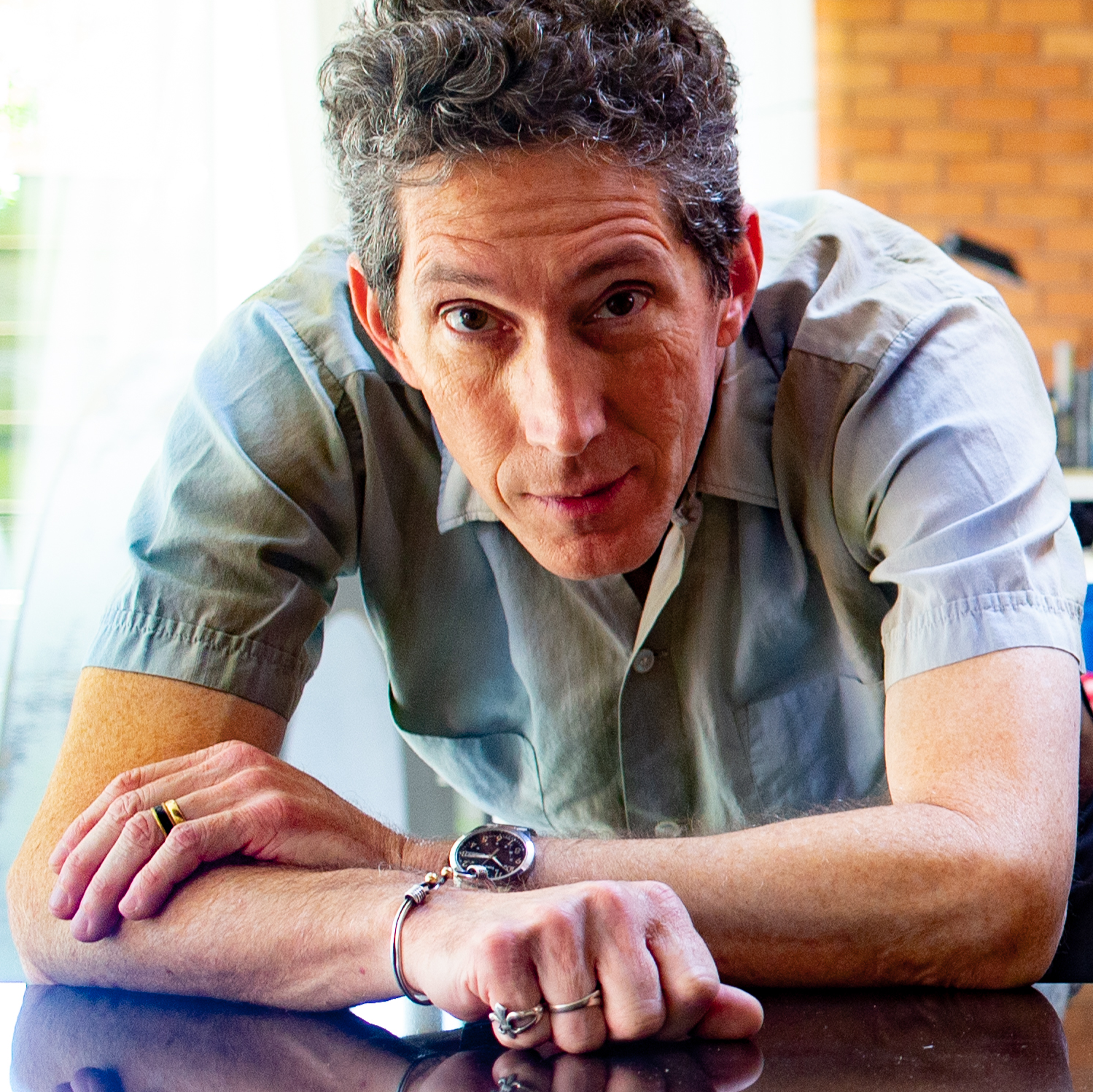
Enough about me. And, and tonight we're, we're fortunate to have a very acclaimed drummer, percussionist, band leader, instructor. He's played with an incredible list of artists including Winton Branford, Marsalis, Randy Brecher, John Scofield, Astrude Gilberto, George Porter, John Cleary, Lena Horne, Liza Minnelli, James booker, Sammy Davis Jr. Francois Hardy, on and on. He also spent 10 years in the New Orleans Philharmonic Orchestra and he's played on dozens of soundtrack recordings, including the Oscar winning score to the Shape of Water. He's been living in Paris for the past 30 years, but he's back in town for a visit and we're gonna get into all that and much more. But without further ado, the great Mr. Jeff Boudreau. Welcome, Jeff.
[00:02:05] Speaker B: Go Saints.
[00:02:05] Speaker A: Go Saints. All right.
[00:02:07] Speaker B: Who, dad.
[00:02:07] Speaker A: All right. Still hasn't. New Orleans is still in the boy.
[00:02:11] Speaker B: Yeah, but actually it's like everybody dead nowadays with the Saints, right? Everybody say they're gonna beat the Saints, but next year is gonna be different. Yeah, I follow him over there.
[00:02:20] Speaker A: Okay. Yeah, yeah, we have a solid quarterback. It seems like I like the cut of his jib.
[00:02:28] Speaker B: And yes, it's. Well, anyway, it's nice to be back.
[00:02:31] Speaker A: Yeah. Great to have you back. You know, I was playing a job with Doug Beloit a couple of months ago and you know, he's always. He's a former guest of the show, as is our guest co host, Mr. Dave Clements here, former Troublemen podcast guest. But Doug's always on the lookout for potential guests and he said, oh, you know, I just talked to Jeff Boudreau. He's coming Back in town, I was like, oh, I should get him. He goes, yeah, you should get him.
[00:02:57] Speaker B: So, yeah, Doug's a great friend. Doug's a great drummer.
Super talent, you know, Inborn drumming talent.
Love Doug, man. And he's. He's been over to Europe a couple times, and we always stay in touch.
[00:03:10] Speaker A: Right, right.
[00:03:11] Speaker B: Yeah.
[00:03:11] Speaker A: He travels with different bands over there. He's a affable guy. I'm sure he rings you up, goes and has a coffee with you or something, so. Well, you know, I know you from back when you were. When we were both young men here, and you're a couple of years younger than you, but you were, I guess, in college, and I was in high school and playing some jobs, and I would occasionally play jobs with. Or you would sub with my father's band.
[00:03:41] Speaker B: Yeah.
[00:03:42] Speaker A: And.
But I didn't realize that your father was a longtime band leader.
[00:03:48] Speaker B: Oh, yeah. Buddy Boudreaux.
[00:03:49] Speaker A: I had no idea.
[00:03:50] Speaker B: Buddy Boudreaux, born in 1917 in Baton Rouge, Grew up playing in Baton Rouge and some in New Orleans.
[00:03:59] Speaker A: Right.
[00:04:02] Speaker B: He had a band. Well, he was a musician. Had a band leader, and then he volunteered for World War II, and he came back from World War II. I think before he went to World War II, he had a band in Baton Rouge with Carl Fontana on trombone and Mose Allison.
[00:04:18] Speaker A: Oh, no shit.
[00:04:19] Speaker B: Was his piano player.
Mose was at LSU getting an English Literature degree.
[00:04:25] Speaker A: Wow.
[00:04:26] Speaker B: And Mose was like, I don't know, 17 or 18 or something. And that was like, one of Mose's first gigs. It's my dad's band in the clubs in Baton Rouge. Wow.
[00:04:35] Speaker A: That's crazy.
[00:04:35] Speaker B: He had a quintet. Lee Forte on trump. No, sextet. Lee 4chan, trumpet. Carl Fontana on trombone. I see Carl Fontana, he was out in Vegas a long time. He's really one of the, you know, he rose. Who was it? Carl Fontana. And can't remember the other trombone player that was in his generation. But okay. Anyways, great musicians. And then he went off to World War II. He came back and resumed band leading.
He took advantage of the GI Bill, got a degree in accounting. And so for about 30 years, from 25 years, from age 35 to 60, he was.
He was accountant at Exxon, but he was always running his bands.
He had all kind of bands, big bands, small bands, Dixieland bands.
[00:05:25] Speaker A: Right. And I was looking at some of the. The people that he backed up, like, all kind of big names. Andy Williams, Burt Bacharach, Ray Charles. What kind of venues was he playing with where he's backing those people?
[00:05:35] Speaker B: Well, most of. Most of those big names were, like, when the big names come to New Orleans, like.
Like big charity events or big conventions that would come to Baton Rouge.
[00:05:47] Speaker A: Oh, okay.
[00:05:47] Speaker B: You know, like, Ray Charles came there one time to do a charity event for a big hospital there.
[00:05:53] Speaker A: Okay.
[00:05:54] Speaker B: And my dad put together the big band and backed him up.
[00:05:56] Speaker A: Your dad was known as a band leader that could. That could put together a band that would back up that kind of level of talent. Yeah.
[00:06:02] Speaker B: And in fact, you couldn't do it these days. But the way my father put together his first band was that he went around to all the clubs in Baton Rouge and on. In Port Allen, on the. On the other side of the river.
And he went to him and he. And he told him. He says, hey, I'm Buddy Boudreau, a saxophone player, and I've got a quintet, and, you know, we'd like to work in your club. You know, maybe work in your club. And he says, but I gotta tell you, we're booked up solid for the next three months, so, you know, I mean, if you want to reserve us ahead, you know, let me know. And. And. And so everybody was like, they. They were impressed. He impressed him. He's like, yeah, so scarcity.
[00:06:47] Speaker A: Bringing the scarred of scarcity.
[00:06:49] Speaker B: So he lined up about, you know, 25 gigs or something.
And then he started calling. Then he called guys and he said, hey, you want to. You want to. You want to make a band with me? I got 25 gigs. I saw rehearsing. He didn't have a band.
[00:07:02] Speaker A: Right. He'd never pay, but he knew he.
[00:07:04] Speaker B: Wouldn'T get musicians to agree to come rehearse if he didn'. Gigs. So.
[00:07:08] Speaker A: Okay.
[00:07:09] Speaker B: At the gigs first.
[00:07:10] Speaker A: Right.
[00:07:10] Speaker B: And then he called guys up, and no problem. You got the best guys and.
[00:07:14] Speaker A: Right.
[00:07:14] Speaker B: You can't do that today because they'll look you up on the Internet.
[00:07:17] Speaker A: Yeah, yeah. Like, oh, this is a bunch of.
[00:07:19] Speaker B: Unless.
Unless you could create with AI you could create a fake band.
[00:07:25] Speaker A: Well, people do that. Yeah.
[00:07:26] Speaker B: And. And fake clubs, fake gigs. Fake gigs.
Hey, that's an. That's an idea.
[00:07:33] Speaker A: Okay. Fake dive bars.
[00:07:35] Speaker B: Sure, sure.
[00:07:36] Speaker A: Yeah.
[00:07:36] Speaker B: I mean, this is going to be. There's never going to be an AI Fake for Snake and Jake's.
[00:07:42] Speaker A: No, no, no. You couldn't do it.
[00:07:44] Speaker B: I mean, look, the whole world will be AI high tech, you know, 500 years swirling with high tech, and Snake and Jake's will, like, still be here.
[00:07:55] Speaker A: Yes.
[00:07:55] Speaker B: Like a time capsule. Right.
[00:07:57] Speaker A: Holding us, Renee. Podcast holding his ground. Sitting in this corner.
[00:08:01] Speaker B: Same people still here. Sitting, drinking at the bar.
[00:08:04] Speaker A: Same bar. Flies. Yeah.
[00:08:06] Speaker B: Star wars bar.
Yeah. So anyway, that's my dad's. My dad's history. And he was an alto player. Alto, clarinet, tenor.
And he played until he played gigs until he was 95.
[00:08:20] Speaker A: Man, that's terrific.
[00:08:21] Speaker B: And died when he was 97.
He was eating McDonald's all his life.
[00:08:27] Speaker A: Yeah.
[00:08:28] Speaker B: Some people ask him his secret, and he was. It was at the house. He brought McDonald's home for lunch, like takeout. And one of his friends, he was about in his late 80s, one of his younger friends came by and he saw him eat. And he says, your wife could make you a soup for lunch. You go to McDonald's, you eat McDonald's. On the golf course when we play, you bring it everywhere. Does your doctor know you eat a McDonald's? What does he say about that? And my dad looked at him and said, my doctor's dead. Right?
[00:08:59] Speaker A: Outlived him.
[00:08:59] Speaker B: So, yeah, my dad was no nonsense. You know, the great generation. World War II, Frank Sinatra generation. And he was a good guy.
[00:09:09] Speaker A: Nice.
[00:09:10] Speaker B: Nice. And so that's how I learned to play, you know, I started playing in his band just sitting in when I was a kid.
And then when I was about 13, you know, I guess he let me play the first gig. But I had to show him. He would tape record all his gigs, and I had to show him at home that I could play along with the tapes. I could play swing, I could play shuffle, play a waltz. I could play bossa nova, I could play merengue. I could play all these things. And. And then he gave me the gig, and then I was nice. I got started that way.
[00:09:42] Speaker A: Funk. Let's go back a little bit before that. So you. You weren't born in New Orleans, huh?
[00:09:48] Speaker B: Born in Baton Rouge.
[00:09:49] Speaker A: Born in Baton Rouge. Okay. And Baton Rouge.
[00:09:54] Speaker B: Baton Rouge. Okay.
Say bye. You be going about Baton Rouge.
So anyway, I miss, by the way, in Europe, I miss the.
The black culture, slang and pronunciation.
[00:10:12] Speaker A: Yeah.
[00:10:13] Speaker B: Here I'm imitating. I talk like that to people over there, and they look at me like I'm crazy.
[00:10:17] Speaker A: Yeah, sure.
Now. Now, when you growing up in Baton Rouge, you're obviously Boudreaux. It's a Cajun name. Did you have. Have people speaking Cajun French in your family?
[00:10:30] Speaker B: My dad could speak a little bit. My grandfather a little bit, but no, not really.
[00:10:34] Speaker A: So you didn't come up speaking like that?
[00:10:36] Speaker B: I came up speaking like Baton Rouge.
[00:10:38] Speaker A: Right.
[00:10:39] Speaker B: Hey, Bob. What's that?
[00:10:40] Speaker A: Okay, so I Know you have a few brothers that you grew up with and one that was a drummer as well.
[00:10:47] Speaker B: Three older brothers.
The oldest brother was a journalist and he went on to work all over the world. He was a specialist in covering political conflict and wars. South America, Central America, Russia, Kosovo, Israel, Baghdad, everywhere. And he, he just retired. He was the quality control editor of the Wall Street Journal.
[00:11:13] Speaker A: Oh, wow.
[00:11:14] Speaker B: And just retired about a year ago. He lives in London now.
[00:11:16] Speaker A: Oh, okay.
[00:11:17] Speaker B: The brother next down from him and was John. And he was a pilot. He was a trumpet player actually, and an Air Force pilot.
And he, he ended up living in Memphis a long time after he retired from the military flying commercial jets and led a big band. And unfortunately, he took a small plane out of a friend of his and the electricity went out in it and he crashed.
[00:11:43] Speaker A: Oh, man, I'm so sorry.
[00:11:44] Speaker B: But doing what he loved.
[00:11:45] Speaker A: Yeah, right.
[00:11:46] Speaker B: You know, they were just too, you know, they were, they were 50s generation. You know, they were born in the mid, in the early mid-50s.
And so they were.
My, my brother Ronnie and I. Ronnie was born in 50, late 56, and I was born in early 59.
[00:12:05] Speaker A: Okay.
[00:12:05] Speaker B: So we were. There was about five or six years between the first two and us. Okay. And so we came out totally different because we were kids in the 60s.
[00:12:14] Speaker A: Right, right.
[00:12:15] Speaker B: And you know, we were, we were exposed to all this unrest and, you know, I remember listening to Chicago, the band and listening to the lyrics and it was wondering, wow, there's trouble in the world. Whoa. You know, and then, you know, all the drug culture. And so we were, we were totally different. But, you know, the two older brothers were straight A's, they were Eagle Scouts, and Ronnie, my brother, and I followed them and we were like overachievers and everything.
[00:12:45] Speaker A: Oh, okay.
[00:12:46] Speaker B: Except I was.
Well, I was arrested one time, 3:00 in the morning for selling marijuana to three 16 year old kids.
[00:12:57] Speaker A: How old were you?
[00:12:59] Speaker B: 13.
[00:13:00] Speaker A: Okay.
All right, well, it's good you had a clientele that could, could pay for the material.
[00:13:07] Speaker B: Yeah. So we grew up, you know, I grew up in, into, you know, the first heavy metal rock and roll. You know, the Beatles are Rolling Stones, Led Zeppelin, all that stuff.
[00:13:17] Speaker A: Right.
[00:13:17] Speaker B: So the first drum set was a dope. Was first drum set had two bass drums.
[00:13:22] Speaker A: Oh, really?
[00:13:22] Speaker B: I mean, if you didn't have, if you didn't have two bass drums back then, you were like. You were a wimp.
[00:13:28] Speaker A: Wow.
[00:13:29] Speaker B: A double bass drum pedal, two bass drums. Two bass drums, yeah. So I grew up playing that and then the jazz of my. My father, you know.
[00:13:37] Speaker A: Right. So. So you started playing early on?
[00:13:40] Speaker B: Yeah, about age seven. Okay.
[00:13:42] Speaker A: Played in school band is what I.
[00:13:44] Speaker B: School band. Played in. In school band. Little elementary school band, junior high, you know, and then started to learn in junior high. It was only like a concert band, so I was learned. I studied classical percussion and I got into high school and played in jazz band.
[00:13:59] Speaker A: Now, did you go to. To Baton Rouge High?
[00:14:01] Speaker B: I went Baton Rouge High one year in ninth grade, and then I went to Broadmoor for three years after that. Lee Forte was a trumpet player. He was my father's best friend, and they had the. They had a big band together, and he was. And he was leading the band at Broadmoor.
[00:14:16] Speaker A: Oh, okay. Because I know Baton Rouge High School had a tremendous music program.
[00:14:21] Speaker B: Yeah, well, up until.
Up until the mid-70s.
[00:14:25] Speaker A: Yeah.
[00:14:26] Speaker B: And then it felt it. It kind of fell apart for three or four years, and then it became a magnet school.
[00:14:33] Speaker A: Oh, okay.
[00:14:33] Speaker B: And since it became a magnet school.
[00:14:35] Speaker A: It'S been really great because I. I knew so many guys at Loyola who, coming in as freshmen, played like horn players, played great. You know, Billy Spencer was subbing with. With, you know, Woody Herman band, playing the scream trumpet part, and he was 19 years old.
[00:14:50] Speaker B: Charlie Pillow, Jeff Chatelaine, Chuck Begeron.
[00:14:54] Speaker A: Right.
[00:14:54] Speaker B: Bass player.
[00:14:55] Speaker A: Tim Oan.
[00:14:56] Speaker B: Tim Ooin.
Yeah. So that was a lot of talent.
[00:15:00] Speaker A: Coming out of Baton Rouge. So you're training up with your dad's band. Were you also, like the band boy? Did you come up?
[00:15:06] Speaker B: Oh, well, I came up, yes. Before I was playing with him, I was setting up the band right up the stands, the lights, the PA system, you know, everything.
[00:15:14] Speaker A: It's funny, I, you know, I'm the same way I was. Did the same thing. Band boy first. And then, you know, you start studying music with one of the guys in the band and. And, you know, you learn a couple of tunes.
[00:15:25] Speaker B: Your dad finally let you in?
[00:15:26] Speaker A: Yeah, yeah, well, you know. Well, he had Hayward playing the bass pedal, so they didn't have a bass player.
So, yeah, I could play a tune or two. And then actually, the way I started playing is this guy, Kerry Bouquet, who I think you played.
[00:15:39] Speaker B: I played with Kerry Boket.
[00:15:41] Speaker A: Yeah. I think we played a bunch of jobs with Kerry because Kerry came on the job as a second horn player that my father, sometime for big jobs, would hire a second guy. And I sat in on that, a couple of tunes that giggle. And he called me up a few days later and said, hey, look, my bass player is dying and I'm Gonna need somebody else here pretty soon. And would you like to do that?
[00:16:08] Speaker B: Wow. That's the only way you got in. Because the guy was dying.
[00:16:11] Speaker A: I was 13 years old.
[00:16:12] Speaker B: Because you were playing better.
[00:16:13] Speaker A: Well, I mean, did you have anything.
[00:16:15] Speaker B: To do with his death?
[00:16:15] Speaker A: No, no, no.
Purely unrelated, but no. That's how he took me on as a 13 year old, you know, and it was a chance to. Now, I remember the first job. I was going up. My father goes, and Carrie had a book and everything. You know, I was used to reading. Reading lead sheets and stuff. My father goes, do you know the Saints? The Saints Go Marching In. You know that song? I said, no. I said, but he has charts. And he goes, he's not gonna have a chart for the Saints. You gotta know the Saints. My father taught me the changes, that of the Saints and sent me off on that first job, so. So you came up in that. It's interesting how many guys I play with now who are in our generation that their father was. Were band leaders. So.
[00:16:58] Speaker B: Yeah, it's a musical family.
[00:17:00] Speaker A: Dave Clements, I played. Played jobs with his father, Ed Lewis. Ed Lewis, yeah, yeah. Lewis Orchestra.
[00:17:07] Speaker B: And then, you know, Wynton and Branford. You know their dad?
[00:17:09] Speaker A: Well, sure, yeah.
[00:17:10] Speaker B: Played some gigs with him back in. In. In the day when Bradford and I are the same age. Whitten's a couple of years younger. And, you know, I met them when I was about 12 because they lived right around the corner from my grandmother.
[00:17:25] Speaker A: Oh, no kidding.
[00:17:26] Speaker B: We're playing kickball in the street. I didn't even know they were musicians. Hickory.
[00:17:29] Speaker A: So y'.
[00:17:29] Speaker B: All.
[00:17:30] Speaker A: Y'.
[00:17:30] Speaker B: All Hickory.
[00:17:30] Speaker A: Y' all lived. Your grandmother lived in the green street. Yeah, right in the square that we're in here.
[00:17:34] Speaker B: Okay, well, yeah, On Green street. Exactly. On the other side of Carroll.
[00:17:38] Speaker A: Oh, all right. All right.
By Nikki Sonzenbach. By Nikki. Yeah, yeah.
[00:17:43] Speaker B: One block over from Nikki Sonzebach. Wow, what a place. He's Boom Boom Boy. I got some stories about Nicky Sonzenbach.
[00:17:52] Speaker A: We had him.
[00:17:53] Speaker B: He passed.
[00:17:54] Speaker A: We had him on the podcast about. About maybe two months before he passed away.
[00:17:58] Speaker B: Oh, wow.
[00:17:59] Speaker A: Yeah. Now it's a great episode. But so. So you'd been spending a lot of time in New Orleans growing up?
[00:18:07] Speaker B: Yeah, well, yeah, I was down here a lot from my grandmother. I. I discovered Johnny Vidakovich when I was like, 15, and I threw a.
The bass player that's playing with my father's band was studying with Bill Huntington, and he would come down here and listen to Bill Huntington, James Drew on piano and Johnny.
And. And he would play tapes for me back in Baton Rouge. And I was like, why? Who's this guy?
So I got his number up. I'd call him. I had to bug him a lot. He wasn't teaching. He wasn't teaching it. Loyola. He wasn't teaching anybody. He was just playing.
And I don't think he ever thought about teaching. But I just bugged him until he said, okay, come on down to New Orleans.
So I went down there on a Saturday, you know, and had a lesson. It's a funny story. I had a lesson with him.
And the first thing he said was. He sat me down and he put on this Bill Evans record, Santa Claus is Coming to Town, live record. And he said, okay, if you can play along with this from the beginning to the end without losing where one is, then I'll take you on as a student.
So I was really nervous, you know, and I started playing along. And, you know, I never really played along with jazz. They were playing in two, and it was kind of syncopated. And so I was playing along at a certain point in Bill Evans solo. I kind of felt like, oops, I'm lost.
What happened at the time? And so I just kind of kept playing and I made my way to the end and I thought I blew it, you know. And then he said, yeah, good, okay. Yeah, I'll teach you. And then 35 years later. No, 40, 35 years later, I'm playing a gig. I'm playing with.
In a quartet with Stafford James, who was the bass player, Woody Shaw.
Gene Perla, who was the bass player of Elvin Jones. And Don Elias on percussion.
That was the quartet, two basses, Don Elias and me. When we were traveling around Europe on the train doing gigs.
You can imagine the sound coming out of the monitor.
[00:20:09] Speaker A: Sure.
[00:20:09] Speaker B: Shoe basses, right? Well, sometimes Stafford was bowing.
Yeah. And we played a gig one time we were opening for Mark Copeland, New York pianist. And he had Randy Brecher in the band. And that's the first time I'd met Randy. Randy Brecher in the band and Gary Peacock, the bass player that was on.
[00:20:33] Speaker A: The Bill Evans record. Right.
[00:20:35] Speaker B: And so I first met him, and I was backstage and, you know, I finally went over to him and I said. I told him the story about me playing along with Santa Claus coming. And I said, you know, at a certain point, I thought I was lost in a solo. And then I got to the end. You know what he told me? He said, you thought you were lost? I was lost.
I couldn't count to eight bars back then. I mean, I was playing. I was playing, you know, in tune and everything, but they. I couldn't. I could. I didn't know where those guys were. I was. I was lost.
[00:21:01] Speaker A: Yeah. Yeah. I. I think they may drop a beat in that recording, actually.
[00:21:06] Speaker B: Yeah. And so that was, like. That was so funny.
[00:21:09] Speaker A: Yeah. Yeah.
[00:21:10] Speaker B: And I, you know, I. I told Johnny about that, and he kind of winked. A little twinkle in his eye, like, you know, he knew they lost a beat and he was just testing.
[00:21:20] Speaker A: Right, right, right.
[00:21:20] Speaker B: You know, 30 years later.
[00:21:23] Speaker A: That's interesting.
[00:21:24] Speaker B: Johnny V. It's hilarious. He's my mentor. Sure.
[00:21:27] Speaker A: Yeah.
[00:21:27] Speaker B: Well, he's, you know, everything about me, you know, drumming. You know, I'm not a chops drummer, you know, and maybe one reason I'm not is because at an early age, Johnny steered me in the direction of music and poetry and sound and touch and all the other things other than technique. So, you know, maybe my technique suffers because of that. But the musicality comes across.
[00:21:56] Speaker A: That's where it's at, anyway. Yeah.
[00:21:58] Speaker B: Yeah. Yeah. So I'm. You know, I wouldn't be anywhere where I am without. Without jv. Jv.
[00:22:04] Speaker A: Technique. Now, he's. He's. I've heard that term technique. You've heard about. Heard about technique 1.
[00:22:13] Speaker B: Tennis technique. Right? Tennis. Right. Hey, by the way, if anybody out there doesn't know, Dave Clements is a badass tennis player.
[00:22:20] Speaker A: Huh? Okay.
[00:22:20] Speaker B: We play. We played as much tennis together as we did music over at Tulane. Yeah. Over two. We used to play. Yeah. We played as much tennis as we did one.
[00:22:29] Speaker A: Most. Some elites here.
[00:22:30] Speaker B: Yeah, I think that's the lowest.
Yeah, so that's. That's. And then. And then for college, I was. I wanted to go to University of Miami or California, and. But, you know, my dad convinced me, hey, you know, go. If you go to New Orleans, you know, I know some band leaders down there like Herb Tass and other guys you go to. You go to Loyola New Orleans, and you'll be gigging, you know. Right. So. Yeah, so I came to Loyola and loyal.
[00:23:00] Speaker A: At that time. Bill Huntington was teaching bass.
[00:23:02] Speaker B: Bill Huntington was teaching bass. Frank Pizzula was teaching piano. John Mahoney had just arrived. Bob Shepard was teaching saxophone.
[00:23:10] Speaker A: Vic Zepeto was the.
[00:23:11] Speaker B: Vic Zepeto was the drummer. Yeah, Vic Zepeto was the drum teacher. Right. Johnny wasn't teaching there until later. Vic Zepeto. And Joe Hebert was the band director. And it was a great band.
[00:23:22] Speaker A: Yeah, a lot of good people there at that time John Otan was there.
[00:23:28] Speaker B: And, you know, Charlie Pillow is now head of the saxophone department at Eastman.
[00:23:32] Speaker A: Oh, yeah.
[00:23:32] Speaker B: Chuck Bajeron, the bass player, is the head of the jazz department in University of Miami.
[00:23:37] Speaker A: Okay.
[00:23:37] Speaker B: I mean, they both lived in New York for a long time before they ended up teaching, but. All right.
A lot of great people came out of that club.
[00:23:44] Speaker A: See, those guys didn't wind up selling shoes. Good for them.
[00:23:49] Speaker B: I don't know if they made a million dollars, but they. Oh, well, they're richer than they were back then.
[00:23:55] Speaker A: Made a whole life of playing. We were hoping for teaching. Sure.
[00:23:58] Speaker B: Yeah. It's just.
[00:23:59] Speaker A: Yeah.
[00:24:00] Speaker B: Every year, just a little more money, you know.
[00:24:02] Speaker A: Yeah. Yeah. So you're playing in all these bands and new. I guess that's when I. When I first met you. You're coming and coming to town playing Herb Tasn jobs and stuff. Oh, well, one thing I wanted to ask you about, like, coming up in your dad's band, you know, you were a child, as was I, and all playing with all these grown men, guys that were much older than us.
[00:24:23] Speaker B: Yeah.
[00:24:23] Speaker A: What an experience, huh?
[00:24:25] Speaker B: Yeah. And. And. And when I came to. To New Orleans, that was kind of the same thing, because.
And it's what I tell young people these days, you know, if you're gonna move. If you want to move to a city, like, you want to move to New York, you want to move to London or wherever, find the best drummer in town and become his best student.
[00:24:43] Speaker A: Yeah, Right.
[00:24:43] Speaker B: And even if he doesn't teach, just go where he played. Just hang out. Just attach yourself to him. And when he's got two gigs, maybe he'll call you to sub. So that's what. That's great advice Johnny V. Afforded me in New Orleans. So he called me. He started calling me to sub, you know, even in Loyola with. And also I was playing with Bill Huntington, sub with James Drew. And then I was playing a lot with the. With the guys he was with. James Singleton, Mike Polaris, Steve Mazowski, Tony Degradi. Those guys are all three, four years older than I am. So I got into that scene through Johnny, and then I played hundreds of gigs with those guys, you know, in New Orleans and Europe.
[00:25:23] Speaker A: Yeah.
[00:25:24] Speaker B: Since. Right.
Yeah.
[00:25:27] Speaker A: Lifelong connections. But going back even before that, when you're in your real formative years, I always think about, like, guys I played with who were, like, even older than my father, and they had styles of playing that don't exist anymore. They had, like, an approach to the instrument. Like, I used to play Jimmy Maxwell's father, Ed Maxwell, was a drummer.
[00:25:49] Speaker B: Wow, what a relaxed.
[00:25:51] Speaker A: He had a feeling.
[00:25:53] Speaker B: Oh, man. Yeah.
[00:25:54] Speaker A: And even the. The sounds that he would try to get out of the kit were not sounds that anybody who grew up listening to the Beatles. I mean, Ringo grew up listening to the same shit that he grew up listening to, you know, like Gene Krupa and, you know, guys like. Like that, you know.
[00:26:08] Speaker B: Yeah, Ringo could get. Was getting a sound. He's playing the hi hat with the sideways motion.
[00:26:12] Speaker A: Right, right.
[00:26:13] Speaker B: Yeah, that's true, man. That's true. And the. The older musicians, their time and their groove and their timing when they're playing parts or whatever was so solid. That's all. And that's all they. That's all they talked about was, you know, you play, you know, for me or the horn players, you're playing too many notes and just keep the time, you know, it's like, that's just keep the time. It was just drilled in because I think I was not really a natural good time keeper, you know, Maybe I should have been playing another instrument, a melodic instrument.
[00:26:44] Speaker A: Well, everybody's got to play time no matter what instrument you're on, man.
[00:26:48] Speaker B: I had to learn really fast in New Orleans, had to pick that up. And the older generation was always telling me about the groove. And now when I go to listen to younger musicians, I hear it the same way. They're playing all this stuff and the groove is not there, man. It's like. And I just say, look, just. Just play. Just be in the groove and then whatever you play will sound good, right? And they're thinking so much these days and they're playing so much and they. They don't. You know, I came to realize at some point, like a long time ago that younger musicians, like, you know, you put on some old Dixieland things for them and they hate it. You know, they don't like it. It's like corny and all that stuff. But what's corny about it is the chord changes and maybe the melodies, but the groove, some of this old Dixieland play, right? Nobody is grooving any harder today in hip hop or whatever. Nobody's grooving any harder today than they were in 1920.
[00:27:46] Speaker A: Right.
[00:27:46] Speaker B: You know?
[00:27:48] Speaker A: Yeah.
[00:27:48] Speaker B: They're not grooving any harder. Yeah, man, it's just this different style of music and maybe it sounds better to them, but, you know, man, I remember hearing some drummers in New Orleans and they'd be playing like a Dixieland shout chorus and it just like blow you off Your feet, man. So powerful, right?
[00:28:07] Speaker A: Yeah, man. You know, I have a few things my father gave me. Pieces of advice, concepts.
I was wondering if maybe your father had something like this. So one of my father's things, he'd say everybody in the band should play as if, if the people could only hear your part, it would make them want to dance.
[00:28:25] Speaker B: Oh, yeah, yeah.
[00:28:27] Speaker A: That's genius. But I mean, like he was saying saxophone players should play like that. Yeah. Singer should sing.
[00:28:32] Speaker B: Yes, please.
I've suffered a lot of my life playing with bands, big bands and small bands. That horn players, they just get used to leaning on the rhythm section and they don't realize they are.
[00:28:46] Speaker A: Yeah.
[00:28:46] Speaker B: And. And maybe when, you know, when they practice at home, they maybe they don't practice in tempo or they don't practice the metronome or they don't practice like the groove because they know the rhythm section is grooving, so.
Oh, man. You know, Johnny, Johnny V. Used to call it having to be policeman.
[00:29:00] Speaker A: Yeah.
[00:29:01] Speaker B: In the band, you know, and I think that's changing a little bit. I mean, there's, there's horn players are playing. You know, the technique and the, and the execution and the articulation is to. Going getting much better as, you know, like people are running the 100 meters faster and faster every.
So, you know.
[00:29:20] Speaker A: Yeah. We have, have more, more ways to analyze our playing, recording and all that kind of thing. Well, man, I'm, I'm loving how this is going, but it's about time for our break.
[00:29:32] Speaker B: A drink, man.
Yeah, I need a. What is it tonight?
Tiki Tuesday.
[00:29:37] Speaker A: Tiki Tuesday.
[00:29:38] Speaker B: That's right, folks, come on down. Don't forget Tuesdays. Tiki Tuesday.
[00:29:42] Speaker A: Drinks behind the bar.
[00:29:43] Speaker B: Tiki punch, homemade by the bartenders here.
And we got, we got women down here in bikinis and fake sun lamps, all right. And they got sand on the floor. We have a doggy here and. Yeah. Okay, so Tiki Tuesdays. All right. See you in a minute.
[00:30:01] Speaker A: But no Manny, Everybody knows today. We'll be right back.
And we're back, back with our guest, Mr. Jeff Boudreau. I am Renee Coleman, back with our Guest Co Host, Mr. Dave Clements, Emperor of the clampire. He's the actually not at his appointed chair here. That's not important.
What's important is that the listeners understand this is a listener supported operation here. And as always, we have The Venmo and PayPal links in the show notes of every show as well as the Facebook posts. And you know, we're still running on Fumes from some contributions from a couple weeks ago, but we soldier on, as I say. And also follow us on social media, Instagram, Facebook and rate, review and subscribe to the podcast wherever you're listening to it. Give us five stars. Cost you. Nothing helps us a lot. Also, we have the link for the Troublemen podcast T shirts right there in the show notes.
And the Iguanas continue to play our regular Sunday night gig there at the world famous Carousel Bar at the Hotel Montley on 7 to 10. It's been great residency. It's continuing on indefinitely.
What else? Yes, and I'll be going out on the road with the Iguanas and the Sunny Landreth Band. I'll be playing in both bands starting the beginning of March and then we're back out towards the end of March. So it's going to be a big, busy, busy season coming up. And next week we won't be doing a podcast because I'll be out on the Big Easy Cruise with the Susan Cassill Band, also playing with the burlesque Trixie Minx review there.
Back to our guest, the great Mr. Jeff Boudreau.
[00:33:26] Speaker B: Great, great, great. Because of the, all the great people that came before me that, you know, I learned from.
[00:33:36] Speaker A: You're standing on the shoulders.
[00:33:38] Speaker B: Yeah, a little bit of all those for sure.
[00:33:40] Speaker A: Well, so, so when we last left the narrative, you're, you've gone through Loyola, you're playing all these, these gigs that Johnny Vidakovich has introduced you to the scene. Everyone's loves your playing and, and you're, you were saying you're playing with a guy who, who was an idol of mine, the greatest Dave Watson. People know him as David Lee Watson, but we know him as Dave Watson. Yeah, he was playing with the first met him. He was playing in the Luther Kent Band. What an incredible band. Luther Campbell, we've mentioned it on the show before. It's basically the, the, the Wayne Cochran Band with a different singer. You know, everybody on, on the, on that band had been in the CC Riders had had the same Charlie Brent was the arranger in both bands. Band leader in both bands.
[00:34:30] Speaker B: They followed followed Jocko.
[00:34:33] Speaker A: Yeah, Dave. Dave was followed Jocko in the Wayne Cochran Band. But then, but then Dave, what a, what a powerful player. So you did some playing with Dave.
[00:34:42] Speaker B: Oh man, he was, he was another mentor. I played a bunch of things with him in the Quarter.
We had a band. He had a band at the absent the old Absinthouse Bar with Scott Gudo, Rick Kriska alto guitar, bass. And we were Playing, you know, funk things, jazz standards. Because he wanted to play jazz. He was a good jazz player.
[00:35:01] Speaker A: Yeah.
[00:35:03] Speaker B: And we were the. The first band of the night and always opening for either Tony degrati Quartet or Luther's Big Band.
[00:35:11] Speaker A: Right.
[00:35:11] Speaker B: And that was back, actually, when Bobby McFerrin walked in.
[00:35:15] Speaker A: Yeah.
[00:35:15] Speaker B: On a break of Tony's. Tony Degradi's gig. After my gig, he walked in the club he just moved from. From San Francisco. He's talking to him and said, I'm a singer, you know, Singer, you know. Okay, you want to sing something with this? Okay. He sat in and he sang Killing Me Softly. And then, you know, it was like, amazing.
[00:35:35] Speaker A: Right.
[00:35:35] Speaker B: And Gino, the owner of the club, said, make it a quintet.
And he was singing every night there now. He was working on his stuff. You know, he was. He was still working on some intonation and. And improvisation and his voice range and everything. He was working it out. But.
[00:35:53] Speaker A: Okay. Formative years. Bobby McFerry, he started.
[00:35:56] Speaker B: His start with jazz was on Bourbon Street.
[00:35:59] Speaker A: No kidding. I knew he lived here, but I didn't realize that that's the stage he was in, you know, artistically.
[00:36:05] Speaker B: Yeah. And then some of that time I was playing with Willie T. And Earl Turban. I gotta say that for any younger generation, people out there that don't know about Willie Earl Turbon and Willie Turpenton, these were. These were like. These are two of my mentors and amazing free spirits.
You know, jazz, like. Like it used to be heavy soul jazz, soul jazz, no holes barred. Go for it. And from the heart, from the emotion, not from the chops, but just.
[00:36:39] Speaker A: Right.
[00:36:39] Speaker B: Rest in peace, both of them.
[00:36:41] Speaker A: Yeah.
[00:36:41] Speaker B: But anyway, anyway, my first gig with Dave was with Leah chase. I was 19 years old, and Leah Chase was singing with a trio at the Chateau Le Moyne Hotel. It's a Holiday Inn now on the corner of Bienville and Dauphine.
And. And she was doing. In that bar. She was doing a show and she had a whole set. It was like jazz standards, Broadway tunes. It was like a lot of arrangements and stuff. Dave was the bass player, and Bobby Bro recommended me for the gig.
So I was playing that gig and I was driving Dave to the gig and back, and we were hanging out. It's my first steady gig, so it was one of the. One of the biggest turning points of my life musically.
One night I was driving home, I dropped Dave off, and then I went to my house. I was living on Caddis street in between magazine and Chop Tools. All right, so turn onto My street. And it was water all over my street.
And it's, you know, it could rain in some places and not another place. I'm thinking, did it happen to do this right on my street?
And when I turned in, when I turned into the. I was in a fourplex. I was on the top fourth of fourplex. When I turned to look at, it was just a pile of ashes on the ground. Three o' clock in the morning.
[00:38:04] Speaker A: Your house?
[00:38:05] Speaker B: 1979. My apartment. My first apartment, actually, it was 1978. Something. Wow. And ashes on the ground. Nobody around, dead at night. Everybody said. And I didn't have the courage to wake anybody up to ask what. So you know what happened? There's no cell phones, no tv. You know, like, I'm just like, oh, is this, am I imagine. Am I imagining this?
So I was like, oh, my gosh.
So I was in shock.
So I went to my girlfriend's. I went to sleep with my girlfriend. I went to my girlfriend's place to knock on her door.
And the reason why she wasn't sleeping at my place or I wouldn't come, because she was in summer school. She had a test, an exam the next day.
[00:38:49] Speaker A: At Sacred Heart?
[00:38:50] Speaker B: No, at Loyola.
[00:38:51] Speaker A: Oh, okay.
[00:38:52] Speaker B: At Loyola.
[00:38:52] Speaker A: Yeah.
[00:38:52] Speaker B: She was, she was staying in a sorority house.
[00:38:55] Speaker A: Okay.
[00:38:55] Speaker B: And so I just kind of said, okay.
[00:38:57] Speaker A: She was of age.
[00:38:58] Speaker B: Yeah, yeah. I'm just gonna, I'm just gonna sneak in.
I won't tell her anything about the apartment burning down because she won't get any sleep.
And, you know, oh, my gosh. So I go and I, I, I. There's a key that all the boyfriends of the girls in the sorority house knew where to find. Key went in the back door. I knocked on her door, she cracked the door open, and she's sleeping with somebody else.
[00:39:21] Speaker A: Oh, so your apartment burning down was not the worst news that night?
[00:39:26] Speaker B: Well, no, I mean, no, her sleeping with the, with the guy was not the worst news.
[00:39:31] Speaker A: Oh, okay. All right. All right, good.
[00:39:32] Speaker B: Well, I mean, it was both the worst. Okay. We've been together together about a year. So, you know, I was just, like, I just said, okay. I just didn't say anything.
[00:39:41] Speaker A: Turning the page.
[00:39:42] Speaker B: The point of that story is, is that I had to go back and play the next night. I mean, just had my car and the clothes and. Actually, that's when I, I stayed about a month at Nikki Sonzon's box, sleeping on a mattress on the basement room with all the music.
[00:39:59] Speaker A: Sure, yeah. Yeah.
[00:40:00] Speaker B: Ricky Sebastian was living there.
[00:40:02] Speaker A: Wow. Yeah. And just Had Ricky on the show a couple of weeks ago. Oh, yeah, yeah.
[00:40:06] Speaker B: Great.
And Oliver Lake and Eugene Chadbourne came through. Eugene. Chad slept on the couches and everything.
[00:40:13] Speaker A: Nice.
[00:40:15] Speaker B: But that was a big turning moment because I had to go back and play the gig every night. And I was just in shock. I was numb. I was a zombie. I was just never.
It was that shocking in my life. And I was just. And I didn't want to play. I didn't want to see anybody. I didn't want to play the drums. I didn't want to be there, but I had to be there.
And so my brain was just fried and off somewhere else and then. But I could realize that, wow, all of a sudden I'm playing better and more free than I ever played in my life.
[00:40:47] Speaker A: Sense of clarity.
[00:40:48] Speaker B: Well, you know, everything was when your brain is shut off, your subconscious plays. And I realized, ah, that's what they're talking about, when you shut your brain down.
And so, you know, I was lucky to experience that really heavily. And so then, you know, that, that became my, my goal for the rest of my life was to, you know, this is the state of mind you get in to play your best.
[00:41:12] Speaker A: Right, right.
[00:41:13] Speaker B: So of course a lot of people do it with drugs and alcohol, which I did sometime. But you can't do that forever.
[00:41:19] Speaker A: No, no, no.
[00:41:20] Speaker B: But at least if you were in that place once, really big, you never forget it. And you can always, you know, and so, you know, even when I. It was kind of like I was just listening to myself playing. I wasn't playing. It was like I was listening. I was looking down and these other drummers, arms were moving and I'm listening to him and you know, and that's the point I. I try to, you know, to pass this on to younger generations is that, you know, playing is, is more about listening than playing. You practice to play, but then when you play with the band, you're not supposed to play. You're supposed to listen and then your subconscious will play.
But, you know, if you're not listening to everybody at the same time, you know, completely, your subconscious is not going to play. Too cloudy things to fit in.
[00:42:14] Speaker A: Yeah. It's too clouded if it's contrived. I always think about it like, I think this is a phrase I stole from Quincy Jones or something. But the idea of leaving enough space for God to walk in the room, oh, wow. You know, like in terms of you're not pushing with your plane, you just leave enough space. And then if you, if you assume that. That, you know, blank slate, sort of like, I don't have any. Any agenda here. Then the music will present you with the next move.
[00:42:45] Speaker B: Yeah, now that's. That's. That's easy enough to do as an accompanist, but as a soloist, to be soloing and listening to everything the rhythm section is doing as much as you listen to yourself.
[00:42:58] Speaker A: Right.
[00:42:58] Speaker B: So I know what. What I try to do is I try to listen like I'm listening to a recording that's already been recorded and it sounds perfect. Yeah. You know when you. When you sit. When you record something in the studio and you sit back in the control room and you're listening back, you can hear, oh, the time's slowing down there. Oh, I made a mistake, or I'm playing too much there. This guy's playing too much, or something's not fitting there. Well, you know, if you listen while you're playing in the same way, then that's. Stuff won't happen. Yeah, it just automatically won't happen. It'll automatically sound good. So. But it takes a lot of practice, concentration to listen that way as an accompanist and as a soloist.
As a soloist, you really have to give up, you know, 75 of what you're expecting to play because you have.
[00:43:45] Speaker A: To give up your ego first.
[00:43:47] Speaker B: Well, yeah, Pat Matheny was talking about that. He says, you know, well, I just. I listen to what's going on. I play a couple of notes, and I listen to, how does that fit in with what everybody else is doing? And then I ask, you know, rhetorically, I ask the. The. My set, my subconscious, my. My fan of music who's listened to thousands of hours of music and knows what he likes to hear.
[00:44:09] Speaker A: Right.
[00:44:09] Speaker B: I asked this part of me, well, what do you want? What do you want to hear next?
And then. And then I play that. And then, you know, so.
[00:44:16] Speaker A: Wow, that's very cool.
[00:44:17] Speaker B: Just, you know, I just hear more and more younger generations of musicians. I go out and I just. I can just hear that they're either not listening like they should, or they're. They're listening and they're not caring. You know, sometimes you ask. I'll ask a drummer, when he comes off, a younger drummer, if he's looking to me for advice. I say, well, did you actually listen and digest every note of the piano solo?
And he's like, well, no, some of it is, well, what are you doing up there?
[00:44:51] Speaker A: How. How do you know what to play?
[00:44:53] Speaker B: What are you doing?
[00:44:53] Speaker A: Right, right, right. Yeah. No, that's that's. Anyway, it's great, man.
[00:44:56] Speaker B: That's my story about, about that. About the French quarters. A great time back in the French. I played with George Porter and Jimmy Bolero.
[00:45:03] Speaker A: Jimmy Bolero?
[00:45:05] Speaker B: Yeah, man. He's. He's the, he's the new Dr. John now. Oh, okay. As far as singing, his soulfulness of his singing and playing, you know, he's from that era and.
[00:45:16] Speaker A: Yeah, Jimmy's been.
[00:45:17] Speaker B: Around, man, with John Cleary and George Porter a lot of gigs, right?
[00:45:21] Speaker A: Yeah, yeah, You. I mean, you, you play with everybody now. When I see some of these, these names like, like, you know, Astrude Gilberto. How do you. On what circumstances did you play with her?
[00:45:33] Speaker B: Oh, that was at the Blue Room at the Fairmont Hotel.
[00:45:35] Speaker A: Oh, so you played the Blue Room gig?
[00:45:37] Speaker B: Yeah, so several times with different people.
[00:45:39] Speaker A: So before the, the Blue Room, drummer was Reed Vaugh and Reed Vaughn had been on the Stan Kenton band.
[00:45:47] Speaker B: Yeah, Reed Vaugh was a great drummer.
[00:45:49] Speaker A: When he was a kid and I guess he got into some drug problems or something. They sent him home, but then he had the, the. The Blue Room gig forever.
[00:45:58] Speaker B: Forever.
[00:45:58] Speaker A: And I played a few gigs with, with. With Reed and. What a sweet guy, man. Very, very gentle soul and. But then, but so the, that was what.
Who, who was. Was it. Dick Stabile was the band leader.
So you, so you got to play a lot of those shows.
[00:46:17] Speaker B: To play some of those shows when, when they. Because you know why? And you know why? I got to play with the, The Temptations when they came in town. Gladysite and the Pips when they came to town to do private shows and convention shows, you know, they would have loved to have Zigaboo on the gig, but I was the only drummer that could, you know, groove, you know, and that I could read.
[00:46:40] Speaker A: Uhhuh.
[00:46:40] Speaker B: I was the only drummer in town on that level that could read music.
[00:46:43] Speaker A: Right.
[00:46:45] Speaker B: And when Zig moved out to LA, he was in the, in the mid-80s. He was worried about you. He. This studios. Everybody wanted to come out there and play in the suit, but he was worried about having to read any charts.
[00:46:58] Speaker A: Nobody had any charts out there at that time.
[00:47:00] Speaker B: I taught him how to read.
[00:47:01] Speaker A: Oh, okay.
[00:47:02] Speaker B: Taught him how to read music. I took. I took a bunch of the old meter songs and I found where the kicks. Like where was the kick on? And a three in this song or I just kind of wrote out the kicks of different meter songs and I showed him what. What those kicks looks like on paper, what it looks like on Paper.
[00:47:20] Speaker A: Wow.
[00:47:20] Speaker B: Cool. And, you know, we. We hung out and I sub. I started. First time I played with Jimmy Belara was subbing for him, you know. You know, these guys. After the Meters broke up, those guys were just around town and playing whatever gigs.
[00:47:33] Speaker A: Right.
[00:47:34] Speaker B: And it's great to see that. They're. They. They're super high profile now. You saw George last night at the Maple Leaf?
[00:47:41] Speaker A: Yeah, yeah. And George is doing great. And.
[00:47:44] Speaker B: Yeah, but so. Yeah, so that was.
That was how I ended up with those gigs, is that I was. Could read music and I could play well enough.
[00:47:53] Speaker A: Nice. Now, so is that the context that you played with Liza Minnelli?
[00:47:57] Speaker B: Yeah, yeah. Played with her in the. In the theater, performing arts. Two different times.
[00:48:03] Speaker A: Now. Did you get to be around her much? What was that like?
[00:48:07] Speaker B: Yeah, she was. She was super nice.
She was super nervous.
[00:48:12] Speaker A: Yeah.
[00:48:12] Speaker B: I mean, we'd be playing the Overture, and she would be standing backstage just behind the curtain, like 2 inches from being seen by the audience. And she'd be waiting to come in, and she'd be smoking a cigarette nervously, and one woman would be combing her hair, another would be polishing shoes and would be fixing her dress. And she'd be smoking, like. And I'm thinking, like, what's gonna happen when she walks out on stage? Oh, my God. And then when the time comes, she walks out and she throws a cigarette down and she comes out, like, totally transformed. Sings her ass off. I mean, she and Gladys Knight had the loudest, biggest voices.
[00:48:54] Speaker A: Yeah.
[00:48:54] Speaker B: They would shake the windows.
[00:48:56] Speaker A: Yeah.
[00:48:57] Speaker B: Well, you know, she's amazing.
[00:48:58] Speaker A: Yeah. I'm a huge fan of Gladys Knight.
Every. Every note Gladys Knight sings sounds like she's like a tear. You know, it's. It's so. It's so.
So soaked with soul and. And feeling.
[00:49:12] Speaker B: Rattle the windows in. In the Sanger Theater.
[00:49:15] Speaker A: But going back to Liza Minnelli, you know, she's Judy Garland's daughter. She's wound up tight. You know, those girls. Those girls are.
[00:49:23] Speaker B: Yeah.
[00:49:24] Speaker A: But man. Incredible. So, like. And then Sammy Davis Jr. Was that.
[00:49:30] Speaker B: Yeah, that was. I think that was. That was a. He came to do a convention or maybe that was at the World's Fair.
I think maybe he did a. Did. Was one of the guys on the show at the World. I did a lot of shows at the World Fair.
[00:49:43] Speaker A: Now, who was the band leader on those things?
[00:49:45] Speaker B: Well, Herb Tassin was the contractor.
[00:49:47] Speaker A: Okay. Herb T. You know, he had everything. Right, Right.
[00:49:50] Speaker B: And the. The people ask me what gig I'm the most proud. What artist I'm the most proud of backing up. And it was. It was an artist that I backed up at the World's Fair.
He was the opening act for. For Linda Ronstadt and the Nelson Riddle Orchestra.
[00:50:07] Speaker A: Okay.
[00:50:08] Speaker B: You know, Linda Ronstadt came and brought the piano. So anyway, opening and it was just accompanying. I was just accompanying him was him and me was Red Skelton.
[00:50:18] Speaker A: Oh, wow.
[00:50:18] Speaker B: I did the same sound effects for his mimes.
[00:50:21] Speaker A: Oh, no, you did. Did all the kicks and stuff. Yeah, yeah, man. You know, I'm a huge Red Skelton fan. I used to watch that television show. I'm sure you did too. Yeah. What a talented guy, man.
Incredible. So. So he, he did the. The mime thing. Was he like in. In the. The. The the Tramp outfit?
Do you remember if you recall?
[00:50:44] Speaker B: Yeah. And. And I was. Do like I had a ratchet or just a little single crash or snare.
[00:50:48] Speaker A: Drum roll or like, like, like Spike Jones kind of stuff.
[00:50:51] Speaker B: Yeah. You know, I met with him for about 20 minutes after the rehearsal of the orchestra and show me when I do this, you do that.
[00:50:59] Speaker A: Okay. Like, like, but. But kind of sound effects from the Spasm Band years.
Yeah. Crazy, man. You know, we were so fortunate to grow up like your father or grew up during. Or, you know, was. Was playing during the vaudeville days almost or at least experienced that as a. As a consumer.
[00:51:19] Speaker B: He used to come down to New Orleans and listen to Sidney Bechet.
[00:51:23] Speaker A: Yeah.
[00:51:23] Speaker B: In the clubs.
[00:51:24] Speaker A: Wow.
[00:51:24] Speaker B: In the. In the late 20s, man.
[00:51:27] Speaker A: To. To have.
For us to have been around guys that saw that stuff.
Incredible, man. Like, feel so fortunate, you know, and it almost seems like prehistoric nowadays when you talk about that kind of era.
[00:51:44] Speaker B: Well, I try to. You know, I've been over in Europe for 30 years and that's what I try to spread over there. And that's kind of, you know, I try to spread the tradition, not necessarily traditional music, but just the spirit of it, you know, like my dad, he knew a thousand and tunes.
[00:52:03] Speaker A: Right.
[00:52:03] Speaker B: But he didn't know any of the chord changes. He could play the melodies. He could solo over them.
[00:52:09] Speaker A: He just could hear it in his head. He knew where.
[00:52:11] Speaker B: Where he never learned scales or was practicing that stuff.
[00:52:15] Speaker A: They didn't think about it like that.
[00:52:16] Speaker B: Didn't need it.
[00:52:17] Speaker A: Yeah.
[00:52:17] Speaker B: Yeah.
[00:52:17] Speaker A: Well, so that you brought it up. That's so. So 30 years ago, about. Around 1995, you moved to Paris. Now what's the impetus for that?
[00:52:26] Speaker B: Well, actually, 1990. 1990, I moved to Vienna first.
[00:52:30] Speaker A: Now why.
[00:52:31] Speaker B: LES Wise New Orleans GUITAR PLAYER Les Wise, Less Wise and Ronnie sj. They were. They were two founders of Musicians Institute of Technology in California.
[00:52:42] Speaker A: Yes.
[00:52:42] Speaker B: Started as Guitar Institute. Right. Then it was Bass Institute. And then they had everybody else. So the European students couldn't afford to come to America because of the exchange rate.
So Les figured out he sold his share in MIT and he went to establish a similar, smaller school in Europe to attract the European students.
And he was looking in Berlin, Vienna, Munich. He found an old cigarette lighter factory in Vienna that was for rent. And it had a little performance hall. It had a swimming pool. It had a little soccer court. It had a whole bunch of rooms. First classrooms, practice rooms. And so he started a school there.
And he called me up and asked and said, look, I need somebody to come over here and set up a drum program or be like the drum. You know, be the drum guy here to attract some students.
And, you know, I'll pay your way over here. Got a place for you to stay. And, you know, you got to come over, commit at least like, one semester or two.
So long story short, I didn't want to go. I was playing with everybody around here. I didn't know what the language they speak, but some people close to me were telling me, you got to go. It's a great opportunity. So I figured I could always come back here. So I said yes, and I moved to Vienna. And I was teaching for him for, you know, three. Three days. Three, four days a week, which I didn't like. You know, I don't. I didn't like teaching.
[00:54:12] Speaker A: No.
[00:54:12] Speaker B: And. And I was not at that time, but then I was. Then I discovered all these gigs around Europe and these great musicians in Vienna and around and the European culture. And after. After a semester, I was just so fascinated with being in Europe, I just decided to stay. And that led to five years.
Then I got tired of the Viennese.
[00:54:34] Speaker A: Now. Now, as a guy coming from New Orleans who had all this. This, you know, the. The wealth of knowledge, the. The. The coal of. Of the. The. The meters and. And Dr. John, everything came from. You must have been like on the moon. Well, yeah, you. For you. But as far as. For them seeing you, you must have been like, what a. You know.
[00:54:57] Speaker B: Of course, treasure, you know. Yeah. They're always curious. So that. That was a different vibe. But it was like being on the moon. Moon.
[00:55:02] Speaker A: Okay.
[00:55:03] Speaker B: Like when you. When you go to the moon, you're all excited because it's so different.
But then after you're there for a while, it's not exciting anymore. But it's still different.
So, like, you know, there's no, there's no secret to why Freud came up with all his theories. He was treating the Viennese.
[00:55:21] Speaker A: Okay.
[00:55:21] Speaker B: I mean, I don't think you're gonna find a lot of anal retentiveness in Brazil.
[00:55:26] Speaker A: Sure.
[00:55:26] Speaker B: You know, but so you got it.
[00:55:28] Speaker A: In spades in Vienna.
[00:55:29] Speaker B: Yeah. So, I mean, the music culture was there. It was great. There's a good avant garde jazz scene, there's a great classical scene. But I just got tired of the culture. It wasn't my culture. So before moving back to either New York or New Orleans, I went to Paris to stay in a. In a empty bedroom at a. At a friend's of mine's apartment, a musician friend in Paris for a month. And while I was there, I just met a lot of musicians. Sid. Paris was such a refreshing place. From Vienna and got gigs and they're saying, hey, are you going to be here two months from now? We're going to make a record and this and that. So like, I just stayed. I mean, Europe is an amazing place. The culture, the people, just the general level of education of even the farmers.
[00:56:12] Speaker A: Yeah.
[00:56:13] Speaker B: Is so much higher than America. So you're within this much higher educated society of people.
They know how to get along. They know how to govern themselves in a cohesive way. You know, there's no, there are no issues.
There are no social issues like gay marriage or abortion, all that stuff. There's none of those are involved in politics.
It's all, you know, everybody's on the same page and politics is politics, religion is religion.
And they've just been doing it for a long time. They've been living together for a time. Long. So much longer.
And, and they have such more of appreciation for the music.
You know, they listen. Actually, you know, I've been playing for eight years every Monday with Rick Margitz.
[00:56:58] Speaker A: A guy that used to be in New Orleans and played. Played gigs with him and played Bobby Oller gigs with him.
[00:57:03] Speaker B: Yeah. And I was, I was playing with him and James Drew and Jim Singleton many, many times here in New Orleans. So he's been living there for about 15. Actually he came over there because of me.
[00:57:15] Speaker A: Okay.
[00:57:16] Speaker B: And he's been there for 15 years.
We've been playing in this club for eight years, like 300 Mondays.
[00:57:23] Speaker A: Wow.
[00:57:24] Speaker B: And it's a new business model. The guy figured out that young people are losing contact with jazz because they can't afford to go in the clubs. The only jazz they hear is amateur jam sessions in the local cafes. And, and, and they, they're like, what this sounds like.
So they, so he's got to be. So the three, three business, three pillars of the business model. It's free to get in, drink, drinks are cheap.
We, and we pay, but we pay the musicians, we guarantee them their fee, and we pay all the social tax. And then we pass the hat. But before we pass the hat, we explain that the musicians are paid, we're passing the hat for support of the club.
And it's like a church.
It's like people sit and listen. They go nuts. These people from age 18, 19 to 35, they go nuts when they hear because they never heard live jazz before.
It's been full every Monday, 300 Mondays.
Never a bad night. It's, it's amazing that the public over there, the young public, it's just so different from the States, huh?
You know, you go into the bank and you want to ask for a loan or you want to open an account and they say, well, what do you do? And you say, well, I play music. And they go, oh, what kind of music? Oh, jazz music. Oh, wow, you play jazz music.
[00:58:46] Speaker A: Wow, okay, well, some status, you know.
[00:58:49] Speaker B: You'Re like, you're an artist and you have some respect.
Anyway. Very cool, the whole European thing.
[00:58:56] Speaker A: No, very cool. So, I mean, so, so you, you, you wind up staying month to month for 30 years.
[00:59:03] Speaker B: Yeah, that's right. Well, after five years, I met my better half.
[00:59:08] Speaker A: Yes, she's right here on Isabelle Begay, my right hand shoulder. I mean, silent partner here in this operation.
[00:59:14] Speaker B: Silent partner. She's amazing.
[00:59:15] Speaker A: She's easy on the eyes, I'll tell.
[00:59:17] Speaker B: You, that amazing French, French woman who grew up in, in a kind of ritzy part of the neighborhood. Her father was a police chief.
[00:59:25] Speaker A: Okay.
[00:59:26] Speaker B: And she's just so curious about the music still to this day.
And it's like she's a New Orleans girl and she loves New Orleans. And we'll be coming back more often. Eventually we'll probably move back here.
[00:59:38] Speaker A: Oh, that'd be great.
[00:59:39] Speaker B: But you know, it's just the people over there, it's just, just a different vibe.
[00:59:45] Speaker A: So you're teaching over there? You have.
[00:59:47] Speaker B: I've been teaching some. You know, when I was, when I was in Vienna, I started teaching very part time, like four hours a week at a university in Linz, second largest city of Austria, about an hour away. It's a really great conservatory there.
Jazz, classical music, dance.
And it's really one of the prominent universities in Europe now. And when I moved to Paris, you know, I resigned. I put in my resignation. They said, oh, well, look, if we rework your contract, you can come back once a month, like for three days, whatever days you want. In a month, if you want to change them at the last minute, you can change them, come back and teach all your monthly hours in two or.
[01:00:38] Speaker A: Three days, like a master class.
[01:00:40] Speaker B: Well, so, you know, would you stay on? So I, I said, well, okay, because I still had gigs in Austria. I had one foot in Paris and one foot in Vienna.
So I just kind of stayed on and, and I just started to enjoy teaching so much because the students in Austrian, German, German culture, they, they, they're so hungry. They do everything you say. Yeah, they, they are begging you to tell them what they suck at. Yeah, they're begging. They want to know they don't have any ego about it. And so I just, you know, I just fell in love with this culture of students.
And you hang it, you know, I'm there for three days, so I'm hanging out with him at night at the gigs and the jam sessions. And the money goes up and up as the years go on. And so I just kind of, as long as I could find three days, you know, four months a semester, so that's eight months a year and you're paid for every month.
So as long as I could find those days, somewhere in between my tours, I would stay and I managed.
And so I kept it. And then, but in Paris, when, not long after I moved to Paris, I started teaching at the National Conservatory here, which is like on a much higher, higher level.
There's only 50 students there, like all four grades. You know, they take 12 a year. There's three or 400 auditioning, and it's free to get in, you know. But anyway, I've been teaching there like adjunct since like 1997, and I'll probably do something for them next semester.
I've done things, things. I've done some New Orleans clinics there. I've taught drum lessons there. I've taught rhythm, rhythm class, taught ensembles.
I did a workshop on bebop jazz. I did a three day workshop on free, free jazz in New York of the 1960s. That's what they wanted me to do.
[01:02:36] Speaker A: Right.
[01:02:37] Speaker B: So, you know, it's a, it's an amazing university with great kids and, well.
[01:02:41] Speaker A: You must have, have legions of students who, who have studied with you at this point, huh?
[01:02:46] Speaker B: Yeah, yeah. All around your, all around Europe. So wherever I go, like the elder statesman now.
[01:02:54] Speaker A: Well, if you got a tour if.
[01:02:55] Speaker B: You got a tour and a couple of nights off somewhere you can find. You could look up, you can find some student who lives near where you are and say, hey, can you get us a gig? And so.
[01:03:05] Speaker A: Right.
[01:03:06] Speaker B: It's great. Yeah, it's been great. It's been a great experience in Europe now.
[01:03:10] Speaker A: Now, you know, like, certain towns have. Have certain, you know, like, rhythmic identity to them, like New Orleans. You know, obviously we don't need to go. Or, you know, other places. You know, there's upstate New York, the upstate Burn. You know, everybody plays way on top. Is there a musical identity to. To Paris?
[01:03:31] Speaker B: Paris, yeah, it's. It's a.
Well, I mean, there's some. There's. There's musicians there that are as great as anybody in New York. Yeah, there's just not as many of them. So aside from the. Really the, The. The average, you know, medium level, the, The. The. The style is. The rhythmic style is, I would call it quite inaccurate.
[01:03:54] Speaker A: Okay.
[01:03:58] Speaker B: So. So, you know, that's kind of where, you know, American drummer moving over there is.
You know, you're sought after. I mean, you have to play policemen a lot. But I'm playing, you know, I'm playing with so many musicians on a high level there. Glenn Ferris is a trombone player from the States that I played with a lot. He used to. He was with the original Frank Zappa and the Mothers.
[01:04:19] Speaker A: Right, right.
[01:04:19] Speaker B: Played on the Stevie Wonder songs in the Key of Life.
He's been over the. There for like 40 years, still playing great. So I played with a lot of American musicians there. I played with guys that come from through New York.
I played with. With Winton there a few times. When he's come through and, and hurling or. Or whoever he was playing with couldn't make the gig.
Whenever Branford comes through town and does a. A big concert there, and if I'm there, he always brings me up to sit in nice on a song.
You know, he's really great. He's a really great guy.
[01:04:53] Speaker A: Yeah, the Marcel says, man.
[01:04:55] Speaker B: Yeah, you know. You know, I know Witten gets a lot of.
A lot of, you know, people. People don't cut him some slack. They think this and that, but, you know, he. He's there, man. He's. He's serving a great purpose. You know, he's. He's like the. The keeper.
And Branford is, you know, Branford's smart, super intelligent.
[01:05:14] Speaker A: Oh, no, all Marcelluses are brilliant.
[01:05:17] Speaker B: And I mean, you know, I can't. I, you know, I can't say enough about Those guys?
[01:05:22] Speaker A: No, you know, Ellis with them. Ellis was one of my teachers. And.
And. Yeah, yeah. No.
[01:05:27] Speaker B: Wow.
[01:05:28] Speaker A: And. And, you know, I spent my senior year. It was the only time I went there. My father wouldn't let me go before that. But I had a private lesson with like a three hour private lesson with Ellis every day of my senior year at high school.
[01:05:41] Speaker B: Wow.
[01:05:42] Speaker A: Changed my life. Yeah. Yeah, yeah, yeah, yeah.
[01:05:44] Speaker B: Well, I remember I was playing with Winton and BRANFORD like in 1979. 78 or 79 at Tyler's.
[01:05:53] Speaker A: Oh, yeah, yeah, yeah.
[01:05:54] Speaker B: We had every Wednesday and Sunday.
[01:05:56] Speaker A: They were still in high school. Yeah, well, Wynton was.
[01:06:00] Speaker B: Wynton was in high school. Branford was at Southern.
[01:06:03] Speaker A: Okay, Right, right.
[01:06:04] Speaker B: And we were. It was a septet in Tyler.
[01:06:09] Speaker A: Yeah, it's a big band.
[01:06:12] Speaker B: Alvin Young on bass. Emily Rler was playing guitar.
[01:06:15] Speaker A: Emily Remley. Yes.
[01:06:17] Speaker B: Mike Polar was on piano, was on drums. And Whitman Branford and this older alto player named S.
Oh, I remember him.
[01:06:26] Speaker A: He played so loud.
Emily used to complain. She'd say, he's hurting my ears.
[01:06:33] Speaker B: But you know what? He was on the band. He was on the band because Fred Laredo, the owner, kind of told us he's gonna be in the band.
[01:06:42] Speaker A: Right, right.
[01:06:43] Speaker B: It was like one of the first times that a club owner actually dictated who was gonna be somebody who's gonna be in the band.
[01:06:50] Speaker A: Yeah. That was a weird scene over there at Tyler.
[01:06:52] Speaker B: Fun. We had fun.
[01:06:53] Speaker A: That was great. No, I was. I was at Tyler's as many nights of the week as I could be when I was in high school at that time. Cuz. Cuz so many great bands like you're talking about, like Willie T had a regular gig there and James river had a regular gig there. Torkonowski. And. And all those guys would play, you know, and. And.
[01:07:12] Speaker B: Oh man. Another. It's reminded me another gig that. That I really learned a lot on was playing with Gary Brown at the 544 Club. Oh, yeah. Six nights a week when I was a senior at Loyola, taking 23 hours a week and playing 10 o' clock to four in the morning at the 5:44 club.
[01:07:36] Speaker A: 5:44.
[01:07:36] Speaker B: And there would be. Look, there would be. There would be a B girls and. And hookers, like dancing, dancing with the guys on the floor. And the guys in the band would be dancing around and I would be over at my table with little candle, like studying for my music history test.
[01:07:55] Speaker A: Dedication.
[01:07:55] Speaker B: Crazy times.
[01:07:56] Speaker A: Yeah, yeah, yeah, yeah.
Well, so, so. Well, some. Somewhere in here you hook up with this Composer Alexandre Despla. Yeah, yeah, yeah, yeah.
[01:08:06] Speaker B: When I. Not long after I first moved to Paris.
There's a cello player named Vincent Segal.
Amazing cello player. If you, if you're out there, look him up. Vincent Seagal. He's so prolific. He's played with. With African musicians. He's played in duo with a drummer with. He's played with every. He plays all kind of styles. Anyway, he. He was. Became a friend of mine. I played a couple times with him and he and Glenn Farris actually recommended me for a TV commercial recording session with Alex.
And, you know, he was just record. He was just writing for TV commercials, cartoons, occasional movie. He was really like coming from. From nowhere.
And then I did.
I did a movie with him called Death in therapy in like 1996, where he had orchestra stuff and he wanted me to play with brushes on the snare drum and the hi hat. And he had some things written out and I improvised and. And we hit it off and. And I was able to figure out what he wanted me to do.
And so he's. He's super loyal guy, Alexander Display. He's one of my. And my girlfriend's top, you know, three favorite people in the world.
[01:09:25] Speaker A: Nice.
[01:09:26] Speaker B: Brian Blade is another one.
[01:09:27] Speaker A: All right. A student of yours?
[01:09:29] Speaker B: He's up. Yeah, he was. Yeah, Brian was. Was kind of a informal student of mine before I went to Europe. And then when I went to Europe, he.
He went on to Johnny V. So he and I are coming from the same place and I keep up with him all the time.
[01:09:46] Speaker A: Yeah, yeah.
[01:09:47] Speaker B: Visit him a couple of years ago for Christmas. He's. He's. So he and Alexander and a couple other people are our favorite people. Alexander is so humble, so nice in the studio.
He can be. There can be a flute player or a clarinet player. That's not getting the part right and, and over and over and the time is running and any other conductor would be like, getting tense, but he's like, no, okay, just try it again, try it again. And then like there was a guitar player one time that couldn't read this complicated part that he wrote. And after four or five times, the guitar player was getting really nervous. And so Alex just said to him, you know, after listening that, you know, I don't think. I don't like what I don't. After all, I don't like what I wrote. You know, the gist of what I'm trying to do. You could improvise something better. Just improvise something. Wow. And. And the guitar player's like, oh, wow. And then he played something and then it was great. And he went on the record. He's so patient, so kind.
Just a teddy bear of a guy and super loyal. So once you show that you can understand in his mind what he wants you to play, how he wants you to play, although he doesn't know how to. To express everything about the drums, once he understands that you can connect and you know what he wants and you can be there and be prepared, he. He will call you first forever.
So I've been his first call drum, drummer and percussionist. I've done a lot of classical percussion things.
[01:11:19] Speaker A: Right.
[01:11:19] Speaker B: For him too. Some, some movies I've just played only like timpani, snare drum, cymbals, conga, sometimes Japanese drums. Okay. Sometimes Egyptian drums. Whatever.
He's been my. I've been his first call for like 30 years.
I still keep touch with him. We played. We've played tennis together together in the past.
And he's. He's a sweetheart. I mean, and look, that's a. Less. That's something for anybody out there looking to get to the top is, you know, the people in the top. You have to be a good person to the people that are working for you.
[01:11:59] Speaker A: Right.
[01:12:00] Speaker B: You know, and. And a lot of the reason, I mean, he's super talent. He's right for Harry Potter, for the Twilight. He wrote Frankenstein recently.
[01:12:09] Speaker A: Oh, yeah.
[01:12:10] Speaker B: So he has a talent. But the other thing he has is he has.
He's just a great person and people like to work with him.
And the final thing about him is the reason that he's such a great movie composer and he's always nominated for awards is because he loves. He's a fan and he's a. Loves fan films and filmmaking as much as he loves music. Right. A lot of, A lot of composers out there, they're musicians, they're like, oh, yeah, I want to write for film.
If you want to write for film, you got to become a student and a fan of filmmaking. Yeah.
And that's what he is and that's his success.
[01:12:49] Speaker A: Nice. Well, you know, something you said, you're talking about, you know, how he treats everybody. Brought to mind this quote from Sam Buterin. He was. Would end every. Sam Butera would end, you know, of course, Louis prima saxophone player, a band leader, arranger. He would end every show.
He would say, okay, it's nice to be important, but it's more important to be nice.
[01:13:12] Speaker B: Oh, man.
Oh, that's deep. Well, Jeff, I remember that.
[01:13:19] Speaker A: Jeff, man, been such a thrill, man. You know, we, we, we lost Dave along the way, but that's okay.
[01:13:25] Speaker B: Where's Day? Oh, Dave.
[01:13:26] Speaker A: He's at the bar. Yeah. Yeah, that's okay.
[01:13:29] Speaker B: It's Tiki Tuesday. Remember Tiki Tuesday? And Dave is at the bar, as it should be. He's under the sun lamp.
[01:13:35] Speaker A: Oh, yeah.
[01:13:36] Speaker B: His feet are in the sand and he's drinking a tiki. Some kind of punch drink.
[01:13:43] Speaker A: Some kind of drink with a, with an umbrella in it. Well, thank you so much, Chef. Yeah, you know, look forward to when, when you and your, your lovely Isabella move, move back to New Orleans. But until then, you know, hold down the fort.
[01:13:58] Speaker B: And anybody out there coming to Europe, especially through Paris, get in touch with Renee.
Send me an email or a Facebook or whatever. And if I'm there, you know, the red carpet's out for you. If you're from New Orleans, the red carpet's out.
[01:14:14] Speaker A: Nice. Well, I'll put, I'll put all of your contact information in the, the show notes of this show so they can just leave me out of this process and they can bother you directly.
[01:14:23] Speaker B: Well, you know, my email has been the same for 30 years.
[01:14:27] Speaker A: I bet it has.
[01:14:28] Speaker B: Boo drums. Boo
[email protected]. there you go. AOL a hole dot com. I mean, no, AOL. I'm sorry. AOL dot com.
[01:14:37] Speaker A: Well, here, let me give you the couple of Troublemen podcast stickers, the ceremonial presentation stickers.
[01:14:44] Speaker B: I'm going to put one of these on. On my, on my drum case.
[01:14:46] Speaker A: Outstanding. Outstanding. And so I guess we're going to wrap this up. And, and for our guest, Jeff Boudreau, and, and my guest, co host, Dave Clements, I am Renee Coleman, signing off from Inside the Feral Zone.
Good night.
[01:15:04] Speaker B: A.
Sa.
Sa.
Sa.
Sam.