Episode Transcript
[00:00:01] Speaker A: Inside the feral zone.
Greetings, listeners. Welcome back. Inside the Feral Zone of the Troubled Men podcast. I'm Renee Komen sitting here in Snake and Jake's Christmas Club lounge in the heart of the Clempire.
As many of you may know, the Feral Zone is a sister podcast of the Troubleman podcast. It shows up in the space from time to time when circumstances call for. This is one of those times. Tonight I have a terrific guest that I've known for many, many years. He happens to be in New Orleans. It was a surprise to me. He didn't know why he was here. I discovered yesterday that he had played a gig at Tipitina's with the great Charlie Halloran and the Tropicals and John Cleary.
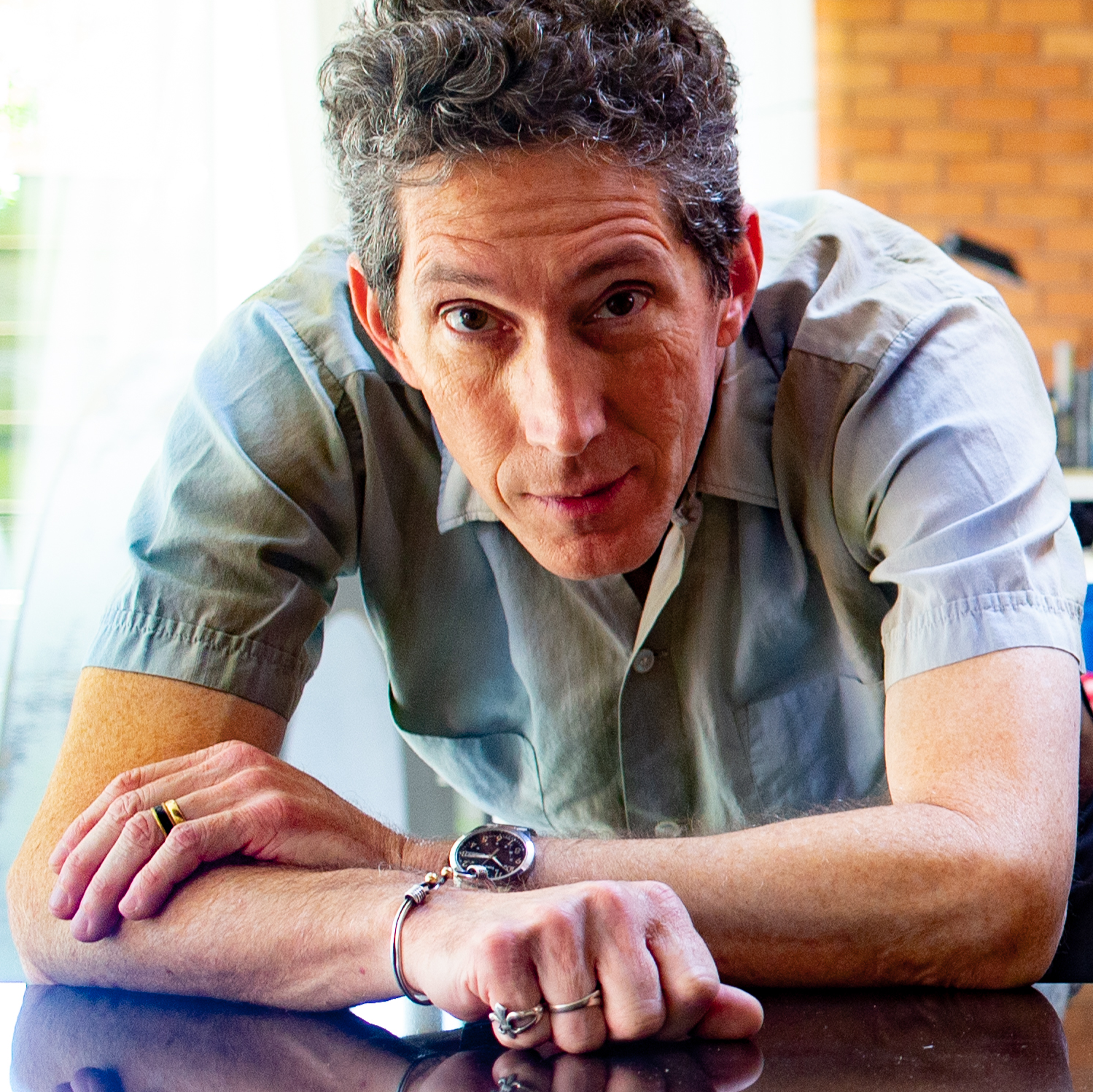
He was on that bill, so had a night off here and we slipped in a feral zone. So he's a beloved songwriter, singer, guitar player, bandleader and radio show host.
He's had his several bands, the Milwaukeeans as well as Tomorrow Sound over his career. He's put out over a dozen records since 1986. His latest solo record is a self titled record, came out in September.
Continues to host his weekly Way back home radio show on WMSE in Milwaukee, Wisconsin, which he's done since 1985, I believe. He's also a very snappy dresser and has a very cool vintage, cheap guitar collection. And without further ado, the great Mr. Paul se barrio. Welcome. Welcome, Paul.
[00:01:56] Speaker B: Good to see you.
[00:01:57] Speaker A: Yeah, man, good to be. Good to have you here.
[00:02:00] Speaker B: Glad to be here.
[00:02:00] Speaker A: Now, have you been in Snake and Jake's before?
[00:02:04] Speaker B: Yes, I have.
[00:02:05] Speaker A: Okay.
[00:02:05] Speaker B: Although I think it was a few modifications ago.
[00:02:09] Speaker A: Okay. Yeah. The ceiling used to be lower.
Now since the ceiling has been raised, it has even more of a sort of Narnia effect that you look at it from outside and it seems like a tool shed. And then you come in, it looks way bigger than you could have imagined.
And of course, very red in here.
Also, like very David Lynchian, you know, the Red Room. Whatever.
[00:02:37] Speaker B: Let's rock.
[00:02:38] Speaker A: Let's rock, man.
So, yeah, as I was saying. Is that why you were in town to do that gig?
[00:02:45] Speaker B: I came into town to celebrate Christmas with Michael Burke and Stacy and her whole gang of people.
[00:02:53] Speaker A: Okay. So it just worked out that.
Now how do you know Charlie?
[00:02:59] Speaker B: Charlie, I've been a big fan of since I first saw them playing.
[00:03:03] Speaker A: Okay.
[00:03:03] Speaker B: I realized we were kind of coming from some very, very similar Caribbean orientation. Yeah.
[00:03:11] Speaker A: It looks like you guys dress out of the same closet, I would say.
[00:03:14] Speaker B: I think you can wear the smaller Ones?
[00:03:16] Speaker A: Yeah, yeah, yeah, yeah, yeah. You could shop at the same vintage store anyway, you wouldn't cross paths.
You find a medium, you go, here you go, Charlie.
[00:03:25] Speaker B: There you go.
[00:03:26] Speaker A: That's when sizes were real, you know, you didn't have, like. Now you probably wear a medium and he wears a small and a. Modern. Modern clothes, you know, but that's when size was before size inflation, when you.
[00:03:38] Speaker B: Were looking for those. Sixteen and a half, right? Yes.
[00:03:42] Speaker A: Yeah. That's what a large is supposed to be.
Well, cool. So, you know, you got down here and as I said, we've known each other for years. We've. We first met, I think, through Derek Houston, when Derek was still playing in the Iguanas.
[00:03:58] Speaker B: I think so.
[00:03:58] Speaker A: And, you know, Iguanas and your band, Paul Seabar and the Milwaukeeans was playing at that time, and it was back in the early 90s, and we did a lot of shows together through the Midwest and beyond.
Now, we might have covered this in the first show, and for those who want to hear the full, you know, get the. The full spectrum of Paul Seabar information. You first appeared on troublemen podcast121 on September 10th in 2020.
So what was that?
[00:04:36] Speaker B: All squirming around our home, all locked down.
[00:04:39] Speaker A: Yes. We were nine months in or six months into lockdown, which we thought was going to be six weeks, obviously quite a bit longer. But we were. We did a remote podcast with you over the. The. The computers there, and you had your.
[00:04:55] Speaker B: Your.
[00:04:56] Speaker A: I think it's actually called Paul Seabar's Tomorrow Sound was the title of the. That episode, if anybody wants to go back and check it out. And that's actually the name of your current band, Tomorrow Sound, Right. Now, how did you and Derek meet?
[00:05:10] Speaker B: We met down here at Jazz Fest, actually, at Eddie's Restaurant on Law street, which had incredibly great fried chicken, also great gumbo.
[00:05:24] Speaker A: Right.
[00:05:24] Speaker B: I remember that wonderful jukebox.
[00:05:26] Speaker A: Jukebox, Okay. I kind of remember the story now.
[00:05:29] Speaker B: And so Derek, I think, was probably still underage. I was still over age.
[00:05:37] Speaker A: Yeah.
[00:05:37] Speaker B: And. But we kept seeing each other at the same gigs. You know, we were all trying to see Jesse Hill and everybody who was still around.
[00:05:45] Speaker A: Right, right.
[00:05:47] Speaker B: And at some point, we found ourselves at the jukebox and kind of Derek said, I've seen you at every place I've been. What's your story?
[00:05:57] Speaker A: Okay.
[00:05:58] Speaker B: And we kind of.
[00:05:59] Speaker A: And he saw your good friends, your sartorial inclinations, which.
[00:06:04] Speaker B: That might have had something to say.
[00:06:05] Speaker A: Sure. The hipster vibe.
[00:06:07] Speaker B: We might have had similar buttons on the shirt.
[00:06:11] Speaker A: Okay, I could see that. Some decked in shirts or something. Yeah, yeah. Well, so for the people, let's do a quick recap.
You're not from New Orleans. You are from Milwaukee.
[00:06:23] Speaker B: That's right.
[00:06:23] Speaker A: Okay. Hence the name of your first band. Milwaukee.
[00:06:27] Speaker B: That's right.
[00:06:28] Speaker A: So grew up there.
Mom and dad. Siblings.
[00:06:33] Speaker B: Yep. Both mom and dad were teachers.
Mother quit or they had. She had to quit when she had me in that day and age.
[00:06:41] Speaker A: Right.
[00:06:42] Speaker B: And when my sister is about a year and a half younger than I. So my sister Mary.
And once we reached teenage years, mom went back and became a paraprofessional aide. And then Mary subsequently became a public school teacher.
[00:07:01] Speaker A: Okay, very nice.
[00:07:02] Speaker B: So I'm the one guy that stepped out of the family business and into a much more ridiculous one with their support, I must add.
[00:07:13] Speaker A: Okay, well, that's good because not everybody has that. But they were looking for someone to do something other than teach, perhaps.
[00:07:21] Speaker B: I think they would have. I think, oddly enough, they would have accepted whatever the heck I was planning on doing.
[00:07:28] Speaker A: Nice, nice.
So when do you first get start getting interested in music? How does that come about?
[00:07:34] Speaker B: Well, I.
I didn't play till quite late, till I was about 18, but I.
I'm 69, if I can believe it.
[00:07:47] Speaker A: But it happens, man.
[00:07:49] Speaker B: Yeah.
So I was not old enough to be like, going through post puberty antics when the Beatles came out. But I was. I was completely alarmed and charmed by the whole British thing and. Right. I didn't quite know what they were singing about, but it was. I loved it.
[00:08:11] Speaker A: Okay.
[00:08:12] Speaker B: And I loved, you know, everything that came after. You know, the Temptations, Milwaukee's, you know, an hour and a half north of Chicago.
[00:08:21] Speaker A: Right.
[00:08:22] Speaker B: So there was a great, you know, Chicago soul was very, very much there and Motown was thriving.
So, you know, there were shows that were on showing all these crazy new bands. You know, the Birds had the. Had the longest bangs.
[00:08:41] Speaker A: Okay.
[00:08:42] Speaker B: I remember that was very pivotal for me that day on whatever. Lloyd Thaxton or whatever there was.
[00:08:49] Speaker A: Okay.
[00:08:50] Speaker B: But, you know, the music came through the radio back then. I mean, I was a little too young. There were some really good soul bands. There was Harvey Scales and Twisting Harvey Scales and the Seven Sounds and Vic Pitts and the Cheaters and a whole mess of others that. I'm trying to think of another.
[00:09:09] Speaker A: Those were Midwestern bands.
[00:09:11] Speaker B: Those were Milwaukee soul bands. But they're.
They would. They like the. The Esquires who had. Get On Up. They were from Milwaukee.
[00:09:20] Speaker A: Oh, okay.
[00:09:21] Speaker B: And so they recorded in Chicago but they were a Milwaukee band.
[00:09:24] Speaker A: Right. It's crazy how much music comes out of the Midwest, man. You know, we had this guy Mark Guarino on. I'm sure you know, Mark, you know, wrote this whole book on country in Midwestern. Yeah, it's a terrific book. Yeah. Anybody that hasn't read it, definitely check it out. But. But yeah, hear the whole tradition of country music. They're going back to the 20s and, you know, all these bluegrass bands recording there in Chicago. And besides just blues, which everybody kind of thinks about, you know, electric blues.
[00:09:52] Speaker B: But, you know, the whole picture of people going to Nashville but also coming up to Chicago and Milwaukee to work. Right. Because those are real, you know, machine shop kind of places.
[00:10:05] Speaker A: Yeah, yeah, yeah, yeah. Everybody came to. Yeah. Work in all those factories and stuff.
[00:10:10] Speaker B: Yeah. And we definitely were part of the great black migration in Milwaukee. Right. There's a lot of, you know, auto parts and auto work stuff going on. And Smelt. I mean, they were. They were doing every terrible job you could do.
[00:10:25] Speaker A: Right, right.
[00:10:28] Speaker B: But I. You know, I caught the radio bug, and so, you know, you'd be up late at night trying to get this thing called Beaker street that came out of, like, Little Rock.
[00:10:37] Speaker A: Okay.
[00:10:38] Speaker B: But it would. You. It was a large enough station that it would get there.
[00:10:42] Speaker A: Clear Channel.
[00:10:43] Speaker B: Right, right.
And I don't. I mean, I. I do recall listening to John R. Every once in a while at the lac, but I didn't really know where to find that. But Chicago and Milwaukee stations were blasting everything that was coming out. Right.
[00:11:00] Speaker A: So that was all. All coming into your head. Now, I read somewhere that you fell in with some family that had a. Some kind of amazing record collection.
[00:11:08] Speaker B: Murphy's.
[00:11:08] Speaker A: Okay. Shout out to the Murphy's.
[00:11:10] Speaker B: Yeah, they were friends of. There's a great.
An artist in Milwaukee named Carl Prebe. And Carl was a.
He's kind of become known for floral portraits and then portraits of African Americans.
And he. He was a big habitue of. Of the sort of the. The black neighborhood. The. The Bronzeville of Milwaukee, which was Walnut street.
And.
[00:11:39] Speaker A: First time that word's been used on the podcast, by the way.
[00:11:42] Speaker B: Habituate.
[00:11:43] Speaker A: Yeah, yeah.
So gold star for you.
[00:11:46] Speaker B: All right, we're working.
I'll keep trying.
[00:11:50] Speaker A: Yeah, yeah. Yes. Keep spitting them out.
[00:11:54] Speaker B: Carl was on the suit, so he was, like, very close to Billie Holiday.
[00:11:58] Speaker A: Oh, nice.
[00:11:59] Speaker B: And so he had an amazing collection of 78s and 45s and some albums that when he died, he left to his brother, who was a Catholic brother.
And this Catholic brother was a big friend of the Murphy family where I first saw previous. You know, he had a bunch of his artwork all over their house.
But when the. When the.
When the brother died, he left Carl's whole collection to the Murphy family. And I was going to high school with the youngest of them, and so I started getting in on these parties at their house. And then all of a sudden, I was like, whoa, man, I don't even know what this stuff is.
[00:12:43] Speaker A: Mine being blown even further.
[00:12:45] Speaker B: Yeah, it was, you know, like, not like one Lewis Jordan record, but 17 Jordan record.
[00:12:52] Speaker A: Okay.
[00:12:53] Speaker B: And, you know, whole mess of Buddy Johnson.
I mean, Rosetta Tharp, including the crazy record where they recorded her wedding.
[00:13:01] Speaker A: Yeah.
[00:13:01] Speaker B: At a. At a stadium.
[00:13:04] Speaker A: Okay.
[00:13:04] Speaker B: And it was like, big, big news.
[00:13:07] Speaker A: Right, Right.
[00:13:07] Speaker B: But, you know, this is the first. This was in, I don't know, like, early 80s, maybe.
[00:13:13] Speaker A: Okay.
[00:13:13] Speaker B: No, early 70s, right?
[00:13:15] Speaker A: Yeah, yeah, yeah, yeah.
[00:13:17] Speaker B: Late 70s.
This is when I met these people.
[00:13:21] Speaker A: Now, I've read conflicting reports about when you first saw the Wild Magnolias. I read one place where it said was on a college break. Another place where it said you were 11 years old at the same arts festival.
[00:13:37] Speaker B: Yeah, it was a lakefront festival of the arts. And I think it.
By looking on the Internet, I realized that it had to have been when I came back from college.
[00:13:47] Speaker A: Okay.
[00:13:47] Speaker B: Right.
[00:13:47] Speaker A: You try to reconstruct these things through the mists of time.
[00:13:55] Speaker B: It was a very pivotal day.
[00:13:57] Speaker A: Yeah.
[00:13:58] Speaker B: You know, so it was a thing where they had jazz there often. There was a guy that had a show on the AM radio in Milwaukee named John Grams.
And he was kind of a rakish. He's probably my age now, but I thought of him as quite an elderly guy, but a very kind of stylish little snap brim hat.
And he would have, like, a madras jacket on, and he'd be introducing whoever he had.
So in previous years, I had seen, like, Helen Humes and Red Norvo.
And so my family, I'm trying to think of who else.
Pretty amazing, you know, jazz musicians, actual, you know, veterans of the whole thing. Right.
And I know my friend John Seeger, who I was in the R B Cadets with.
He went down and saw Bola Secchi there, that great Brazilian guitar player.
[00:14:55] Speaker A: Right.
[00:14:55] Speaker B: Which is, you know, right on the lakefront in Milwaukee in this summertime.
Must have been tremendous.
[00:15:02] Speaker A: Sure, sure.
[00:15:03] Speaker B: But this one year, they announced their. Their schedule. And that one day it was the Wild Magnolias.
Ola Tunji, the. The Nigerian percussionist guy, and then Art Blakey's Jazz Messenger Nice. And this was the. This was Blakey with like, Bobby Watson and. Oh, yeah, Billy Pierce.
That era, like maybe John Hicks or something.
[00:15:28] Speaker A: I played with Bobby Watson at the.
[00:15:30] Speaker B: The.
[00:15:31] Speaker A: Several of the Hawaiian jazz festivals that the Iguanas go back to, really, after year, the first couple. Bobby was on, on both of those. Yeah. What a sweetheart. What a great player, man.
[00:15:40] Speaker B: Oh, my God, he was wonderful.
[00:15:42] Speaker A: Still is.
[00:15:43] Speaker B: And I was at, you know, at that point, I had gotten.
I had a professor that was teaching jazz. He was a jazz pianist. He was. He had done his PhD on, like, Chinese opera music.
And the joke was that if you went over there and went, saw Ron playing that music, that he might not be playing it in the speed that it was recorded, but he was a very, very enthusiastic guy that kind of built the fire under you to want to hear jazz.
[00:16:15] Speaker A: All right.
[00:16:16] Speaker B: And I had a bunch of guys, I went to school in Florida, this school that's being dismantled now by their Desantis.
[00:16:23] Speaker A: Huh. Is that some sort of experimental school called New College? New College in Sarasota. And what was the. What was the driving ethos behind that? Why is it being dismantled?
[00:16:35] Speaker B: Well, you know, it's just woke as hell.
[00:16:40] Speaker A: Okay. All right.
[00:16:42] Speaker B: I came up in high school in like a non graded, sort of, you know, individually directed.
[00:16:48] Speaker A: Oh, okay.
[00:16:49] Speaker B: It was like very few students in a class. So if you. If you're going to read Proust, you'd read Proust with eight people.
[00:16:55] Speaker A: Okay, well, that's good because, you know, you get a lot of attention and, you know, it's like you can't get lost in the shuffle. That's.
[00:17:02] Speaker B: I mean, you can't hide either.
[00:17:04] Speaker A: Yeah.
[00:17:04] Speaker B: So you got to really read it. Right.
[00:17:06] Speaker A: Okay.
[00:17:06] Speaker B: So I really loved going there, but one of the things that people were from the east and from the out west and there weren't a lot of Midwesterners.
And all of them came with record collections. I really didn't have one at the time.
And, you know, they could. I had, you know, my dearest friend, he showed up with, you know, Rai Cooter and Taj Mahal the first day I got there and I hadn't. I hadn't heard either of them. And they've been like, come on, my lodestars, sort of ever since.
[00:17:39] Speaker A: Yeah.
[00:17:40] Speaker B: So, you know, it was a.
I was really curious and I started buying stuff around then. But then I came home and I encountered this whole collection.
And at the time, I just started playing guitar. So I was, you know, I was playing Neil Young and Bob Dylan and whoever Else, you know, I happened upon and learning, you know, going to see John Fahey or something and.
[00:18:07] Speaker A: Right.
[00:18:07] Speaker B: Getting ideas for what I might want to do.
And then I started playing with these guys that were familiar with all kinds of music. And I think that's.
That's really what kind of lit the fire for guitar, was being able to play with other guys.
[00:18:21] Speaker A: Sure.
[00:18:22] Speaker B: And, you know, pick up parts of their repertoire and you figure out ways how. You know, how's John Hurt doing that?
[00:18:28] Speaker A: Right, right.
And so. So you're. You're in college, but then you. You go back and you see the Wild Magnolias and you get really turned on to the idea of New Orleans as a sort of Mecca.
[00:18:45] Speaker B: Yeah.
And even, you know, when I think about it now, I mean, it really. It was probably Bo Dallas and it may have been the Magnolia. What's the other guy? The guy that's still around that's doing it?
[00:19:01] Speaker A: Monk Boudreau.
[00:19:02] Speaker B: Monk, yeah, yeah, yeah.
[00:19:04] Speaker A: Big Chief Monk Boudreau.
[00:19:05] Speaker B: Yeah.
[00:19:05] Speaker A: He was from the Chief of Chiefs.
[00:19:06] Speaker B: He's of a different tribe, but I think he toured with that group.
[00:19:10] Speaker A: Yes, yes. He's. He's been in and out of several organizations.
[00:19:14] Speaker B: Yeah.
[00:19:14] Speaker A: Over. Over all of his.
[00:19:16] Speaker B: They really. They own. They didn't travel. You know, it wasn't like it was probably the era, whether the Willie T record was out or one of those two, but they weren't traveling with a band, so they were traveling with, you.
[00:19:30] Speaker A: Know, tambourines, just doing chanting and the big drums.
[00:19:35] Speaker B: Right. And bringing, you know, like walking the grounds of the art festival and having us kids following them.
[00:19:43] Speaker A: Right.
[00:19:44] Speaker B: You know, I'm. Big chief, got a golden crown.
I only knew it live.
[00:19:51] Speaker A: Okay.
[00:19:51] Speaker B: So when I heard it on record, I was like, that's not how it goes.
I mean, it was really powerful.
[00:19:57] Speaker A: Yeah.
[00:19:58] Speaker B: And I like that. That whole thing of just drums and vocals, that's continued to be pretty pivotal for me. And when I look back on my other records, I mean, I kind. Every record, I think there's an innovation and I'm doing something like that. But then I go back to the other ones, and there's. There's always one that's doing that anyway.
[00:20:16] Speaker A: Yeah. And I was noticing. I was listening again to this record today, and. And you have.
You have this. This tune. Keep on Looking like that.
[00:20:25] Speaker B: Yeah, yeah.
[00:20:25] Speaker A: Which kind of incorporates a lot of that kind of chant and gospel influence.
[00:20:33] Speaker B: Yeah, yeah. Thank you.
That's what I hope and is in there.
[00:20:38] Speaker A: Yeah, man. Absolutely.
[00:20:40] Speaker B: I think of that day as pivotal in the sense That, I mean, there was the whole New Orleans thing. There was the, the vocal, Vocal and drum thing then Olatunji's band at the time was very much like what Oludara's band was, you know, 20, 30 years later.
And, and that whole chain of things with African music and, and kind of this funky soul thing.
[00:21:06] Speaker A: Right.
[00:21:07] Speaker B: I've been trying to follow.
[00:21:09] Speaker A: Sure. Yeah.
That's really interesting.
[00:21:13] Speaker B: You know, and then, you know, Blake. Yeah, I had never seen him. And, you know, it was quite exciting to see that band. You know, I would never say that.
[00:21:20] Speaker A: I'm a band that plays jazz so viscerally.
[00:21:24] Speaker B: Yeah, yeah, yeah, man.
[00:21:26] Speaker A: It's a lot. It's very bloody experience. There's nothing, nothing ivory tower about, about what goes on.
[00:21:33] Speaker B: It was on the other end of the John Lewis spectrum.
[00:21:36] Speaker A: Uh huh. Right, right.
[00:21:38] Speaker B: But it was quite a day, you know.
[00:21:41] Speaker A: Okay. I know. You start coming down to Jazz Fest pretty early on, huh?
[00:21:46] Speaker B: Yeah. I made my first trip to New Orleans from, from Sarasota 1. I think it was.
I think it was probably 78, either 77 or 78. And we, some of us borrowed a car and came here and then broke down with his car and got stuck for a week.
[00:22:05] Speaker A: Okay.
[00:22:06] Speaker B: So it was kind of good at the time. I was, you know, playing acoustic guitar and trying to learn how to play. So I, I had a little repertoire that had grown when I discovered that family's collection.
[00:22:18] Speaker A: Okay.
[00:22:18] Speaker B: And I also kind. What I was kind of saying was that, you know, you start out learning folk music or whatever was. Was. Had grown out of folk music.
And, you know, you, you learn your Dylan tunes if you.
I got to school the year that Blood on the Tracks came out.
[00:22:34] Speaker A: Nice.
[00:22:34] Speaker B: So that was.
[00:22:36] Speaker A: It's a big year.
Yeah, yeah, yeah.
[00:22:39] Speaker B: And the first.
[00:22:41] Speaker A: That's the first Dylan record that I had.
[00:22:43] Speaker B: Me too.
[00:22:44] Speaker A: And, and people have heard a couple of people say, oh, well, like, my wife doesn't like Dylan. I was like, well, I could teach her to like Dylan. The first, first thing I do is play Blood on the Tracks, you know, because through that I can get you in, I can get you into all the stuff after that, all the stuff before that.
[00:23:02] Speaker B: You're gonna make me lonesome when you go oh yeah how's she gonna. Not like.
[00:23:05] Speaker A: I know, I know.
[00:23:07] Speaker B: Flowers on the hillside blooming Crazy.
Yeah.
But so the, you know, the idea, I, I was probably coming here to try and I found the penny post which was on Farad street somewhere, actually directly across the street from where Mac Perkins, who was my percussionist for many years. He had grown up right there.
[00:23:31] Speaker A: Oh, all right.
[00:23:32] Speaker B: Yeah, it was. I think the.
There was a thrift shop too, like Kitty Corner from the Penny Post.
But I, you know, at the time, I didn't know what was going on here. I mean, I should have been trying to see long hair, but I didn't know about him.
[00:23:49] Speaker A: Right.
[00:23:49] Speaker B: Yeah. So I did.
I did read in the paper, though, that there was this guy that was going to play at. At Tipitina's on the Sunday, and he was getting ready to go on a European tour. And they said something about he was a military veteran or something. And, you know, it was this kind of tale about how he's catching on in Europe.
So I thought, oh, Sunday, I'm here, I'll go over there.
And Tibetina's at the time was like a pageant of just wild folks.
[00:24:22] Speaker A: Sure.
[00:24:23] Speaker B: I was at a hippie school, you know, so this was sort of analogous, but it had also this whole urban kind of hipster thing going on.
[00:24:33] Speaker A: Right. The ceilings were low.
You could smell the bathrooms from everywhere.
[00:24:38] Speaker B: Those Indian sandals with the little one that's got a thing on it. Sure, I remember that being a factor. Yeah. But I mean, it was a smaller place, you know, that whole front end of the building. You grew up here, you know, the whole story. But it was.
It was like. I felt like all the walks of life had come through. It was. James Booker was playing, but he was playing solo Hammond organ.
So he was set up right in the corner.
[00:25:06] Speaker A: Uhhuh.
[00:25:06] Speaker B: Playing Hammond.
And then everybody's coming, milling around, going, and. I mean, it was wonderful, man.
[00:25:15] Speaker A: Yeah. Now, that was. That was a great thing to see. If you're just going to see a couple of things.
It doesn't get much more New Orleans than that, man. Especially in the New Orleans, combined with the avant garde and the harebrained element, you know?
[00:25:28] Speaker B: Yeah, yeah, it was a good thing. We, we. We saw many glances at the New Orleans that I would come to love, but I. I didn't quite know what I was doing. But we were right off of Valance, or right off a magazine on Valance, on the other side of it from where Benny's was eventually.
[00:25:48] Speaker A: Okay, but. So right there in the neighborhood, man, 13th Ward, whatever that is.
[00:25:54] Speaker B: Yeah, that was fantastic. But I.
Then I didn't get back until.
I'm pretty sure it was 1981 because I was finishing my thesis in 80.
[00:26:07] Speaker A: Okay.
[00:26:08] Speaker B: I don't think I could have gotten away for Jazz Fest while I was doing that.
So that's the first one I came to, and I've come to all of them since then.
[00:26:19] Speaker A: Nice.
[00:26:20] Speaker B: Definitely the guy that's got the hook in his lip.
[00:26:24] Speaker A: Sure, sure.
[00:26:25] Speaker B: Tell Quint that his message got through. At least one guy.
[00:26:29] Speaker A: You know, Quint has done so much, man. I've talked about this multiple times, but, you know, people mostly know Quint for. Oh, well, you know, he started the Jazz Fest. Or, you know, he did this other thing. But just, you know, being instrumental in Professor Longhair's resurgence and taking them all around, that would have been enough, just kind of being the. The impetus to suggest that they combine New Orleans electric funk with Mardi Gras Indian chants.
[00:27:01] Speaker B: Yeah. I mean, he's behind the Wild Magnolias record, isn't he?
[00:27:05] Speaker A: Yeah, yeah. No, I think it was his idea, you guys. You guys should get together, like, even.
[00:27:10] Speaker B: Like Honda Wanda. Sounds like he even paid for it or was there doing it. Very.
[00:27:15] Speaker A: Yeah, yeah, yeah. No, he was. He was, you know, balls deep and all that stuff, as they say.
[00:27:24] Speaker B: Yeah, Allison, too, I think.
[00:27:25] Speaker A: Oh, yeah, yeah, absolutely. And she, you know, she doesn't get enough credit, but. Yeah, Allison Miner. Yeah, she was right there, you know, right there with him doing all that stuff.
[00:27:34] Speaker B: I remember the. The first interviews that I heard out there where she was doing them.
[00:27:38] Speaker A: Yeah.
[00:27:39] Speaker B: And I mean, where they ultimately named the place after her, but, I mean, she was tremendous.
Oh, yeah.
[00:27:45] Speaker A: Oh, yeah.
So.
[00:27:47] Speaker B: So you go that stuff.
[00:27:48] Speaker A: Yeah. You go back to Milwaukee and you. You start the Milwaukee. Oh, no, you have the R B Cadets.
[00:27:54] Speaker B: Yeah, I. I was. I had my own little, like, acoustic jump band that was playing, you know, that. That repertoire. Lewis Jordan, Buddy Johnson, maybe writing a few instrumentals or something.
[00:28:08] Speaker A: Okay.
[00:28:08] Speaker B: And trying to figure out how to write.
And so I had that going for a little while, and I had a great tenor player named Rip Tenor. That was tremendous. And he kind of upped my game immediately as he was. I listen to tapes now, and it's like I was playing with a grown up. Yeah, he was happening.
And we. We had a really nice thing going. But then I.
I was curious about, like, how bands worked, and I met Robin Pluir, who I ended up working with a long time, and she said, hey, I'm playing with these guys down in there. They're in Kenosha.
We're gonna rehearse this week or something, and I don't know if you want to. We're gonna do this gig at this club. This guy had started a club. He wanted to book, like, Nico O. V. Wright and, like, all kinds of crazy.
And so I, I did a bunch of. I did a gig there with, with Jonathan Richmond and Gordon Gano was just like, just out of high school.
[00:29:15] Speaker A: Oh, cool.
[00:29:16] Speaker B: So it was Gordon and then I did a solo set and then Jonathan played.
[00:29:21] Speaker A: Nice. Now, Gordon Gano from Violent Films. Right, right.
[00:29:25] Speaker B: Yeah. Including if you are a violin fan, femme aficionado out there.
[00:29:31] Speaker A: Sure. I think a lot of people like the Violent Films.
[00:29:33] Speaker B: The, the guy in the shorts underneath the beauty parlor helmet on the back of. Of the blind leading the naked is me.
[00:29:40] Speaker A: Oh, okay. All right.
[00:29:42] Speaker B: And I'm also singing on the Children of the Revolution with them.
[00:29:46] Speaker A: Oh, cool.
[00:29:46] Speaker B: But we, we had, we. I actually gave them gigs. It's in one of those situations.
[00:29:52] Speaker A: Oh, okay.
[00:29:52] Speaker B: We played my little band. We played at this place called the Jazz Gallery. And they were in that period where they were busking and they couldn't really find places.
And I, I asked the guy at the gallery, you know, I. These guys are good, you know, See, Try them on a Tuesday or something.
[00:30:10] Speaker A: Right on. Good for you.
[00:30:12] Speaker B: So it was, I mean, he was, he was full blown coming out of high school.
[00:30:16] Speaker A: Yeah.
[00:30:17] Speaker B: Gordon was really writing.
[00:30:18] Speaker A: Yeah.
[00:30:18] Speaker B: And really funny.
[00:30:20] Speaker A: Yeah.
[00:30:21] Speaker B: Extremely funny guy. Yeah.
In a very completely deadpan way.
[00:30:26] Speaker A: Right, right.
Yeah. That was a great band, man. You know, and then. And yes, I, I remember the, the first record is fully formed, man. Yeah, it comes out and I guess when Chrissy Hine discovered them out on the street, they were already like that. Just.
[00:30:40] Speaker B: Yeah, they were out front of the Oriental Theater, which is one of our biggest movie theater pass palaces right along with the Downer.
It's the only town with the Downer Theater.
[00:30:55] Speaker A: Oh, okay. Yeah, I don't know that one.
[00:30:57] Speaker B: Yeah. There was an early judge that was named Jason Downer.
So we have Downer Avenue. Where. The Downer Theater.
Yeah.
[00:31:06] Speaker A: So you, you, you, you're, you're writing more. You decide you're going to start your own band.
[00:31:11] Speaker B: At some point I went and went to this rehearsal with the R and B Cadets, and I had just found that Howard Tate record at the Kmart for like, you know, 39 cents. Along with a Meters record.
The Fire on the Bayou Meters record.
[00:31:30] Speaker A: Yeah.
[00:31:30] Speaker B: And so I just found those and I went down to this rehearsal and the first thing they were learning was Ain't Nobody Home from the Howard Tate record.
So I, I thought, yeah, that's, that's for you. I'd like to work with these guys.
[00:31:45] Speaker A: Okay.
[00:31:46] Speaker B: And they were, they were doing it. They'd been in bands and they, you know, they had it. And John was writing a lot of original music and I had. Was now exploring and finding all kinds of 45s and stuff. So I, I became the guy that did. Found the covers that we were going to do. Then John would write the new, new stuff.
[00:32:05] Speaker A: Okay. Because you do have an encyclopedic knowledge of. Of music all across all these roots genres from, you know, from American roots music to African roots music and Caribbean stuff.
[00:32:19] Speaker B: And Yeah, I got. I caught the fever.
[00:32:22] Speaker A: All right.
[00:32:23] Speaker B: At that point it was probably soul and R B and New Orleans R B. Right, right.
[00:32:28] Speaker A: Well, yeah, yeah, I guess, you know, you always.
[00:32:31] Speaker B: I'd found maybe a couple Sparrow records or something, so I was off into Calypso too. But I. We weren't really playing that.
But then, you know, I. I brought in all these. I'm a giant Lee Dorsey fan. So I'd be the guy that would sing like work, work, work and all the. All the flip sides of the Greatest Love on, you know, a whole mess of tunes.
[00:32:57] Speaker A: Nice.
[00:32:57] Speaker B: That would be my. My job was I self employed appointed Lee Dorsey man.
[00:33:03] Speaker A: Right. You know, this is a. Seems like it'd be a good time to take a little break here and so we can refresh our cocktails and everybody out there in the feral zone knows what to do and go get yourself another drink and we'll be right back.
[00:33:23] Speaker C: We bring a lot to the table when we sing what trouble things heavy in our mind Slings and narrow of course Words the name we dawn they fall by the wayside when we sing.
Dream home meant to be when we sing we ex out somewhat awesome when.
[00:33:57] Speaker A: We sing.
[00:34:00] Speaker C: All the way to get Feeling lost and not them are tempered by the feeling that we're no more long bring our life together.
When I sing all by my law Something you can feel trouble call crying out for care in the night.
[00:34:31] Speaker B: When.
[00:34:31] Speaker C: I let my voice soft we can keep you and all this promise Suddenly so light There is light.
[00:34:47] Speaker A: And we're back.
Back with our guest, Mr. Paul Sebar. I am Renee Komen. Now, Paul, I know you're familiar with the show. You understand the show is a listener supported operation. We have no corporate sponsorship. But we do have our devoted listeners who use the links in the show notes of every show or the Facebook page. We have links for the Venmo and PayPal accounts. And this week we have support from a guy we already mentioned on the podcast, Mr. Mark Guarino, the great journalist and writer and all around good guy. And so Mark is sponsoring the. Our cocktails tonight. And as well as another guy, Andrew Aronson was contributor to the through the Venmo link. So I want to give a shout out to both of them fellas. Thank you so much.
[00:35:39] Speaker B: Thank you.
[00:35:39] Speaker A: And we also have the links to the Patreon page in those show notes. And we have a handful of patrons that support us week in and week out. Also, we have the link to the Troublemen podcast T shirts there.
And we also say follow us on social media, Instagram, Facebook, and rate, review and subscribe to the podcast wherever you're listening to it. Give us five stars. Helps us a lot. Cost you nothing.
And you can always find my dates on iguanas.com or on my Renee Komen Facebook page, which I have linked to there in the show notes and Iguanas. Paul, you were asking about this Sunday whether the Iguanas were playing at the legendary Carousel Bar in the Hotel Montleon. The answer is yes. Yes, indeed we have. Our residency has been indefinitely extended.
[00:36:32] Speaker B: Yeah.
[00:36:33] Speaker A: So he will be there every Sunday from 7 to 10. And, man, it's. It's been a great gig for us this past weekend. It's, you know, I guess all the holiday revelry and it was packed out and it's really starting to. On certain nights, it feels like, I imagine like the Butera, the Sam Butera or the, you know, Louis Prima Land lounge shows would be in Vegas where everybody shows up, they're sitting down, but they're all totally focused on the band. You know, the. And the energy in the room is, is electric.
[00:37:08] Speaker B: You know, it's all right.
[00:37:10] Speaker A: Crazy, man.
I mean, I don't want to oversell it. Maybe it's not like that every time, but, but now it's this past weekend, I was like, wow, this is.
I just get certain flashes coming into my mind. Like I'm.
[00:37:24] Speaker B: I feel like I'm the Meters at the Ivanhoe.
[00:37:26] Speaker A: Okay. Yeah, yeah, yeah. I don't know. I don't want to, you know, I.
[00:37:29] Speaker B: Don'T want to conflate that.
[00:37:31] Speaker A: Oversell it. But. But yeah, it's. It's. It's been a great scene. So, yes, Paul, I hope you. You'll come see us there. And, and you know, when people like, like a Paul Sebar come in and see us, we'll say, paul, why don't you get up and do a few tunes with us? And you're one of those guys who has gotten, gotten up and done a few tunes with the Iguanas since the first time we ever played together. So, you know, not Only do you slay. We've done it many times before and.
Yeah, yeah.
[00:37:58] Speaker B: So it's always been a blast.
[00:38:00] Speaker A: Yeah, yeah, yeah.
[00:38:01] Speaker B: It's.
[00:38:01] Speaker A: It's, you know, we've had such a copacetic relationship between you and the Iguanas. You know, it's.
It's really been a beautiful thing, man.
And you have that. That kind of thing with a lot of people. You know, you have. I was thinking about this today. Like, you, you have, you know, many stellar fans. You know, Joe Ely was a big fan of yours and collaborator, I guess.
[00:38:26] Speaker B: You know, we were always planning to collaborate. We never really did. And I mean, he was just a tremendous fellow.
[00:38:34] Speaker A: Yeah, yeah, that's a. It's a terrible loss there.
[00:38:37] Speaker B: Yeah.
[00:38:38] Speaker A: And you know, Bonnie Raitt, another big support.
In fact, I saw some.
Somewhere in the news or social media somewhere, a concert of hers where she was holding up this new record of yours, which is. I was saying it's self titled. It is called Paul C Bar.
[00:38:58] Speaker B: Yeah.
[00:38:59] Speaker A: And sometimes they would say an eponymously titled record.
[00:39:02] Speaker B: Yeah, that's right.
That's what we're going with.
[00:39:05] Speaker A: Going with. Yeah, yeah, yeah. No, so.
[00:39:07] Speaker B: So.
[00:39:07] Speaker A: And this is maybe like your 13th record or something in your career. And so finally you.
[00:39:13] Speaker B: Something close.
[00:39:14] Speaker A: Yeah, yeah.
[00:39:14] Speaker B: Close enough claiming it.
[00:39:15] Speaker A: Right, right, right. So you finally, you have one that's just Paul Seabar. Now, would you consider this a solo record?
[00:39:23] Speaker B: It's actually a. It's a full band record.
[00:39:26] Speaker A: Full band record.
[00:39:27] Speaker B: It was done partly over the lockdown and also in kind of fits and starts. But it was largely done in Chicago with this guy, Alex hall, who's tremendous.
[00:39:38] Speaker A: Okay. I'm not familiar with him, but he plays great and the record sounds amazing, man. I think the record is really excellent.
[00:39:46] Speaker B: Thank you. And.
[00:39:49] Speaker A: You know, really varied bunch of material. It all sounds really very natural and, you know, warm and not overworked and not overwrought.
And it goes by quickly, which I think is always a good thing in a record because that means it's not bogging down at any point. You know, the narrative is flowing and you put it on and you're like, everything is like, oh, that sounds great. It sounds great. And then it's over, you know, like. And there's 11 songs on it. It's not a short record, but.
[00:40:19] Speaker B: Yeah.
[00:40:19] Speaker A: So well done, man.
[00:40:21] Speaker B: I'm glad it sounds like that on your end. That's what we were hoping.
[00:40:26] Speaker A: Guy. Alex Hall, I noticed some of his credits. One is Nick Lowe.
He has some sort of association with Nick Lowe, which Is another. Another big supporter of yours?
[00:40:36] Speaker B: No, he's been.
We've been close to him for a long time, and. Yeah, nobody better than to be close to him.
[00:40:44] Speaker A: Hey, man.
[00:40:44] Speaker B: Tremendous. If nothing else, you'll be endlessly amused.
[00:40:48] Speaker A: Yeah. Okay.
[00:40:49] Speaker B: Hanging around.
[00:40:50] Speaker A: Right.
[00:40:50] Speaker B: He's a wonderful guy.
And we had. We had.
We'd open shows for him as far back as the R B Cadets, and he had seen us play.
[00:40:59] Speaker A: Oh, wow.
[00:41:01] Speaker B: And he actually produced a song on the R B Cadets record, which just came out on Twin Tone right near the end of the band, but it was like 86, I think.
Yeah.
And we. We've maintained our friendship and.
[00:41:15] Speaker A: Nice.
[00:41:15] Speaker B: You know, he.
He actually sang background on an earlier record, but he wasn't involved musically on this one.
[00:41:24] Speaker A: Okay. Well, another group that Alex Hall I saw has an association with is the Cactus Blossoms.
[00:41:31] Speaker B: Yeah. Yeah.
[00:41:32] Speaker A: And I first became aware of them when they appeared in one season of the reboot of Twin Peaks, the David lynch thing that came out on Showtime.
Now, it's probably 10 years ago at this point, might be eight or something, but it was when they would. They would have a band play a full song on each episode. And one was these two tall brothers singing this real moody music, kind of Everly Brothers esque.
[00:42:04] Speaker B: Yeah.
[00:42:04] Speaker A: And then the Iguanas played this folk festival in Canada, Vancouver or something. Yes. Yeah. Yeah, I think it was.
And they were on the bill and. And so I got to hang around with them a lot.
[00:42:21] Speaker B: They're a great guy.
[00:42:21] Speaker A: They are great.
[00:42:22] Speaker B: They're out of Minneapolis.
[00:42:23] Speaker A: Oh, okay.
[00:42:25] Speaker B: Yeah, we actually. We actually borrowed their Wurlitzer.
[00:42:29] Speaker A: Oh, I did see that credit.
[00:42:31] Speaker B: Yeah.
[00:42:32] Speaker A: So, yeah, so. So you have, like, your regular bass player. Mike Frederickson plays on most of the record.
Alex hall plays drums on most of it, although Reggie Bordeaux, your longtime drummer, plays on. On a few tracks.
[00:42:50] Speaker B: Right, right.
[00:42:51] Speaker A: And. And, you know, you have Bob Jennings, your saxophone player and keyboard player, also plays on a bunch of stuff. Then you have some other people coming in, and I guess that's the thing when you're during lockdown. Everybody's locked down wherever they are, and you're somewhere.
[00:43:06] Speaker B: And he's like, well, yeah, I mean, it did. It made for, you know, kind of varied recording.
I did a bunch of recording at home that we brought into the studio. I did a few things where it's just Alex and I kind of cooking it up. And then we eventually augmented it.
[00:43:24] Speaker A: And, man, for. For doing it like that, it sounds remarkably consistent. It doesn't sound like a patched together bunch of material.
[00:43:33] Speaker B: I'VE been really taken with what Alex does with whoever he's been with. He. He's done these two records for the Flat five that. He's also a member of that band.
[00:43:41] Speaker A: Oh, okay.
[00:43:42] Speaker B: And that's.
[00:43:43] Speaker A: That's. That's the guy that. That's the band that Casey McDonough is in.
[00:43:46] Speaker B: Casey and. And Scott Legan, who both play with NRBQ now.
[00:43:50] Speaker A: Oh, okay. Scott is the guitar player. Yeah, yeah. I saw those guys with the Iguanas or something at Fitzgerald's.
[00:43:57] Speaker B: Oh, yeah.
[00:43:57] Speaker A: And I met Casey, and Casey and I got along so well. He stayed through the whole Iguana set, and then we hung out for like, two hours at Fitzgerald's afternoon.
[00:44:07] Speaker B: He's a king among men. Casey McDonough. Yeah, man, they're wonderful guys. Scott Legan is actually on the record. Right, right.
[00:44:15] Speaker A: I saw that.
[00:44:16] Speaker B: A couple of tunes. But Alex has produced them. He's produced the Cactus blossoms. He produced J.D. mcPherson.
He engineered that first one.
Jimmy Sutton, I think, is recredited as the producer.
[00:44:31] Speaker A: Okay.
[00:44:32] Speaker B: But he's done a bunch of JD's stuff.
[00:44:34] Speaker A: Nice.
[00:44:35] Speaker B: And he's.
He works the studio that was. It was Jimmy Sutton's that he had built.
It's now called Reliable Recorders. And that's where Alex works.
[00:44:47] Speaker A: Okay.
[00:44:48] Speaker B: And Alex is just a chameleonic. You know, he can. Whatever drum feel you're thinking about, he's already thought about that and figured out how to get it.
[00:44:56] Speaker A: Yeah.
[00:44:57] Speaker B: And we just had a wonderful time working on the record. And he has a really great sense of how to make it, you know, how to. How there can be variety, but also, you know, a sense of a place. And he actually has almost like a timestamp that kind of makes you think. You don't think, well, this is 61 or 68 or something, but you think this is from a good time. Yeah, this music is from a good. You know, we're kind of building a right. You know, it's. It's conscious of. Of the past, but it's. It has this real sense of like, you know, I like to be there, wherever that is.
[00:45:36] Speaker A: I was listening to today, I was like, t. What's the band that did Crystal Blue Persuasion?
[00:45:42] Speaker B: Tommy James.
[00:45:43] Speaker A: Oh, there you go. Yeah, yeah. Because you have a song that. That really kind of is that kind of like soul jazz, Moody, probably Sunday Rock. Yes. Sunday Ride.
[00:45:56] Speaker B: Yeah, exactly.
I mean, that. That was.
That was really like one of the surprising ones of the. Of the. The whole process.
[00:46:05] Speaker A: Okay.
[00:46:05] Speaker B: It was early in the. You know, it was right after the vaccinations came out and so we could, we could work again.
But it was, we were like. We weren't sure you're supposed to, you know. So we, I had Alex there and myself and we were going to experiment with some things that I brought from home.
And then we were going. Scott Legan was going to come in to do that that day and we could see what we came up with.
And so that was a thing where I brought a guitar part that I had recorded at home on my phone.
I mean. Oh right, that's the one straight out of Voice Memos.
And it was, you know, late at night, Cynthia would be sleeping and I'd be out there. You know, I had an open tuned like kind of baritone Dan electro copy and it's kind of like, I don't know, solid Joni Mitchell land, you know, in terms of the tuning.
[00:47:01] Speaker A: Uh huh.
[00:47:02] Speaker B: So I became a little problematic trying to figure out how to play it live now but. But it, you know, we had this kind of atmospheric thing. I thought if anybody can cut this up and make it work, it's Alex. So I brought it along along with like, you know, a stack of notebooks at a home message lyrics. And so I, I said, I got this lyric.
I don't know if it'll work with this, but I'm kind of thinking maybe we'll try this. And there was this crazy day where we had been in Detroit. We played and we were driving home in the van coming home from Detroit.
[00:47:39] Speaker A: This with Tomorrow Sound, your regular four piece band.
[00:47:42] Speaker B: We were still called the Milwaukee and so.
[00:47:44] Speaker A: Okay. Oh, okay.
[00:47:45] Speaker B: But you know, this lyric was written about 25 years ago coming back.
[00:47:52] Speaker A: So you have all this notebooks of old lyrics that you, you still go back, you know. I think that's a brilliant move. That's something. That's a Burroughs move where you keep all your shit and you go back and you keep re editing it.
[00:48:06] Speaker B: Yeah, I mean, I mean this is oddly enough it was really like.
It was, it was in stanzas and it was. I had always imagined I was going to figure out, you know, what I was going to play and make it up someday. But I never did.
And so, but I knew I had it and I mean we were, we were driving back from Detroit. It was the first day of autumn, but it was 75 degrees and beautiful and like wild like crazy flowing clouds and yeah, you know the corn's like up, you know, up your head and it was like know there was no reason to feel ex, you know, exalted you know, we really had like. We never really caught on in Detroit. And I. I love going there.
[00:48:55] Speaker A: It's a tough city, man.
[00:48:56] Speaker B: I have a lot of friends there.
[00:48:57] Speaker A: Sure.
[00:48:58] Speaker B: But, you know, we had a reasonably good gig. You know, I wasn't losing too much money by paying everybody.
[00:49:05] Speaker A: Right.
[00:49:07] Speaker B: And so, you know, for some reason, it was a moment of like, really just exaltation. You know, we're driving, I'm seeing all these things, you know, this giant tire that's welcoming you.
And then there's. I. I see these guys pulled off on the side of the road, and the guy's got like a. Like a brown, like brown leather colored Cadillac. And he gets out of the Cadillac and he's got a brown leather suit that matches his car. Wow. And his license plate's says Mr. Jazz.
And then. And then I go about a mile down the road and there's a guy who's got his motorcycle that's got like flat. It's got matte black saddlebags and it's got a matte. Matte black leather cover on the whole. On the whole thing. And he's got the same suit on and he's just right there. They're both on the side of the road. Wow.
[00:50:06] Speaker A: Must be a thing, man.
[00:50:07] Speaker B: It's like a Sunday.
And so that's what I wrote, this crazy thing, you know, Mr. Jazz is riding too with his burnished fringe on the matte black tip and it's off to fall Just before the colors and the sickly slide we're purring, whining and thinking wide on this Sunday ride.
And I had written that, and I had written about the welcoming tire. And then corn's head high Everything's hanging on It'll be bonfires and jackets and dragging along but now it's shirt sleeves and a brand new breeze in a flicking green time and. And then it's off to fall again.
[00:50:47] Speaker A: Nice.
[00:50:48] Speaker B: But I had this thing and, you know, so Alex cut the. The guitar part up so that it was like, I don't know, three minutes long. And then he said, well, let's go see what we get. You know, I said, well, I'll try singing this against it and see if it works.
So he turned the tape on, he went out to the drums.
Scott went to the organ. They turned the organ on and then they put. He, you know, 15 seconds later or something, the guitar starts up.
They both kick in and start doing it. And then I just sang this thing. And I mean, it's really substantially the first take.
We went Back in and, you know, sang a couple things again, I think.
[00:51:32] Speaker A: Right.
[00:51:33] Speaker B: Maybe I did a few like Brenton Wood kind of attempts.
[00:51:37] Speaker A: Right. But it was octave up, but conceived right in the moment as far as the totality of the musical. Musical concept.
[00:51:47] Speaker B: Yeah. I mean, it's, it was. Well, all of us, we did it and then we looked like we were like, how did that happen?
[00:51:55] Speaker A: Right, right.
When stuff like that happens. I've worked with people where you're like, wow, that was so easy. Let's go on to the next thing. And they're like, let's not the muse. Maybe we should just stop there. Yeah, yeah, yeah, yeah. Let's not get greedy.
[00:52:08] Speaker B: Yeah, yeah, yeah, yeah. But I mean, it's, it, it. Oddly enough, it does echo a lot of my favorite kind of things. You know, there's. There's elements of that kind of, you know, those kind of sixth chords or something or.
[00:52:22] Speaker A: Right.
[00:52:22] Speaker B: Minor or major sevenths or something. Right. And then, you know, I, that's. The people hear the, the organ and my other other great friends said, ah, it's Rascals, man. It's the Rascals.
[00:52:35] Speaker A: Okay.
[00:52:35] Speaker B: You know, so I mean, it's nice that everybody, everybody's hearing all their favorites.
[00:52:39] Speaker A: Yeah, yeah, yeah, yeah. No, it's definitely puts you in a time space, you know, you're like, oh, wow. Yeah, this is very, it's very soothing. I thought the whole record was, was, was very comforting.
You know, it felt, felt familiar while at the same time being new and completely inventive and everything and.
[00:52:58] Speaker B: But, but that's good, I think.
[00:53:01] Speaker A: Yeah, yeah. No, no, no, it's. It's great. Now, I noticed that you have a couple of co writes from a guy I done a good bit of playing with. The great Pat McLaughlin.
[00:53:14] Speaker B: Yes, yes.
[00:53:15] Speaker A: How did, how did that happen?
[00:53:16] Speaker B: Well, I've been a giant fan. I saw him for the first time in Austin, Texas, actually, during one of the south by Southwest where we went down, which is quite a while ago.
And he was there at the time. I think he had Billy Bremner in his band.
[00:53:33] Speaker A: Yeah, yeah.
[00:53:34] Speaker B: And Ian McClagan and I mean it was like. And then Carlo Carlosio.
[00:53:40] Speaker A: Yeah, yeah, yeah.
[00:53:41] Speaker B: And that was the first time I saw Carlo play and. Or no, I had seen Carlo with, with Mooney.
[00:53:47] Speaker A: Oh, okay.
[00:53:48] Speaker B: A bunch.
But you know, I met Pat back then and we, we kind of bonded. Bonded over crazy that we liked. Sure. And as the years went on, I mean, I've. The last. Probably the last five records or something that there's always at Least one that we've co written.
[00:54:07] Speaker A: Nice. Nice.
[00:54:08] Speaker B: It's been. It's been the. The most fertile of our. My co writing relations, you know.
[00:54:14] Speaker A: You know, I.
I wasn't aware that you had. Had that kind of history with Pat. But, but thinking about really makes a lot of sense because you guys have so many things in common. Especially like the rhythmic approach, the roots approach.
Like, you know, Pat has this thing where he'll set the verse up with something, you know, like very rhythmically propulsive. And he's incredible rhythm guitar player, man. Like, just has such a pocket and.
[00:54:44] Speaker B: A way he bends his back the way that no other humans can bend their back.
[00:54:49] Speaker A: Right, right, right. And then lifts his leg out there.
[00:54:55] Speaker B: That's the greatest, man.
[00:54:56] Speaker A: But he'll go ahead.
[00:54:58] Speaker B: No, my friend Cynthia, you know, my dear pal, she.
She would tell me, well, there's music and then there's Pat.
She had a little. Almost like a little votive.
There's like a little votive.
Tiny little picture of him from Unglued. From the back of Unglued.
[00:55:17] Speaker A: Nice.
[00:55:18] Speaker B: In a little frame that's been in our home throughout the time.
[00:55:23] Speaker A: That's so funny. And. But so I was going to say he'll like set up a verse with something that's real funky and rootsy sounding and then the chorus will go to a rock related but not expected key change that will elevate the whole thing into this whole other like very major and even almost major seventh tonality where it just. It's like, wow, how'd you get there from where you just were?
And it's like the skies open up, man, and you know, God shines the sun face on you. And then it's right back to.
This real gut bucket feel. Yeah, man.
[00:56:13] Speaker B: What's that one?
There's the million of them.
[00:56:17] Speaker A: I always think of that time was silly boy, what we used to.
[00:56:23] Speaker B: Getting everything that you wanted. Now look at you.
[00:56:28] Speaker A: Yeah, that's it.
[00:56:28] Speaker B: Now look at you.
[00:56:31] Speaker A: So great.
It goes back into that kind of flat seven groove.
So good.
[00:56:41] Speaker B: He's fantastic.
[00:56:42] Speaker A: Oh, man. Oh man. Well, that's. It's so.
[00:56:46] Speaker B: Yeah. We did two on the record. One called We Sure Got Enough, which is really in Doug Somme territory. On the record.
[00:56:54] Speaker A: Oh, yeah. And that's.
[00:56:54] Speaker B: That.
[00:56:55] Speaker A: That one's. That's a brilliant thing. You have double Derek playing the Rocky Morales part there and the other guys playing the Augie. The Auggie Myers part. Yeah, yeah, that's very successfully done, man.
You got the Vox organ sound.
[00:57:14] Speaker B: Yeah, we had a great Time doing that one that actually was recorded in Milwaukee. That was one of the first ones we did for the record.
[00:57:21] Speaker A: Okay.
[00:57:22] Speaker B: And that's got Reggie on it playing drums.
[00:57:24] Speaker A: Right. It's got Derek Houston playing saxophone and.
[00:57:28] Speaker B: And yeah, Derek had come up to visit during the summer when we, when we had just put it down. And so he went in and put his solo on there.
[00:57:37] Speaker A: Nice.
[00:57:38] Speaker B: And. And then he's on a few tracks.
[00:57:42] Speaker A: Yeah, he's on a whole bunch of stuff here. And all that stuff sounds great, you know. And again, Derek plays like, he has a.
Such a command of rock and roll saxophone. You can play a song for him that's a new song, an original song, and you'll listen to it. And he can relate it to all the. The entire canon of rock and roll saxophone and synthesize something that's new, that fits your thing. But it's totally based on everything that came before it. You know, it's completely rooted in the.
[00:58:14] Speaker B: Tone is as big as a house, you know, no matter what. And I mean, it's such a gas. I mean, that's one of my favorite things on the record is to hear him. That one you were talking about.
Keep on thinking or keep on looking like that.
[00:58:28] Speaker A: Right, right.
[00:58:29] Speaker B: He's straight up, you know. Plaz Johnson.
[00:58:32] Speaker A: Right.
[00:58:33] Speaker B: Pink.
Pink Panther Land.
[00:58:35] Speaker A: Yeah, yeah, yeah, yeah.
[00:58:36] Speaker B: You know, and it was really. I mean, it's kind of. It's close. I'm a giant 5 Royales fan, and that's as close as I've ever come to riding something that's up sort of up that street.
[00:58:46] Speaker A: Nice.
[00:58:47] Speaker B: But, you know, it's just wonderful to hear him play on there. And also on the one called the Brink of Things where there he's like doing the, you know, what's our guy? Lee.
[00:59:00] Speaker A: Lee Allen. Yeah, yeah, yeah, yeah, yeah. No, Derek is such a student of all that stuff, man.
[00:59:05] Speaker B: He.
[00:59:06] Speaker A: He's digested in a way that, you.
[00:59:08] Speaker B: Know, or it's even, Even King Curtis like.
[00:59:12] Speaker A: Yeah.
[00:59:13] Speaker B: On that song. Yeah.
But the other Pat song is the. The last song on the record called Dreaming Back.
We got a few more. That was one that I almost forgot for the record.
Pat and I had it for probably five years or something.
And I, I, I like going to the last day where we were going to all cut together and at the room in Chicago. And I thought, oh, man, I never even thought of that one. So then I'm just so glad we did it. And that was like, really one. Like we did three or four takes, but the first take, like, the Organ playing on it is. I love it.
Bob plays beautifully.
[00:59:53] Speaker A: Yeah, man.
[00:59:54] Speaker B: Derek was coming to join us in the studio that day to maybe do some overdubbing or something, and he walked in the door while we were cutting that, and, you know, he was like, whoa, man. It was really fun.
[01:00:08] Speaker A: It's so exciting when you're doing something. You can really feel the electrons moving around in a very special way, you know, and everybody's looking at each other like, oh, no, we're doing important work here. This is. We're doing God's work here.
[01:00:23] Speaker B: I mean, you know, you're hoping, and you're hoping you have that. That kind of sense of it. Of it happening, you know, that that comes across rather than, like, really working it hard or trying. And, I mean, that's really where the. Where the first take had it, and the later ones had me, you know, trying a little too hard or something.
[01:00:43] Speaker A: Right, right, right. Sounds too thought out, or maybe everything's becoming a little bit contrived. Not that you're trying to, but, you know, you can all. Like, they say you only have one chance to make a first impression, and songs or performances do that similarly, you know, like, there's only one time when you're gonna play the song where you're not sure what's gonna happen next.
[01:01:05] Speaker B: That's true.
[01:01:06] Speaker A: I mean, in the. In the.
[01:01:08] Speaker B: Also, you're balancing, you know, like, Mike, my bass player, he's a wonderful player.
I kind of wanted to do the kind of. The Nickelo plan of, like. Of having the band not really know it well, but having him, he knew. He knows the song, how to play it on acoustic and sing it to the point where he doesn't feel like it sounds like him anymore. He. He wants it to be like that guy.
So he's got it all down, so he's not even thinking about it. But he wants to get that kind of unsettled thing in. In the band. Right.
And I. I like that idea, but I think Mike is not. Mike is, like, a guy that really wants to think the thing through and wants to make sure he's got it the way he wants it.
And so you kind of have to work that balance of, like, making sure he's comfortable and having fun.
But that was one where, you know, once we had it down, then we just put it down.
[01:02:04] Speaker A: Yeah, like the. Like. Like capturing the sense of wonder on. On tape, you know, like, that's.
[01:02:10] Speaker B: That's tough.
[01:02:11] Speaker A: The tape catches everything. That's the thing.
It catches everything, man. It catches every good impulse Every false impulse, it reads your mind and then puts it out there for everyone to consume, for good or bad.
Well, you know, you mentioned Cynthia, and the record is dedicated to Cynthia.
And you know, Cynthia.
I knew Cynthia maybe before I knew you.
She used to live in New Orleans. She was a big Iguanas fan. She would come dance, you know, a devoted dancer at Cafe Brazil when we played there. And what a beautiful person, what a sweet soul, and always someone super kind to me.
[01:03:04] Speaker B: And we did have a wonderful thing. And I'm really so glad and so lucky to have been with her.
I, you know, walking around here, I think about her, you know, all the things we did here, all the things we did everywhere.
[01:03:20] Speaker A: Right.
[01:03:20] Speaker B: And all her. Her ideas about music and about life and how to wear a shirt and, you know, everything.
[01:03:29] Speaker A: Yeah. She was. Had opinions about everything.
[01:03:32] Speaker B: Yeah.
And, you know, so they. I.
We lost her in. In March of 24. Right.
And, you know, it was a cancer thing, you know, stomach cancer.
But, you know, it's. It's the kind of thing where, you know, someone is as alive as anyone you've ever known, and then, you know, they're gone. And you don't.
[01:04:00] Speaker A: I don't know, there's no rhyme or reason to. It's inexplicable.
[01:04:04] Speaker B: No. So I was. I kind of wrestled. The record was really done. Recorded before.
Even before she was really very sick.
But I wanted to somehow acknowledge it. At one point I was going to call the record In Cynthia's World.
And then, I don't know, I had a few friends that said, you may not want to have that be central to the. To the.
[01:04:32] Speaker A: Sure.
[01:04:33] Speaker B: So that's what I. My dedication in there is.
[01:04:35] Speaker A: That's beautiful, man.
That's beautiful.
You know, one of the last memories, maybe the last time I saw Cynthia, we iguanas played Shank hall and y' all came to see us and we were hanging out after the gig for a long time and.
And, you know, Cynthia is someone who's always very sweet to me and, you know, I've been using this thin red, like Girls Watch Band for a few years. And I thought, well, everyone will notice this. And nobody does, but Cynthia did.
She goes, ooh, I like that Watch Band. I was like, okay, Cynthia, you get the prize. Cuz you're the first person in months to even notice it.
[01:05:20] Speaker B: But you.
[01:05:21] Speaker A: She was. That's the kind of person she was, you know, just.
[01:05:24] Speaker B: Yeah.
[01:05:24] Speaker A: Nothing escaped her.
[01:05:25] Speaker B: And she could have probably told you who made that one.
[01:05:28] Speaker A: Yeah, right, right, right.
[01:05:32] Speaker B: Oh, man.
[01:05:34] Speaker A: God. Paul, well, you know, it's. You made such a terrific record here and be so proud.
[01:05:41] Speaker B: It's out on a label out of New York called Story Sound.
[01:05:44] Speaker A: Yes.
[01:05:45] Speaker B: And it just came out in September, and we're gonna have it be the new record for as long as we possibly can.
[01:05:53] Speaker A: Sure. Yeah. Yeah, it just came out.
[01:05:55] Speaker B: We're really trying to get it. I mean, I had to go down to the music factory and make sure they had it in.
[01:06:01] Speaker A: Gotta do it, man. And. Well, I guess you must be either have a new book agent or shopping for a new booking agent, since our longtime booking agent just left the business. That's the thing, you know, if you stay in the business long enough, everybody that you got into it with leaves and you're like, you got to start over.
[01:06:20] Speaker B: Yeah. We're the ones out on the curb trying to figure it out.
[01:06:24] Speaker A: But, you know, here, you and I, we're not. We're not starting over. It's just a continuation. And, you know, when, like, I think about this in terms of, like, clubs that I played, you know, like, clubs start and you do great business there, and then either they close or they don't like you anymore. They quit using you for what, you know, somebody gets in a beef, I don't know, who knows what happened. You know, a million things, or they.
[01:06:49] Speaker B: Get a new booking agent for the club.
[01:06:51] Speaker A: Yeah, yeah, yeah.
And I always think, look, I played a million jobs before, before I ever met you. I will play a million jobs after you.
It's not.
[01:07:03] Speaker B: I'm not at least a half a million.
[01:07:05] Speaker A: You know, I don't know. You know, I always. I think that the speaker has the privilege of hyperbole.
So, yes, it's not an actual million, but it's thousands. Yes, I will play thousands of jobs right from here on out.
[01:07:22] Speaker B: Yes.
[01:07:22] Speaker A: You know, God willing. But so. But, you know, it's something you got to take in stride, but. So you guys have plans, you're touring. I've seen you've gotten a lot of coverage already on this. You had the first three songs on the record were all the singles that you put out, which all sounded beautiful.
[01:07:42] Speaker B: Yeah.
It's been fun to have someone that cares about your record as much as you do.
[01:07:49] Speaker A: Right.
[01:07:49] Speaker B: That's a great thing.
[01:07:50] Speaker A: Right. And that's. That's for the record company. Stories out. Right on. Where are they based out of?
[01:07:56] Speaker B: They're out of. They're in. On the Lower east side in New York.
[01:08:00] Speaker A: Nice. My favorite part of New York.
[01:08:02] Speaker B: There's a guy named Dick Knett.
[01:08:03] Speaker A: Alphabet City.
[01:08:05] Speaker B: Yeah, they're. They're just about. They're probably. I guess it would be considered Soho. He's been there a long time.
[01:08:10] Speaker A: Okay.
[01:08:11] Speaker B: There's a guy named Dick Knet who's. I met down here actually at Jazz Fest years and years ago, but never knew I'd be working with him. But he's a great guy.
And he at the time had a band called the Last Forever. They did kind of orchestral folk music and they had a record on Non Such.
[01:08:29] Speaker A: Okay.
[01:08:30] Speaker B: And I remember he since has done. He did a record for his own label called. Called Too Sad for the Public. That's what the band is called.
But he's a very kind of darkly droll guy.
[01:08:45] Speaker A: Nice.
[01:08:46] Speaker B: And. And. And a real fan of the people on his label. He's got a bunch of songs. A bunch of records by Loud and Wainwright.
[01:08:54] Speaker A: Oh, sure.
[01:08:55] Speaker B: And then a gal named Anna Ege. He's done a number of records with her. And he kind of works with the Suzy Roach and her daughter. He's done a record there. And they did a record that. That double record of Maggie's songs. When Maggie died.
They did a really nice Maggie Roach compilation record.
[01:09:14] Speaker A: Nice. Well, that sounds like a good place for you to be, man.
[01:09:17] Speaker B: Yeah, I mean, that's.
I have more relations to some of those acts than one would think.
[01:09:23] Speaker A: Sure. No, I can see it. Yeah, I can see it.
[01:09:26] Speaker B: Yeah. I mean, I think, you know, we're. We're probably their only dance band, so.
[01:09:30] Speaker A: Right. They need one.
[01:09:31] Speaker B: That's good.
[01:09:32] Speaker A: Yeah. I need. You know, like, everybody thinks that that's the cliche thing from American Bands. And it's got a good beat. You can dance to it.
[01:09:41] Speaker B: That's right.
Or like Eugene Levy said, boss school.
[01:09:45] Speaker A: Yeah.
[01:09:46] Speaker B: Boss age.
Yeah.
[01:09:50] Speaker A: All right, Paul. Well, I think we're going to wrap it up here unless you have anything else to.
I don't know, words of wisdom for.
[01:09:58] Speaker B: For. I think we're. I think we're pretty well there. But please come out if you see him. We're coming to town. Come see us.
[01:10:05] Speaker A: Yeah. Look out for Paul C Bar and Tomorrow Sound. And check out the record.
Paul C Bar.
[01:10:12] Speaker B: Yeah.
[01:10:13] Speaker A: Aptly titled.
[01:10:15] Speaker B: Yeah.
[01:10:16] Speaker A: Paul. Love you so much, man.
[01:10:17] Speaker B: Thanks, Renee.
[01:10:18] Speaker A: And. And.
[01:10:20] Speaker B: And Manny's not here to counter that.
[01:10:23] Speaker A: Yeah.
[01:10:23] Speaker B: Well.
[01:10:25] Speaker A: He would have bailed out a while ago over all this.
Let's kind of talk. That won't even characterize what he would have said. But I am Renee Komen for Manny Chevrolet and our guest, Paul Sebar signing off from inside the Feral Zone.
[01:10:43] Speaker B: And struggle.
[01:10:45] Speaker A: Happy New Year, everyone. The struggle continues in the New Year. Good night.
[01:10:51] Speaker C: Everything working he's dressed like his car It's a candy blade jacket and that's his bar Mr. J riding too with his burnished fringe on a matte black.
[01:11:07] Speaker A: Tip.
[01:11:11] Speaker C: And it's off to fall Just before the colors and the sickly slide we're hovering moment and thinking why.
[01:11:29] Speaker A: On.
[01:11:30] Speaker C: This Sunday ride we squirt on a summer and it's torpid Gripping on the highway and this aimless trip Motor City is calling with its weapon in time.
And it's off the fall Just before the color and the sickness Swinging, burning thinking wide on this Sunday ride.
Corns hit high everything hanging on It'll be bonfires and jackets and dragging along now it's shirt sleep and I ran to breeze in a flicking green tide and it's off to fall Just before the colors and the sickly slide.
[01:12:57] Speaker B: We'Re.
[01:12:57] Speaker C: Floating w them thinking why.
On this Sunday ride Mighty tear on the m When we stop on the side on our Sunday ride.
On a Sunday ride on a Sunday ride on a Sunday ride.
Sunday ride Sunday ride Sunday ride Something.