Episode Transcript
[00:00:15] Speaker A: Greetings, troubled listeners. Welcome back to the Troubled Men podcast. I am Renee Coleman, sitting once again in Snake and Jake's Christmas Club Lounge in the heart of the Clempire with my co host, the original troubled man for troubled times, Mr. Manny Chevrolet. Welcome, Manny.
[00:00:32] Speaker B: Thank you, thank you for having me.
[00:00:34] Speaker A: Thank you for being here.
[00:00:35] Speaker B: You know, it's, we're here at Snake and Jake's, right? It's big news today, huh? The Trump phone is going to happen.
[00:00:45] Speaker A: Wow.
[00:00:46] Speaker B: He finally got his kids to make this phone deal happen.
[00:00:49] Speaker A: Okay.
[00:00:50] Speaker B: And it's going to be available to the public very soon.
[00:00:53] Speaker A: All right.
[00:00:54] Speaker B: Like within days.
[00:00:55] Speaker A: Got a gold tone phone, I'm guessing.
[00:00:57] Speaker B: I don't know. But I, I, I, I, I did see something. I, I saw, I read an article about it.
The, the camera on this phone will only face you.
[00:01:08] Speaker A: Okay. That's the only, it only takes selfies.
[00:01:11] Speaker B: It only takes selfies because the guy is such in love with himself.
[00:01:14] Speaker A: Sure, sure.
[00:01:15] Speaker B: So he made that one of the things. All right. Camera will only face you.
[00:01:19] Speaker A: Okay?
[00:01:19] Speaker B: So forget about taking family photos with the Trump phone.
[00:01:23] Speaker C: You know, I wonder if it'll say where it's made from.
[00:01:26] Speaker B: Well, it's made in China.
[00:01:27] Speaker C: That's what I was thinking.
[00:01:28] Speaker B: Yeah, it's made in China.
[00:01:29] Speaker A: I don't think it's possible to make one.
[00:01:31] Speaker B: Yeah, but apparently they promised, you know, a couple years ago when they came up with this idea would be like a hundred dollars or something.
[00:01:38] Speaker A: Huh.
[00:01:38] Speaker B: It's $799.
[00:01:40] Speaker C: That's cheap for cell phones.
[00:01:42] Speaker B: Yeah, yeah.
[00:01:42] Speaker A: Those things are expensive now. Yeah, regular iPhone is like a thousand.
[00:01:47] Speaker B: I'm thinking of going back to a landline. Yeah, that's a good idea, I think. You know, I, I don't know. I have my hand me down phone from my daughter from like 10 years ago.
[00:01:57] Speaker C: Is it still flip or the flip's broken?
[00:01:59] Speaker B: No, it's not a flip phone. It's just a, a regular phone. But it does tend to, like, fall asleep without telling you. It just is. Like you go to your phone and you want to call somebody or text somebody or look at something and it's just pitch black.
[00:02:13] Speaker A: It's dead.
[00:02:14] Speaker B: It's dead. So it's an old phone, but what do I care?
[00:02:18] Speaker A: You're not trying to stay in touch with anybody. There's, there's nothing that urgent, I'm guessing.
[00:02:22] Speaker B: Yeah, yeah. And so the, it's coming out like very soon and.
[00:02:27] Speaker A: Okay.
[00:02:27] Speaker B: It's part of his gift to his son who got married.
[00:02:31] Speaker C: Oh.
[00:02:32] Speaker B: You know, it's like, oh, oh, your idea is finally panned out. Don Jr.
Have a phone.
[00:02:37] Speaker A: Are you tempted to upgrade to one, you think?
[00:02:41] Speaker B: Well, no, but. No, I'm not going to upgrade. I don't. You know, what do I care?
[00:02:46] Speaker C: Maybe our sponsors could get you one.
[00:02:48] Speaker B: Yeah, there you go. Out there. The troubled nation.
[00:02:50] Speaker C: Yeah.
[00:02:51] Speaker B: You know, they've gotten me bottles of Bosco. Maybe somebody out there will give me a Trump phone.
[00:02:57] Speaker A: Yeah, I'm not sure. That might be a long shot, but you never know.
[00:03:01] Speaker B: You never know. Just send me a Trump phone. And I don't think these have much shelf life, these Trump phones. No, no, but he's crazy going.
[00:03:10] Speaker A: Neither does he, actually.
[00:03:11] Speaker B: Yeah, well, yeah. Apparently he's been at the doctor three times in, like, 48 hours, you know, but is that real news or is it fake news? I can't.
[00:03:21] Speaker A: I don't know, taking him somewhere.
[00:03:22] Speaker B: I mean, they're taking them somewhere, you know, it's not the Keith Richards thing. They're not taking blood. And you, you know, switch.
[00:03:28] Speaker A: Swap it out.
[00:03:29] Speaker B: Yeah, swap it out. Who knows? I. I don't know. But I do know one thing. His. His health secretary, RFK Jr. Did you see this guy tangling with the snakes today? Yeah, I saw that. He was handling sick. That Dr. Oz's house.
[00:03:44] Speaker A: Yeah. Yeah. Crazy. Yeah.
[00:03:45] Speaker B: But the weird thing is they cut. I saw. I saw some bootleg footage of it because, you know, the news will only show so much.
[00:03:52] Speaker C: Right, right.
[00:03:52] Speaker B: And then they have to move on.
[00:03:53] Speaker A: Right.
[00:03:54] Speaker B: But apparently he picked up those snakes and he started speaking in tongues.
[00:03:58] Speaker A: That's what I was thinking.
[00:03:59] Speaker B: Yeah.
You know, with his gravelly voice.
[00:04:04] Speaker A: Yeah.
[00:04:05] Speaker B: It's already. Exactly.
So, you know, and I don't care for snakes. Never have.
[00:04:10] Speaker A: Yeah.
[00:04:11] Speaker B: He's kind of bold to do that, I thought, you know, why not?
[00:04:13] Speaker A: Well, he's nuts.
[00:04:14] Speaker B: Well, yeah.
[00:04:15] Speaker A: You know, he doesn't have good judgment.
[00:04:17] Speaker B: Well, either does his wife, who hooked up with him. Right, right, people.
[00:04:22] Speaker A: Yes, yes.
[00:04:23] Speaker B: I'm so disappointed in her.
[00:04:25] Speaker A: Yeah.
[00:04:25] Speaker B: I mean, I actually had a thing for her.
[00:04:27] Speaker A: Oh, oh, Cheryl Hines.
[00:04:28] Speaker B: Yeah, Cheryl Hines. Back in her day with Larry dav. I actually had a thing for her.
[00:04:33] Speaker A: Sure, I could see that. A certain sweet disposition.
[00:04:37] Speaker B: Yeah. You know, milking off Larry's wealth and, you know, it's all good.
[00:04:42] Speaker A: Right, right. Well, you know, the heart knows what the heart wants.
[00:04:45] Speaker B: So she wants RFK Jr. I guess she just wants to be a Kennedy or something. I don't know.
[00:04:50] Speaker A: I don't know.
[00:04:51] Speaker B: I don't know, man. What's happening with you?
[00:04:53] Speaker A: Oh, not too much. You know, we were. I was in Hawaii last week and.
[00:04:59] Speaker B: Putting out fires.
[00:05:00] Speaker A: Putting out fires?
[00:05:01] Speaker B: Yeah.
[00:05:01] Speaker A: Starting fires.
Yeah. It was a great trip, you know, had some, some jazz giants over there. John Patitucci, the great bass player.
[00:05:11] Speaker B: Never heard of.
[00:05:12] Speaker A: Guy he played with. He's played with Chick Corea for about the past 25 years or so.
[00:05:17] Speaker B: Chick Corea, that bastard.
He owes me money. Yeah, that owes me money, man.
[00:05:23] Speaker A: I don't know if it's the same chick.
[00:05:25] Speaker C: I don't think you can collect.
[00:05:27] Speaker B: But just like all the people that owe me money, they die.
[00:05:30] Speaker A: Yeah.
[00:05:31] Speaker B: Carlo Nuccio, it's.
[00:05:35] Speaker A: It's their greatest revenge, you know?
[00:05:38] Speaker B: Yeah. Not paying.
[00:05:39] Speaker A: Sneaking out without. Without paying off their debts to Manny anyway.
[00:05:43] Speaker B: But you're in Hawaii.
[00:05:45] Speaker A: Yeah, so.
[00:05:45] Speaker B: So you went surfing?
[00:05:47] Speaker A: I didn't go surfing, but I did go snorkeling and I actually wound up. Well, you know, when I, you know, I'm not crazy about the water, but I thought, well, I should really go on this, this time. And there was a smooth day and I went out there. Now, my initial thing. Kept waiting to see when the reef was going to get good looking. And the.
[00:06:08] Speaker B: What was the reef? You know, where it was going to
[00:06:11] Speaker A: look like it really was exploding with life. So I kept swimming out, swimming out, swimming out. And then I looked up at where I was and I was like 300ft from shore and nobody was anywhere around me. I thought, oh, this is terrible, I got to go.
So I made it back in.
[00:06:27] Speaker B: How do you go all that way out with a cocktail in your hands?
[00:06:30] Speaker A: You know, it's practice, man. You practice.
[00:06:32] Speaker B: Okay, but you went out there.
[00:06:34] Speaker A: But I did. On the way back, I ran into a full sized sea turtle. It's like four feet in length and. And he was right in front of me. And he didn't get spooked and he just kind of swam. I swam behind him for about five minutes. It was. Did he.
I didn't see any of that.
[00:06:51] Speaker B: Turtles like this.
[00:06:52] Speaker A: I didn't see any of that. He was very serene.
[00:06:54] Speaker B: Did you?
[00:06:56] Speaker A: No, no, no, no. Not that I remember.
[00:06:58] Speaker B: Back as a kid, you know, we. As teenagers or young teenagers, we'd go to Venice, Santa Monica beach. That's where I'm from.
[00:07:05] Speaker C: Sure. Yeah.
[00:07:06] Speaker B: With my friends. And sometimes, you know, you'd be out there body surfing or whatever. Doing what? Swimming. And you had to go.
[00:07:15] Speaker C: You had to go.
[00:07:16] Speaker B: Yeah. You couldn't get back in time to the bathroom.
[00:07:20] Speaker C: Oh, yeah.
[00:07:20] Speaker B: So you just went one or two in the ocean.
[00:07:23] Speaker A: Okay.
[00:07:23] Speaker C: One or two?
[00:07:24] Speaker B: Yeah, it didn't matter.
You know, the hardest thing about doing two in the ocean is. Is you pretty much use your hand away.
[00:07:32] Speaker A: Oh, geez. Getting right into it.
[00:07:34] Speaker B: Yeah.
[00:07:34] Speaker A: Okay. Well, I didn't see it going.
[00:07:37] Speaker B: You gotta go, you gotta go, you gotta go, you gotta go. Exactly.
[00:07:40] Speaker C: Yeah.
[00:07:41] Speaker A: Well, we have some interesting podcast news, man.
Yes.
[00:07:45] Speaker B: We're being canceled?
[00:07:46] Speaker A: Well, no, not yet. The Troublemen podcast is.
I got a communique this week that we're number one in music interviews in Serbia.
[00:07:57] Speaker B: Okay.
[00:07:59] Speaker C: Now that's important.
[00:08:01] Speaker A: I don't know how we attain that.
[00:08:06] Speaker B: Sounds like.
Who. Who told you this?
[00:08:10] Speaker A: As an email from somewhere.
[00:08:12] Speaker B: Somebody in China. You're number one in Serbia?
[00:08:16] Speaker A: Yeah. I don't know.
[00:08:17] Speaker B: Click on this.
[00:08:18] Speaker A: Some other. No, it didn't seem to be.
Go any further than I'm sure they would have liked for me to. To contact.
[00:08:25] Speaker B: Now, what kind of language is. What do they speak in Serbia?
[00:08:28] Speaker A: They speak Serbian, I think.
[00:08:30] Speaker B: You know, there's a Slavic kind of a. Slavic.
[00:08:32] Speaker A: Yeah, yeah, they're Slavic.
[00:08:34] Speaker B: Russian.
[00:08:34] Speaker A: Russian. They're related to their German. Genetically related to the Russians. No, not the Germans, the Russians.
[00:08:39] Speaker B: Oh, okay. But so we're number one in Serbia.
[00:08:43] Speaker A: Yes, in. In music interviews.
[00:08:45] Speaker C: I think that bodes well for Serbia, actually.
[00:08:46] Speaker A: Okay. All right.
[00:08:48] Speaker C: That means good things for Serbia.
[00:08:49] Speaker A: Right on.
[00:08:50] Speaker B: Now, are they at war with anybody?
[00:08:53] Speaker A: I don't think so.
[00:08:53] Speaker B: Okay.
[00:08:54] Speaker A: I don't think so. It's a small country. You know, they did have the. The war back then. What, the 90s?
[00:08:58] Speaker B: Well, maybe we should go there and do a show. Maybe we'll begin a big welcome there.
[00:09:02] Speaker A: All right.
[00:09:03] Speaker B: Maybe find out who did this and see if they can put us up for a few days.
[00:09:06] Speaker A: Okay. Contact the consulate there. Whoever put up this post, circle them
[00:09:11] Speaker B: in, and I'll just say we want to come to our country.
[00:09:14] Speaker C: What do you mean? You never heard of us?
[00:09:15] Speaker B: Yeah, exactly. Exactly.
[00:09:18] Speaker C: We're number one.
[00:09:19] Speaker B: We're number one here.
We're number one here.
Anyway, so. Yeah. You got back from a turtle, right? Right. You made turtle soup.
[00:09:31] Speaker A: Yes, made turtle soup.
[00:09:32] Speaker B: You ever have to. I love turtles.
[00:09:34] Speaker A: I've never.
[00:09:35] Speaker C: I don't think I've ever had.
[00:09:36] Speaker B: Oh, it's really good.
[00:09:37] Speaker C: It's good.
[00:09:37] Speaker B: Yeah, it's really good. I remember one time when I.
[00:09:40] Speaker C: Many, many, I've had turtle soup, but not.
[00:09:45] Speaker B: I had turtle soup right out of its shell.
[00:09:47] Speaker A: Wow.
[00:09:48] Speaker B: Pretty good.
[00:09:48] Speaker C: Awkward. But.
[00:09:49] Speaker B: But I remember one time speaking to people, you know, who owed me money. Carla Nucha and I, many, many years ago, went to The House of Blues to see the Pretenders play. Oh, nice.
And it was really great. I was all excited. And right after the first song, Chrissy Hyde said, how can you fucking people have eat turtles?
Fuck you. And she. And everyone booed her, but they didn'.
[00:10:17] Speaker A: Okay.
[00:10:17] Speaker B: They booed the out of her, But I thought, you know. Yeah, okay, I get it, Chrissy. You're all right, Chrissy.
[00:10:24] Speaker A: That's not something I would eat.
[00:10:25] Speaker B: But then Carlos JFK or. Yeah, no, no, no.
But of course, Carlo, who was dope Phoenix at the time, had to leave right after the third song. So I missed a great show.
[00:10:37] Speaker A: Oh, geez. He got a call. It was time. Had to go meet the man, I guess.
[00:10:43] Speaker B: I don't know.
[00:10:43] Speaker A: Right, right. Well, you know, I had a thing happen a couple of weeks ago when I was on the road with Sonny Landreth and the Iguanas. And I wanted to talk about it because it really, you know, it kind of changed my mind in a certain way. And I think the troubled nation could. Could benefit from this. So we're playing Northampton, Massachusetts. We're hanging out. Great gig. Two sets, you know, set by both bands. We're in the dressing room backstage afterwards, having some bottles of wine. There's this really old dude there hanging out. He's drinking with us. He's talking to us and he's saying, yeah, you know, I've been a fan for a long time. I drove an hour and a half to see y' all tonight. So great to see y'. All. And I'm going, man, what year were you born? He says, 1935.
[00:11:28] Speaker C: No way.
[00:11:29] Speaker A: I'm 91. I said, you're 91? Wow. Crazy. And everybody's going, ah, it's great. You look so good, you know. And I said, well, I have a couple of questions. I said, what did you do for a living? He said, I was a builder. I said, you mean like an architect? He said, no, like swinging a hammer. Like actually building homes, like, huh. Okay. I said, well, when did you retire? He said, last year. Oh, my gosh. So I thought, okay, I could keep working for another 30 years, you know, I think that's how you show up. That's how you can drive an hour and a half to see your favorite band at 91 is if you work until you're 90.
[00:12:05] Speaker C: Yeah, yeah.
[00:12:06] Speaker A: That's the secret, people.
[00:12:07] Speaker B: You didn't think that he was just a old liar?
[00:12:10] Speaker A: No, he looked all of 91, you know.
[00:12:14] Speaker B: Well, yeah, but some people say it
[00:12:15] Speaker C: keeps you young to keep going.
[00:12:17] Speaker A: That's what I'm saying. That's all. That's. That's what that story is about.
Well, speaking.
[00:12:21] Speaker B: Well, you know, I wanted to recap that story. After you left Massachusetts, he died.
[00:12:26] Speaker C: Oh, we have word. We've gotten word from Serbia.
[00:12:31] Speaker B: Called our fan base.
[00:12:32] Speaker C: Turned out he was Serbian national RIP Peter.
[00:12:35] Speaker B: Yeah. What was his name?
[00:12:37] Speaker A: Name Peter.
[00:12:37] Speaker B: Peter.
[00:12:38] Speaker A: Shout out to Peter. Does he listen to the show Massachusetts. I. I might have given him. Given him a troubleman podcast sticker. So he may be listening.
[00:12:45] Speaker C: I think we had got him a free Trump phone.
[00:12:47] Speaker A: Oh, okay.
[00:12:51] Speaker B: Probably wipe his ass with it.
[00:12:54] Speaker A: Well, speaking of people who. Who are no longer with us, we lost the great Claudine L. This week.
[00:13:01] Speaker B: Oh, yeah, I know.
[00:13:02] Speaker A: Yeah. She was a. A real. She was a French girl, model. Married.
[00:13:08] Speaker B: Married to a Serbian.
[00:13:09] Speaker A: Married. Andy Williams.
[00:13:10] Speaker C: Andy Williams.
[00:13:11] Speaker B: Oh, that's right.
[00:13:12] Speaker A: And. And had a singing career, made a couple of great records.
[00:13:16] Speaker B: But she died mysteriously.
[00:13:18] Speaker A: Well, I mean, she lived for a long time. The. The. The controversy at the time was after she divorced Andy Williams. Then she was hanging out with some kind of French or Swiss, like skier or something, and he turned up dead.
[00:13:32] Speaker B: Oh.
[00:13:33] Speaker A: And we weren't really sure what Claudine's involvement was. It was a little bit sketchy, but somehow, you know, being the beautiful ingenue that she was, she got off scot free.
[00:13:46] Speaker C: It's always the Swiss.
[00:13:47] Speaker B: Yeah. You know, they make such good watches.
[00:13:50] Speaker C: They do make good watches. And cuckoo clocks.
[00:13:53] Speaker B: And the cheese isn't longer watch.
[00:13:55] Speaker A: It is.
[00:13:55] Speaker B: It is a watch, too. Was she a part of that business?
[00:13:58] Speaker A: I don't know. She was. She was French. I think not. Yeah, he might have been Swiss.
[00:14:02] Speaker B: No, I heard she avoided jail time somehow. I think there was a gang bang involved. Some kind of game.
[00:14:09] Speaker A: Okay.
[00:14:10] Speaker B: With the judge, the defense, but she
[00:14:13] Speaker A: did a great recording of this BG song, Holiday.
[00:14:17] Speaker B: Oh, isn't that Madonna song.
[00:14:19] Speaker A: It's a different Holiday.
[00:14:20] Speaker B: Oh, it's a different.
[00:14:21] Speaker A: This is a song written by the
[00:14:23] Speaker B: Bee Gees that Madonna ripped up.
[00:14:26] Speaker A: Very mournful.
But I love the Claudia Lange version of that.
[00:14:30] Speaker B: She was not heard from for like 20 years.
[00:14:33] Speaker A: Is that right?
[00:14:34] Speaker B: Something like that.
[00:14:35] Speaker A: I mean, I hadn't heard anything about her in the news for a long time.
Low profile.
[00:14:39] Speaker B: I think she was on the last episode of Dallas.
[00:14:42] Speaker A: Huh.
[00:14:42] Speaker B: Oh, a TV show. Really? Yeah, where she fights one of the other broads on that show.
[00:14:47] Speaker A: Really?
[00:14:48] Speaker B: Yeah.
[00:14:48] Speaker A: You're not even making that up?
[00:14:49] Speaker B: No, I'm not making that crazy.
I speak the truth.
[00:14:53] Speaker A: The. The.
[00:14:54] Speaker B: Why would I lie? About something like.
[00:14:56] Speaker A: I know, I know. Well, it would be easy to make it up, but. But the, The. The memory you have for a minutia like that is mind boggling.
[00:15:05] Speaker B: It is mind boggling.
[00:15:06] Speaker A: It is.
[00:15:06] Speaker B: I surprised myself.
[00:15:07] Speaker A: Sure, sure. Sure.
[00:15:08] Speaker C: Seems like a good song title too.
[00:15:10] Speaker A: What?
[00:15:11] Speaker B: What?
[00:15:11] Speaker C: Memory from minutiae.
[00:15:12] Speaker A: Okay. I don't know. It's a mouthful.
Well, and then today we lost the great Sonny Rollins.
[00:15:18] Speaker B: Henry Rollins.
[00:15:19] Speaker A: Dad. No, no.
Maybe a distant cousin, but Sonny Rollins.
[00:15:25] Speaker C: Saxophone, Colossus.
[00:15:26] Speaker A: Saxophone, Colossus. A guy who. When John Coltrane was coming out, people said, well, he's kind of a Sonny Rollins imitator.
[00:15:34] Speaker C: Right.
[00:15:34] Speaker A: And John Coltrane's been dead for over 50 years.
[00:15:38] Speaker C: Yeah, yeah. I only recorded for 11 years.
[00:15:41] Speaker A: Right.
[00:15:41] Speaker B: Now, he never admitted to being the father of Henry, right?
[00:15:45] Speaker A: Not that I know of, but I haven't. I haven't seen all the correspondence.
[00:15:48] Speaker B: Yeah, they look a lot alike.
[00:15:51] Speaker A: I don't know. I guess you could.
[00:15:52] Speaker B: They're both angry, though. I know that I saw today that the.
[00:15:56] Speaker C: The famous Harlem. A Day in Harlem photo with all the jazz musicians.
[00:16:00] Speaker A: Right. He was the last surviving.
[00:16:03] Speaker C: Surviving member.
[00:16:04] Speaker B: That's good.
[00:16:05] Speaker A: Well, I guess now they're all in heaven.
[00:16:07] Speaker C: Yeah.
[00:16:08] Speaker B: If you believe in that.
[00:16:09] Speaker A: Sure, sure, sure. Well, you know, the last. What I'd heard about Sonny Rollins recently was great New Orleans saxophone player Donald Harrison had been having some health issues.
[00:16:20] Speaker B: Oh.
[00:16:20] Speaker A: And at some kind of long thing. And. And he was being treated for it, but he was, you know, definitely it was serious. And he had gotten a call from Sonny Rollins, checking on him to see.
To make sure he was. He was gonna do okay. It was gonna come out okay.
[00:16:38] Speaker B: Did Sonny know your friend Pete?
I don't know. I don't know.
[00:16:42] Speaker A: I'm not sure about that.
[00:16:43] Speaker B: Maybe they knew each other.
[00:16:44] Speaker A: It's possible.
[00:16:45] Speaker C: It could have been toured in Serbia, I'm sure.
[00:16:49] Speaker A: Oh, yeah, yeah, yeah. Sonny Rollins got a lot. Got around 95 years old.
[00:16:53] Speaker C: 95 crazy. I find it interesting that he was one of the few musicians that retired.
[00:16:59] Speaker A: Did he?
[00:17:00] Speaker C: And he retired several times. Obviously at the end of his career, he retired. He stopped playing the last four or five years.
[00:17:07] Speaker A: Okay, well, you know, it's fine, you know, but. But yeah, well, you know, Sam Butera retired from playing. Yeah. And we said, sam, why are you stopping? He goes, man, this music is very challenging. And.
And, you know, if I can't play it at the level that I play it at, then I don't. I don't want to keep doing it.
[00:17:29] Speaker C: Yeah.
[00:17:29] Speaker B: Until they get Broke. And they have to, you know, do the reunion tour, you know, the comeback tour. Right, right, all that.
[00:17:36] Speaker A: Well, maybe we should get to it.
[00:17:38] Speaker B: No, I got a couple of things.
[00:17:39] Speaker A: Okay, go ahead.
[00:17:41] Speaker B: You know, we've been talking about this whole. You brought this up like a cup spit up. You all right?
[00:17:46] Speaker A: Yeah, I'm good.
[00:17:47] Speaker B: All right.
This whole, like, you started this thing where people are saying, welcome in.
[00:17:52] Speaker A: Welcome in.
[00:17:53] Speaker B: Yeah. And you said it hadn't reached New Orleans yet. Okay, well, I did finally. I finally went to a place where they said, welcome in. Have you heard about this?
[00:18:02] Speaker C: I haven't heard about this.
[00:18:03] Speaker B: Oh, well, it's something that's going around when you walk into a business or whatever, they say, welcome in, welcome, welcome.
[00:18:10] Speaker C: Sounds like a northern thing.
[00:18:11] Speaker A: Yeah, it's weird. Sounds like, like English is your second up.
[00:18:15] Speaker B: A few weeks ago when he heard it on some kind of podcast and
[00:18:18] Speaker A: then I heard it in person when I was up in the Northeast, people were saying to me in person, welcome in.
[00:18:23] Speaker B: Well, I finally heard it down here. Okay, well, I was, you know, I, I, I, I was in the men's room of a porno shop.
[00:18:30] Speaker A: Okay.
[00:18:32] Speaker B: And someone said, welcome in.
[00:18:34] Speaker A: All right.
[00:18:34] Speaker B: I was like, like this, man.
[00:18:37] Speaker A: Sure.
[00:18:37] Speaker B: So I jerked off by myself.
[00:18:40] Speaker A: All right, well, that's probably better, you
[00:18:42] Speaker B: know, Anyway, yeah, so I finally heard it.
[00:18:44] Speaker C: That's amazing.
[00:18:44] Speaker B: Finally heard.
[00:18:45] Speaker C: Great story.
[00:18:46] Speaker B: Yeah. Welcome in.
You know, in the men's room. You know, it's very scary. I was scared.
[00:18:51] Speaker A: Yeah, it's okay. Okay.
[00:18:53] Speaker B: Anyway, get to your guest. All right. He's exciting to me.
[00:18:56] Speaker A: Yeah, yeah, yeah, yeah. He's, he's not shy. That's good. We like a, like an outgoing guest.
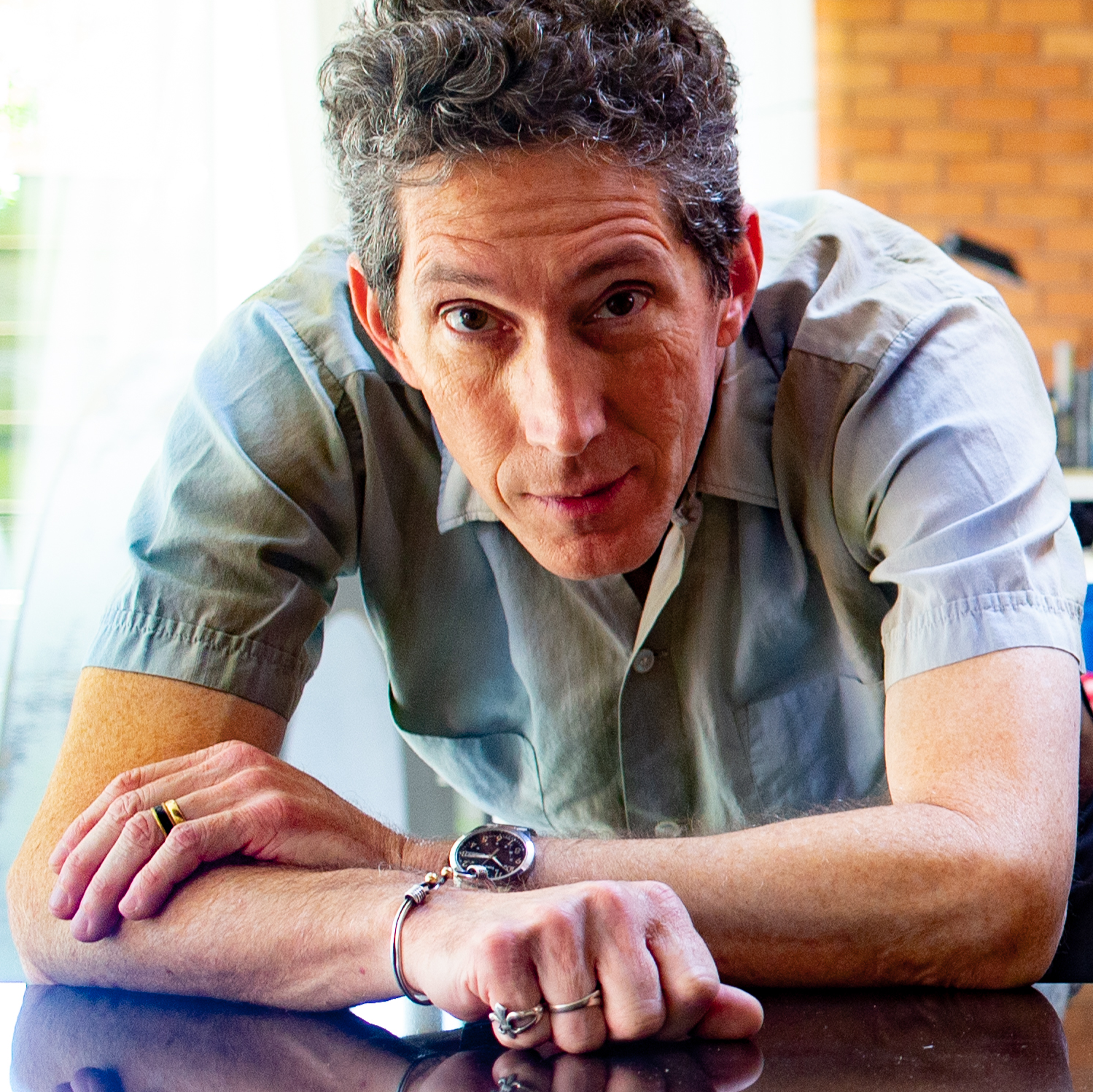
Well, it's a terrific guest we have here. I've known him for many years. He's a Grammy Award winning saxophone player, also plays flute, composer, professor of music at uno. He plays with the New Orleans Nightcrawlers, Muevolo with Margie Perez Otra, also with Charlie and the Tropicals and Voodoo Nouveau, many other bands. He did a four year tour of duty with the Marine Corps Band.
[00:19:29] Speaker C: Woo.
[00:19:30] Speaker A: Thank you for your service.
[00:19:31] Speaker C: You're welcome.
[00:19:32] Speaker A: Semper Fi is played or recorded with many bands. Galactic, Nicholas Payton, the Temptations, Charlie Hunter, Gatemouth Brown, Stanton Moore, among others.
[00:19:43] Speaker C: Did you get this off a Serbian website somewhere?
[00:19:46] Speaker A: Don't worry about where my, my intelligence comes from, okay? Without. We're going to get to all that and much more. But without further ado, the great Mr. Brent Rose.
[00:19:54] Speaker C: Thank you, thank you, thank you, thank you for having me.
[00:19:56] Speaker A: Guys, thanks for coming. Glad we could line it all up. You, I know you, like Manny, are busy with the. The education of the. The. The. The unformed minds of our youth.
[00:20:06] Speaker C: Yes.
[00:20:07] Speaker A: And how's that going?
[00:20:09] Speaker C: It's tough.
I'll bet it's generationally. Generationally tough.
It's gotten more difficult to teach because they're fucking idiots. Yeah. I mean, that would be one way to put it.
[00:20:22] Speaker B: They're fucking idiots.
[00:20:23] Speaker C: I'm hoping that it comes back around.
[00:20:24] Speaker A: Okay. They have less capacity to concentrate than ever before. They're. They're more distracted.
[00:20:30] Speaker C: I mean, I blame their parents, but. Yeah, there's. There's like a. There's a entitlement to students that we didn't have growing up.
[00:20:38] Speaker A: It's crazy.
[00:20:38] Speaker C: Yeah.
[00:20:39] Speaker A: And for those people, it's way too late. They're broken for their whole lives.
[00:20:44] Speaker C: You think so?
[00:20:45] Speaker A: Oh, absolutely.
[00:20:46] Speaker B: I mean, well, there's always one diamond in the rough.
[00:20:49] Speaker A: Sure. Well, yeah, no, it's not all people of that age because, like, my son, a bunch of his friends are all very solid. And, you know, I have great hope for the future from seeing some of these people, but a lot of them. And it's tough.
[00:21:03] Speaker C: It's tough. Yeah. I get a lot of students that just don't.
They don't really want to put in the work, and they tell you how busy they are, and they have no idea how not busy they are. You have so much free time.
What are you busy doing?
[00:21:18] Speaker A: Right.
[00:21:18] Speaker C: Put in some time. I can't. There's no secret to becoming a great musician other than putting in the time.
[00:21:24] Speaker A: Yeah. Or doing anything.
[00:21:25] Speaker C: Yeah.
[00:21:25] Speaker A: Or doing good at anything, but. All right, we'll get back to that. But let's go back with you a little bit. Okay. So are you from New Orleans? I'm not sure.
[00:21:37] Speaker C: No, I grew up. Actually. I was born in Southern California, close to Manny.
I was in Mission Viejo, which is in Orange County. This was a city that was settled by Philip Morris.
[00:21:50] Speaker B: Orange Curtain. You were in the Orange Curtain?
[00:21:52] Speaker C: Philip Morris cigarettes, which my dad worked for.
[00:21:55] Speaker A: Okay.
[00:21:56] Speaker C: And then right after Mount St. Helens had erupted in Washington State, we ended up moving up to Seattle, and I graduated high school.
[00:22:06] Speaker B: For your health.
[00:22:07] Speaker C: For my health.
[00:22:08] Speaker B: Yeah.
[00:22:08] Speaker C: We were going there for our go
[00:22:09] Speaker B: up to exploding volcano.
[00:22:11] Speaker C: It was after, you know, it had
[00:22:13] Speaker B: settled, the dust had settled, and the cars were being washed.
[00:22:17] Speaker C: I will say this, the Northwest has a great music culture in terms of high school, big bands.
[00:22:24] Speaker B: Yeah. When did you move from Orange county to Washington?
[00:22:28] Speaker C: I was 8.
[00:22:28] Speaker B: So this would have Been. So you weren't really a Californian. You were just eight years in California.
[00:22:34] Speaker C: Eight years in California.
[00:22:35] Speaker A: Now, had your family been in that area for some time?
[00:22:38] Speaker C: No, I'm not really sure why we ended up there.
[00:22:40] Speaker A: Okay, Are you Mexican and some. Some derivation? No. Okay.
[00:22:45] Speaker C: Just good friends with Eric Lucero, but
[00:22:47] Speaker A: that's what I'm saying. I know you're playing all these Latin bands. I wasn't sure.
He's not Mexican, but anybody can change their name.
[00:22:55] Speaker C: Anybody can change a name.
[00:22:56] Speaker A: Yeah.
[00:22:57] Speaker C: Rosenberg.
Rosen.
[00:23:00] Speaker B: Rosen.
[00:23:01] Speaker C: Yeah.
[00:23:01] Speaker A: Was that.
[00:23:02] Speaker B: That was family wine.
[00:23:03] Speaker C: No, I think it was Rose. I think it's Irish, actually.
[00:23:05] Speaker A: Oh, okay. There you go.
[00:23:06] Speaker C: Yeah.
[00:23:06] Speaker A: Irish Rose.
[00:23:07] Speaker C: Irish Rose.
[00:23:08] Speaker B: Keep telling yourselves.
[00:23:09] Speaker C: Sure, I'm gonna keep telling myself that.
[00:23:11] Speaker A: So at what point do you start playing saxophone?
[00:23:15] Speaker C: So this is great. This is actually an interesting story.
I was in sixth grade and went to my sister, who we still don't get along to this day.
I went to her middle school Christmas concert, and there was this kid sitting there warming up for the concert and he had his sunglasses on and he was playing this saxophone. I was like, that's what I want to do. That guy looks fucking cool. I want to be that guy.
[00:23:43] Speaker B: Steve Kim.
[00:23:44] Speaker C: I was in sixth grade, and so
[00:23:46] Speaker B: maybe he was a little older, seventh grade or something.
[00:23:50] Speaker C: Seventh and a half grade, if that's a thing.
[00:23:52] Speaker A: You saw that as a path forward for you?
[00:23:54] Speaker C: Yeah. And I got this instrument the summer before seventh grade. I put it together. I had the mouthpiece on upside down, and I started blowing in it, and it immediately made a sound, which was important to me because my sister chose the flute.
And if you know anything about the flute, it takes a long time to figure out how to get a sound out of that.
[00:24:15] Speaker A: Right. That's a good thing about the sound. That was my first instrument as well.
[00:24:18] Speaker C: Because your dad was a saxophone player. Great saxophone.
[00:24:21] Speaker A: So that. And that is a good thing about the horn is that you can get a sound right away, right away.
[00:24:27] Speaker C: And.
And not too long after that, I realized that you could make yourself feel better by playing that instrument.
[00:24:35] Speaker A: Nice.
[00:24:35] Speaker C: You know what I mean? Like, if shit was going bad, if you were having a bad day, if your Trump phone broke and they wouldn't repair it, like you could play your saxophone.
[00:24:44] Speaker B: Now, your sister, does she still play the flute?
[00:24:46] Speaker C: No, thank God.
[00:24:47] Speaker B: Okay.
[00:24:48] Speaker C: Yeah, she's playing and she doesn't listen to podcasts.
[00:24:50] Speaker B: So we can talk about it.
[00:24:51] Speaker C: Oh, good.
[00:24:51] Speaker A: Okay.
[00:24:53] Speaker B: We talk shit about it.
[00:24:54] Speaker C: We can talk shit about it.
[00:24:55] Speaker A: Yeah.
So, yes. And it is self soothing. To oh my gosh. And you know, I've had a string of students that don't that always wash out, you know, it hasn't been many, so. But you know, it's. I find it's hard to get people to practice.
[00:25:13] Speaker C: It really is.
[00:25:14] Speaker A: And because they don't, they don't want to ever commit to it enough to learn. What's fun about practicing?
[00:25:22] Speaker C: Yeah.
[00:25:23] Speaker A: And I try to trick them into doing it. And I'll say, like you said, they'll say, I didn't have any time this week. And I would say, well, could you find five minutes a day? And they have to go, yes. And I say, well, could you find 10? They have to say yes. And I said, well, if you can find 15 minutes a day to play the instrument, you will get better.
[00:25:43] Speaker C: Right.
[00:25:44] Speaker A: And with the idea being that if you play for 15 minutes and you do it every day, at some point you're going to play longer than that because you're going to start digging, you know, it's going to be.
But so.
[00:25:53] Speaker B: And they buy this.
[00:25:55] Speaker A: No, no, they don't. They don't.
[00:25:58] Speaker C: Nothing changes.
[00:25:59] Speaker B: Yeah.
[00:25:59] Speaker A: Then the dad calls you up after that and says, hey, he doesn't want to take lessons anymore.
[00:26:04] Speaker C: Yeah. Or they call you up and tell you why their son didn't have 10 minutes to practice.
[00:26:08] Speaker A: Right.
[00:26:08] Speaker C: They make an excuse for him.
[00:26:10] Speaker A: Okay.
[00:26:11] Speaker C: Jesus Christ.
[00:26:12] Speaker A: Like, man, I remember one time when I showed up for a piano lesson and I was not prepared and I felt so bad. I was in tears. Not because anybody was screaming at me, just because I understood how I had failed in my assignment for the week. And you know, I was just so ashamed of it that I.
It really made an impression on me.
[00:26:37] Speaker C: Yeah. Yeah.
[00:26:38] Speaker A: Anyway, so you figured that out early and so you were self driven as a younger musician.
[00:26:45] Speaker C: I figured out that I could, I could use the saxophone to escape life, if that makes sense.
[00:26:50] Speaker B: But you thought this guy was cool. And we talked about this last week about cool. What is cool? You know, with that chick last week.
[00:26:59] Speaker A: Well, he actually played on a record.
[00:27:02] Speaker B: Yeah. Lee Marvin's daughter.
[00:27:04] Speaker C: Right.
[00:27:05] Speaker B: We talked about cool. Yeah.
What is cool? So at that age you're looking at anything that's going to be cool, but then you realize later in life, well, he wasn't so cool, was he?
[00:27:17] Speaker C: I would have no idea.
[00:27:18] Speaker B: Yeah. Why not?
[00:27:20] Speaker C: I don't know him.
[00:27:20] Speaker B: Oh, you don't know him.
[00:27:22] Speaker A: But he seemed cool.
[00:27:23] Speaker B: He seems cool. Did he smoke cigarettes?
[00:27:26] Speaker C: Not yet, but I'm sure he does.
[00:27:28] Speaker B: Okay. And he was Asian, right?
[00:27:29] Speaker C: He Swims with turtles.
[00:27:31] Speaker A: Okay.
[00:27:31] Speaker B: Okay. Did he with turtles?
[00:27:33] Speaker C: He shot with the turtles. Okay. Wow. Oh, man.
[00:27:39] Speaker A: So. So you move up to Seattle area
[00:27:42] Speaker C: and we're in Seattle. Yeah.
[00:27:43] Speaker A: Oh, that's where it was. This is all happening.
[00:27:45] Speaker B: Isn't that the highest suicide rate in the country? Seattle? Because it rains so much?
[00:27:50] Speaker C: Well, I mean, there's Kurt Cobain, but I think that's it.
[00:27:52] Speaker B: Oh, really? He's the only one who blew his brains out.
[00:27:55] Speaker A: Now, now, how. How old are you compared to Kurt? You're younger than me and Manny.
[00:28:00] Speaker C: I'm 53.
[00:28:01] Speaker A: Okay. You're 10 years younger than me.
[00:28:03] Speaker C: Us.
[00:28:03] Speaker A: And how old would Kurt have been now? Probably 45.
[00:28:07] Speaker C: Yeah, he's younger than us.
[00:28:08] Speaker B: Yeah.
[00:28:08] Speaker A: Yeah. Not. Not by much, though.
[00:28:10] Speaker C: I missed grunge.
[00:28:11] Speaker A: Yeah.
[00:28:12] Speaker C: I graduated in 1990 from high school, and I was gone right after that.
[00:28:16] Speaker A: Okay.
[00:28:16] Speaker C: And I think 91 was like.
[00:28:18] Speaker A: But, like, you miss it?
[00:28:19] Speaker B: Like, you miss a friend or you miss it? You just missed it.
[00:28:22] Speaker C: No, I. I enjoy it.
[00:28:24] Speaker B: Oh, you enjoy it.
[00:28:25] Speaker C: Yeah.
[00:28:25] Speaker A: But you weren't there for it.
[00:28:26] Speaker B: Not too much saxophone playing and grunge.
[00:28:29] Speaker C: There should be.
[00:28:30] Speaker B: Yeah.
[00:28:30] Speaker C: I think there's a market for it.
[00:28:32] Speaker B: That's your new market, dude, right there. Bring back the grunge on the saxophone.
[00:28:37] Speaker C: Serbian grunge. Serbian instrumental grunge.
[00:28:41] Speaker B: There you go, man. It's like a Kenny G. Smells like teen
[00:28:47] Speaker A: turtle.
[00:28:49] Speaker C: Teenage turtle.
[00:28:52] Speaker A: I'm gonna have to put a moratorium on that.
[00:28:56] Speaker B: I like it.
[00:28:58] Speaker A: Jesus Christ.
[00:28:59] Speaker C: All right, Renee's gonna stop.
[00:29:00] Speaker A: That's all right.
[00:29:01] Speaker B: Don't move. He'll edit it out.
[00:29:03] Speaker A: Yeah. No, so. So you're. You're playing in the school band up there. Tell us what that's like. You said they have a strong academic band program.
[00:29:12] Speaker C: Yeah, yeah. Since. Since.
[00:29:14] Speaker A: And also, it's a social thing. You. When you're in the band and you know, you have status based on your. Your mastery of the instrument, and so you have control over that. And it's. Girls.
[00:29:27] Speaker C: Are there band girls? They're the best.
[00:29:32] Speaker A: Go on.
[00:29:32] Speaker C: My first week of school, when bands started in seventh grade, I realized that most of my friends that were in the band had been playing since fourth grade. Fourth, fifth, and sixth grade. And I came home in tears.
I said, everybody knows how to read music. I don't know anything about music. I don't know how to do anything.
And so my parents got me lessons, and I just had a natural inclination towards the instrument.
And I grew very rapidly over that first year and was probably the best saxophone player in a small Pond.
But, you know, I had some ability and I really loved. I loved the music. It was an escape for me from like an interesting childhood.
[00:30:19] Speaker A: Yeah.
[00:30:20] Speaker C: But I'll say this. Because of educational rigors, I had to go to school before school. Normal school started.
7th grade, 8th grade, all the way through 10th through 12th grade.
So my commitment was getting up at 5:30 in the morning and going to school every day for 6:30.
[00:30:46] Speaker A: Right.
[00:30:46] Speaker C: So we could have a big band rehearsal. Or in middle school, it was what they called early morning pe.
If you wanted to be in the. In the jazz band, you had to go to school before to take P.E.
[00:30:59] Speaker A: so you could. So you had a free period to get.
[00:31:00] Speaker C: So we had a free period. And then in high school, they didn't have time for the big band, so we had to go in before school.
[00:31:11] Speaker A: Okay.
[00:31:11] Speaker C: And rehearse at 6:30.
[00:31:13] Speaker A: Right, right. Sure. I remember doing that in junior high school. Sectionals.
[00:31:17] Speaker C: Sectionals, yeah.
[00:31:18] Speaker A: An hour before school started. Yeah.
[00:31:20] Speaker C: Yeah.
[00:31:21] Speaker B: You still don't know why you moved to Seattle?
[00:31:27] Speaker C: That's a good question. I think. I think, you know, my. My father was still working for Philip Morris Cigarettes at that point and, and transferred up there.
[00:31:34] Speaker B: But he was a sales man.
[00:31:37] Speaker C: Yeah, sales guy. Go to the mom and pop, set up the little displays.
We'd get all the free duffel bags, all the swag.
[00:31:47] Speaker B: Now, how much were cigarettes back then?
[00:31:49] Speaker C: They were less.
[00:31:50] Speaker B: Well, yeah, they were less.
[00:31:52] Speaker C: They were less. I quit smoking cigarettes 18 years ago and they were $5 a pack when you quit smoking?
[00:31:58] Speaker A: Yeah, yeah, yeah. They're probably. There weren't that much. I quit smoking 20 years ago, but when I started smoking, I would buy them out of the machine at the Jefferson Orleans for 50 cents a pack.
[00:32:09] Speaker C: A pack?
[00:32:10] Speaker A: 50 cents?
[00:32:11] Speaker C: Yeah, two quarters. I hear they're like 10, 12, $15 a pack now.
[00:32:16] Speaker A: Yeah, yeah, I saw it.
[00:32:18] Speaker B: Look here, it's 15 a pack.
[00:32:21] Speaker A: 15? Jesus Christ.
All right, well, that's a good thing.
[00:32:25] Speaker B: I remember there was a vending machine back at the VA in Westwood because I used to volunteer to hang out with the vets when I was in high school. There was a vending machine. It's like 50 cents for a pack of cigarettes. But it also gave you a free book of matches.
[00:32:42] Speaker A: Yes.
[00:32:43] Speaker B: Is that crazy? Going nuts Gave you a free book of matches. But we had to keep them away from the vets. The matches.
[00:32:51] Speaker C: The matches.
[00:32:52] Speaker B: Give them the cigarettes.
[00:32:53] Speaker C: No matches.
[00:32:54] Speaker B: No match.
[00:32:54] Speaker C: He didn't want them smoking.
[00:32:56] Speaker A: Shell shot.
[00:32:56] Speaker B: No. We didn't want him having flashbacks.
[00:33:00] Speaker A: Fire in the hole.
[00:33:01] Speaker C: Jacob Slatter.
[00:33:03] Speaker A: Right, right, right, right, right.
[00:33:04] Speaker B: Enzio, Enzio.
[00:33:05] Speaker C: Yeah.
[00:33:09] Speaker A: So.
[00:33:10] Speaker B: So you.
[00:33:10] Speaker A: You're playing in every ensemble that you can. You're playing in the jazz band, the concert band, the big band.
[00:33:18] Speaker C: Yeah, I. I actually, I was. I was dating a young lady who had a.
[00:33:24] Speaker B: She played the flute.
[00:33:25] Speaker C: She played the flute.
She played the cello, actually. But she had a friend that had a gospel band called Songs of Solomon.
And so here I am, I'm 16, I'm a junior in. In. In northern Seattle, and I start playing with this gospel band called Songs of Solomon. It's four sisters, all Latinos, and then the band. And I was this kid that was just in the band, and we were playing these inner city churches in Seattle. I had never seen this. I mean, I grew up in the burbs, Right. You know, I was like Journey Eagles, like, white kid from the suburbs. And I met these, like, all black churches where there's two white people in the audience, a crazy white lady, and my dad, who went to every gig I ever played, you know, when he was able to.
[00:34:16] Speaker B: To sell cigarettes, he went.
[00:34:17] Speaker C: Would sell the cigarettes.
[00:34:18] Speaker B: Yeah.
[00:34:19] Speaker C: And there was a.
[00:34:20] Speaker B: You know, it was his own. He had one of those coin things.
[00:34:24] Speaker C: He had a thing. Yeah.
[00:34:26] Speaker B: Out his voice.
[00:34:27] Speaker A: I love those things.
[00:34:28] Speaker C: Yeah, you grow up rapidly in that and you learn about soul.
[00:34:32] Speaker A: Sure.
[00:34:32] Speaker C: You know, and. And so must have been great guys
[00:34:35] Speaker A: you were playing with.
[00:34:36] Speaker C: I mean, it was amazing. And I don't.
[00:34:39] Speaker A: Organ player. What was the band like?
[00:34:41] Speaker C: There was guitar, there was drums, there was bass, there was keys. There wasn't an organ player. It wasn't that.
[00:34:46] Speaker A: Right.
[00:34:47] Speaker C: And then these four sisters who were singing, and I didn't know anything about anything, but I knew how to listen and play along, and so I just did that.
And, man, what a great experience to grow up.
You know, I got, I don't know, over a year of that.
[00:35:03] Speaker A: Right.
[00:35:04] Speaker C: Experience before I even started considering if I wanted to be a musician for real. 16 years old, 17 years old, you
[00:35:13] Speaker A: weren't convinced by that time. You weren't sure.
[00:35:15] Speaker C: I mean, do. Is anybody sure at 16 what they want to do?
[00:35:18] Speaker A: I knew I was going to do this when I was 10 years old.
[00:35:20] Speaker C: Yeah, well, I mean, your dad did
[00:35:21] Speaker A: it, so you had no. He. He did not want me to do it.
[00:35:24] Speaker C: He did not want you to do it. Okay.
[00:35:25] Speaker B: Yeah. You know, Father's Day coming up.
Yeah, I know Father's Day is coming up. I know he's not going to get the blessing from his dad.
[00:35:33] Speaker A: Well, you know, my father looking for It.
[00:35:35] Speaker B: For each a lifetime.
[00:35:37] Speaker A: Still, I've given up on that long.
[00:35:39] Speaker C: Renee Senior.
[00:35:40] Speaker A: Not holding out for any of that. I've made my peace with all of you.
[00:35:44] Speaker C: Okay, okay, okay.
[00:35:45] Speaker B: Ain't gonna happen.
[00:35:47] Speaker A: No, no, no. Well, you know, at some point. That's the thing about having children of your own is it's an opportunity to heal all of those traumas. Because when you have a relationship with your child that you like, it's kind of fixes whatever.
Again, whatever Ingram was there.
[00:36:07] Speaker C: Sure.
[00:36:08] Speaker A: From, you know, your relationship with your partner.
[00:36:10] Speaker B: Keep telling yourself that.
[00:36:11] Speaker A: I feel like that can.
[00:36:12] Speaker C: Or it could just repeat itself.
[00:36:14] Speaker B: It could.
[00:36:14] Speaker A: It could repeat itself. In my case, I. I think all. It's. It's been very therapeutic. Now, you mentioned something. You were saying an interesting family, but yet your father was there for everything. So obviously you had a very attentive father.
[00:36:27] Speaker C: Oh, he's the best. Yeah, he. He doesn't travel anymore, but man, he was such a supportive cat. And my musical ability comes from his father.
[00:36:37] Speaker A: Yeah.
[00:36:38] Speaker C: And his dad just had the ability to pick up things and play them.
[00:36:41] Speaker A: Yeah.
[00:36:41] Speaker C: You know, and.
[00:36:42] Speaker A: Right.
[00:36:42] Speaker C: And. But he was a coal miner, Your grandfather. My grandfather was a coal miner. He left. Left the coal mines. Got married at 16.
[00:36:51] Speaker A: Wearing pencil. Pennsylvania.
[00:36:53] Speaker C: Kentucky.
[00:36:53] Speaker A: Kentucky.
[00:36:54] Speaker C: Yeah. And then, you know, so he married his cousin. He married. He married my grandmother. I'm not sure if they're cousins, but the people that could be. Yeah, I never asked.
[00:37:06] Speaker A: Sure.
[00:37:06] Speaker C: That's a good question.
[00:37:07] Speaker B: Too late now.
Too late now.
[00:37:11] Speaker A: Oh, well, it doesn't really matter. You seem fine. You don't seem to be carrying any mutations.
[00:37:16] Speaker C: There's a twitch. It's fine.
[00:37:18] Speaker A: We all have that.
[00:37:19] Speaker C: We all have that.
[00:37:20] Speaker A: Is. That's a musician.
[00:37:20] Speaker C: It's a musician thing.
[00:37:22] Speaker A: That's all. It's the Tourette syndrome. You know, Tourette syndrome is a much higher incidence among musicians.
[00:37:28] Speaker C: One of my favorite shows right now.
[00:37:30] Speaker A: What?
[00:37:30] Speaker C: There's a show by this girl that has Tourette's.
Balin out Loud or something.
[00:37:35] Speaker A: Oh, really?
[00:37:36] Speaker C: She's awesome.
[00:37:37] Speaker A: Oh, well, you know, we. We talked about that guy with the Tourettes on the.
The. The BAFTA awards.
[00:37:45] Speaker B: But my hero, that guy.
[00:37:48] Speaker A: I didn't have that kind of Tourette's.
But I think again, like you were talking about before, that musicians that you have a higher incidence because people that are. That already have that kind of brain thing.
Music is a soothing thing for it. So we find that we go, oh, this is something that calms it down.
[00:38:13] Speaker C: Right, Exactly.
[00:38:14] Speaker A: Let me do more of this.
[00:38:15] Speaker C: Yeah. I don't know about you, but I get irritated when I don't get enough practice in.
[00:38:20] Speaker A: Yeah.
[00:38:20] Speaker C: You know, like if. If a couple days go by and I just haven't had any time on my horn and I'm not talking about the gigs.
[00:38:26] Speaker A: Right.
[00:38:26] Speaker C: Just some time to myself and music.
[00:38:28] Speaker A: Okay.
[00:38:29] Speaker C: I don't know. There's a tick inside me that's like, ah, I know.
[00:38:33] Speaker A: Well, that's, you know, that.
And again, I love when people. When musicians say, oh, yeah, you know, I'm a little bit ocd and it's like, that's a feature. That's how you became good at this. If you didn't have that, you would have never put in the time required to master this.
[00:38:51] Speaker C: Yeah, I think it's the same for athletes, right? Yeah. You know, those cats that become really good athletes have that same tick where they just push and push and push.
They're so hard on themselves, you know, like, oh, I sucked on that gig or whatever. Like. Yeah. I don't know.
[00:39:10] Speaker A: Okay, well, so. So let's see. Where are we? Yeah, you know, I want to get to your. Your post high school life here. Sure. But I think right now. Manny, it's about that time.
[00:39:21] Speaker B: Yeah, I need a refill. We'll be right back. Trouble.
[00:40:50] Speaker A: And we're back.
[00:40:51] Speaker B: We are back.
[00:40:52] Speaker A: Back with Mr. Manny Chevrolet.
[00:40:53] Speaker B: We're better than Ezra.
[00:40:55] Speaker A: I am Renee Coleman, back with our guest, Mr. Brent Rose.
And yeah, it's a lively Tiki Tuesday here tonight.
[00:41:03] Speaker C: They just opened at 7, right.
[00:41:05] Speaker A: Actually, I think on Tiki Tuesday during the summer they open at 5:30.
[00:41:09] Speaker C: Oh, okay, that makes sense. Yeah, it's better.
[00:41:11] Speaker A: Jump on.
[00:41:12] Speaker B: So let. Yeah, let the degenerates in earlier.
[00:41:15] Speaker A: Sure. Yeah.
[00:41:15] Speaker C: Yeah, they are here.
[00:41:17] Speaker B: Whatever happened to that crack whore across the street?
[00:41:20] Speaker C: I think she moved to Serbia.
[00:41:22] Speaker A: Yeah, they might have deported her.
[00:41:24] Speaker B: I don't know. I don't know.
[00:41:25] Speaker A: Yeah, that was her to her home or home country.
[00:41:29] Speaker B: A few weeks ago. There was some crack whore across. Oh, nice.
[00:41:32] Speaker C: Yeah. Friend of yours?
[00:41:34] Speaker B: Yeah. What's that?
[00:41:35] Speaker C: A friend of yours?
[00:41:36] Speaker B: No, no, no, no, no, no, no.
[00:41:38] Speaker A: Not yet.
[00:41:39] Speaker B: She was. Was not a friend. She was family.
[00:41:41] Speaker A: Yeah.
[00:41:44] Speaker B: Come on, man.
[00:41:45] Speaker A: Yeah. When you're Snake and Jake's your family. And speaking of Snake and Jake's, we have three kind of winch looking.
[00:41:53] Speaker C: There's a pirate thing going on, which
[00:41:54] Speaker B: is of Eastwood, man.
[00:41:55] Speaker A: Okay.
[00:41:58] Speaker B: I'd let any one of them cast a spell on me.
[00:42:00] Speaker A: Okay. All right.
[00:42:02] Speaker B: Look at that belly right there.
[00:42:03] Speaker C: Swing Guardium Lev.
[00:42:06] Speaker A: Okay.
[00:42:06] Speaker B: That man.
[00:42:07] Speaker A: All right, well, I know Brent is familiar with the podcast to some degree. And he may, may or may not know. This is a listener supported operation. And to that end, we have a Venmo and PayPal links in the show, notes of every show, as well as the Facebook page. And we have a. An old supporter, I mean, a longtime supporter, the great Mr. Bill Pachette, Bill Pichet.
And he supported us through the Venmo. We have a new face showing up, Michael Pineau.
And he's supporting us through the PayPal. So we got.
[00:42:43] Speaker B: Thank you, Michael.
[00:42:44] Speaker A: Yeah, Michael and Bill. Thank you so much.
[00:42:47] Speaker B: And as always, would Michael be able to pay for horrors?
[00:42:52] Speaker A: Well, I mean, you know, the money is fungible. You can use it for whatever you want.
[00:42:56] Speaker B: You know, look at the rack on this.
[00:42:58] Speaker A: Not earmarked.
Okay. Well, I think. I think these girls are. I don't think they're working girls. I think they're just regular girls, man.
[00:43:06] Speaker C: Is this where editing comes into play?
[00:43:10] Speaker B: I think you just go get it through your head.
[00:43:12] Speaker A: Sure, sure, sure.
Well, anyway, we also have the. The link for the Patreon page there. We have a handful of patrons that are supporting us week in and week out.
And also the link to the Troublemen podcast. T shirts.
[00:43:25] Speaker B: Oh, yeah.
[00:43:26] Speaker A: And I would say, when's the last
[00:43:28] Speaker B: time we sold a T shirt?
[00:43:29] Speaker A: We sold a T shirt.
[00:43:30] Speaker C: I'm buy a T shirt.
[00:43:32] Speaker A: There you go. They're available in all sizes and colors, men's and. And ladies styles.
[00:43:37] Speaker C: I'll take a ladies.
[00:43:37] Speaker A: Okay, sure.
And what else? Follow us on social media, Instagram, Facebook and rate, review and subscribe to the podcast wherever you're listening. Listening to it. Give us five stars. Helps us a lot. Costs you nothing. That's how it gets us to the top of the charts in. Sir, you gotta help keep us up there.
[00:44:00] Speaker C: We need to learn some Serbian before this is over. I think we got to get a few words in.
[00:44:04] Speaker A: Okay. You know, English is challenging enough.
[00:44:06] Speaker C: It really is.
[00:44:07] Speaker B: Yeah.
[00:44:07] Speaker A: So.
And it seems to be enough of that for now. Let's get back to our guests.
[00:44:14] Speaker B: Nobody said life is fair.
[00:44:16] Speaker A: No.
[00:44:16] Speaker B: Except for that Serbian guy who worked at the fair. He said life is fair.
[00:44:20] Speaker C: Right.
[00:44:21] Speaker A: Okay.
[00:44:21] Speaker C: Right.
[00:44:22] Speaker A: All right.
[00:44:22] Speaker B: Crazy going.
[00:44:23] Speaker A: That makes sense. It's. It's a simple. Those simple affirmations they call them.
[00:44:28] Speaker C: Yeah.
[00:44:28] Speaker A: You know, that's. Those are good to hold on to.
[00:44:30] Speaker C: Simple truth and a life lesson.
[00:44:32] Speaker A: Yeah, yeah, yeah, yeah. Life is fair.
[00:44:34] Speaker B: Life is not fair.
[00:44:36] Speaker A: Except if you're working at the fair, then life is.
[00:44:38] Speaker C: If you're swimming behind a giant turtle, life Is probably not fair.
[00:44:41] Speaker A: All right.
[00:44:42] Speaker B: The life of a carny is horrible.
[00:44:44] Speaker A: Yeah, yeah, yeah, yeah. But, you know, sometimes you got to go on the run and, you know, it's. It's a good place to disappear. They don't ask many questions.
Carnival.
[00:44:53] Speaker B: Remember that movie with Jody Foster called Carney?
[00:44:57] Speaker A: I do, yeah.
[00:44:58] Speaker B: Was that good?
[00:44:58] Speaker A: I can't remember seeing.
[00:45:00] Speaker B: It was. Okay. What's his name? The guy who played Buddy Holly was also in it.
[00:45:05] Speaker A: Was he? Or was it the other one?
[00:45:06] Speaker C: One.
[00:45:06] Speaker B: And Robbie Robertson was in it. Was he from the band?
[00:45:10] Speaker A: Okay.
[00:45:11] Speaker B: One of the worst people I've ever met.
[00:45:12] Speaker A: Him not known as a great actor.
[00:45:14] Speaker B: Yeah, he's a jerk.
[00:45:15] Speaker C: But anyway, his memory from minutia is pretty. Pretty stout.
[00:45:19] Speaker A: Oh, no, man.
[00:45:21] Speaker B: Millions of elements got it together.
Well.
[00:45:24] Speaker A: But back to you, the great Mr. Brent Rose. So. So we're gonna try to move a
[00:45:29] Speaker C: little bit more quickly here getting out of high school.
[00:45:32] Speaker A: So you go straight into the marines from the high school?
[00:45:36] Speaker C: I did. I had a band director that said, hey, look, I know you don't have money for school.
And a guy that had gone to school before me at that same high school had gone into the Marine Corps band.
And so I didn't know any better, but I ended up going into the Marine Corps band and getting stationed in New Orleans.
[00:45:59] Speaker A: Oh, really?
[00:46:00] Speaker C: Yeah.
[00:46:00] Speaker B: Now, wait a minute. When you join the marines and you say, I want to play music, they say, okay, you're gonna play. They don't just say, no, you're going to boot camp and you're gonna go to Lebanon. Something like that.
[00:46:11] Speaker C: I went to boot camp.
[00:46:12] Speaker B: Yeah, I know. Well, you have to.
[00:46:14] Speaker C: You have to go to boot camp. And then I went to combat. You're in the band, and I was in the band. And this is. This is probably the only thing I remember.
[00:46:21] Speaker B: What if they said, you're not in the band? We know you're a saxophone phone fl.
[00:46:25] Speaker C: No, they couldn't. They. They had.
[00:46:26] Speaker B: That was part of the deal.
[00:46:27] Speaker C: That was part of the deal.
[00:46:28] Speaker B: And I remember because there's no more draft.
[00:46:31] Speaker C: No, no, there's no draft.
[00:46:33] Speaker B: It's coming back, though.
[00:46:34] Speaker C: In November, I become a marine. I finish. I finish boot camp, and I go to combat training. And they're reading off everybody's job description.
[00:46:41] Speaker B: Yeah.
[00:46:42] Speaker C: And it's. And it's 3311. 3311. 3311. Which is just a rifleman, a grunt.
[00:46:50] Speaker B: Well, it's a Johnson. 33. 11.
[00:46:51] Speaker C: Johnson.
[00:46:52] Speaker B: Yeah. Smith. 3311.
[00:46:53] Speaker C: Yeah. Everybody. They get to Rose, and they go, 55, 37.
And the guy in charge says, private Rose, what in the hell is 5537? I said, sir, saxophone, sir. Oh, we got us a saxophone player. And I got the. Kicked out of. For about two weeks before I got to music school.
[00:47:15] Speaker B: It was like a full metal jacket.
[00:47:17] Speaker C: It was kind of like that. I didn't go crazy.
[00:47:20] Speaker B: He said to Matthew Modine, you know, said, you're not a writer. You're a killer.
[00:47:25] Speaker C: You're a killer.
[00:47:26] Speaker B: Yeah, exactly.
[00:47:27] Speaker C: But I was a. I was a.
[00:47:29] Speaker B: You were. Saxophone. You were not a saxophone player. You're a killer.
[00:47:32] Speaker A: Killer saxophone player.
[00:47:33] Speaker B: Now, could you kill someone if they said, okay, drop the sacks down and pick up the rifle and kill. No, you couldn't do it.
[00:47:42] Speaker C: I couldn't do it.
[00:47:43] Speaker B: What kind of Marine are you?
[00:47:45] Speaker C: Yeah.
[00:47:45] Speaker A: So you never got into the shit? You never. You're never anywhere overseas?
[00:47:51] Speaker C: Never had to go? No, we. We. I came to New Orleans.
[00:47:54] Speaker A: Straight to New Orleans.
[00:47:56] Speaker B: What year is this?
[00:47:57] Speaker C: I did combat training, and in then, August of 1991, I arrived in New Orleans.
[00:48:02] Speaker A: And you did your whole tour here?
[00:48:04] Speaker C: And I finished my three years in New Orleans.
[00:48:06] Speaker A: We never had to go.
[00:48:08] Speaker C: Never went anywhere. I went. We traveled around the US Playing shows.
[00:48:12] Speaker A: That's what I'm saying. So you travel. So was. Did they have. I imagine they have, like, probably a traditional jazz component.
[00:48:18] Speaker C: That was the cool thing that kind of set me up for my career, was that There was about 50 musicians in the band. And out of those 50 musicians, we had a big band, a brass quintet, a jazz combo, a woodwind quintet, a rock and roll cover band, a concert band, and a marching band. And so we all had to do.
[00:48:41] Speaker A: Right.
[00:48:42] Speaker C: Everything.
[00:48:42] Speaker B: Did you do Mardi Gras every year?
[00:48:44] Speaker C: I marched in 150 parades.
[00:48:47] Speaker B: Did you practice that, too? You practice that? Tulane?
[00:48:50] Speaker C: Never.
[00:48:50] Speaker B: Oh. Because I know the week before Mardi Gras at Tulane, there's all these military bands practicing on campus.
[00:48:58] Speaker C: Oh, I don't know about that.
[00:48:59] Speaker B: Yeah. You don't know about that.
[00:49:00] Speaker C: That was before my time, I guess. Or after my time.
[00:49:03] Speaker A: Yeah. Yeah. Well, what was the Marine installation here?
[00:49:07] Speaker C: Where is NSA Algiers. It's now called Federal City. It's like General De Gaulle.
[00:49:12] Speaker A: Well, that. But that was Navy, right?
[00:49:14] Speaker C: Yeah, but we were, you know, Marine Corps is Department of the Navy.
[00:49:17] Speaker A: Oh, is it?
[00:49:17] Speaker C: Yeah, the men's department.
[00:49:18] Speaker A: Okay.
[00:49:22] Speaker C: Sorry.
[00:49:23] Speaker A: Sorry.
[00:49:23] Speaker C: Marine joke.
[00:49:24] Speaker A: Yeah. No, that makes sense.
I get it.
[00:49:28] Speaker C: We are Department of the Navy. Heavy. Yeah.
[00:49:29] Speaker A: I didn't realize that.
[00:49:30] Speaker C: Yeah, we were on that Base.
[00:49:32] Speaker A: I know Marines are. Are the. The animals of the. Of the military. They send you all in. You have a rifle. That's. Well, not.
[00:49:38] Speaker C: I had a saxophone.
[00:49:39] Speaker A: Yeah, you have a saxophone. They send you in with just a saxophone. That's. That's.
[00:49:43] Speaker C: That's some whole tone. Scale licks, maybe.
[00:49:46] Speaker A: Okay. All right. Well, those. Those are terrifying.
[00:49:48] Speaker C: They are terrifying.
[00:49:51] Speaker A: So. So. So you get all this exposure to all these great musicians. I know really good musicians play in the Marine Corps bands sometimes.
[00:50:00] Speaker C: Yeah.
[00:50:00] Speaker A: Yeah. So you're. But then you're also New Orleans. You're meeting New Orleans musicians.
[00:50:04] Speaker C: So this is actually an interesting story.
One of my mentors that was in the Marine Corps Band with me was Thaddeus Ford. And Thaddeus Ford is the brother of Lewis Ford, who was in Harry Connick Jr. S big band and plays with Preservation hall and still around today. And the son of Clarence Ford, who was in Fast Domino's Band.
[00:50:27] Speaker A: Oh, right, right.
[00:50:27] Speaker C: And so I get to New Orleans, and this guy Thaddeus, he's like. This guy has a little talent. He wants it.
He's like, you got to start listening to X, Y, and Z. He takes me out to see his dad playing at the Sheraton.
He had a regular gig at the Sheraton that was just him and a bass player or maybe the Marriott, but was somewhere downtown. And.
And I started to get my exposure into what, you know, I thought real music was compared to what I had been listening to in. In high school.
[00:50:56] Speaker A: Right on.
[00:50:57] Speaker C: You know.
[00:50:57] Speaker B: Were you listening to Gerald Ford?
[00:50:59] Speaker C: It was Gerald Ford mostly, but it was like Gerald Ford and Kenny G.
Side of David Sanborn.
[00:51:06] Speaker B: Oh, good.
[00:51:07] Speaker C: With a little bit of Count Basie.
[00:51:10] Speaker B: Oh, God. Horrible.
[00:51:11] Speaker C: It was horrible.
[00:51:12] Speaker B: Yeah.
[00:51:13] Speaker A: Resentment. That's the name.
[00:51:14] Speaker C: Yeah. Wodzinski.
[00:51:16] Speaker A: It's a big new Brzezinski. I was trying to come up with that name, but I took the event.
I'm no Manny Chevrolet.
So you get out of your four years without a scratch on you.
[00:51:30] Speaker C: I did. And no scratches.
[00:51:31] Speaker A: Nice.
And so you decide, well, I'm gonna stay in New Orleans. I've burned all my bridges elsewhere.
[00:51:38] Speaker C: Yeah. The last year or so that I was in that military band, I started going out to the jam sessions and. And every Monday night at Cafe Brazil, Steve Mas. Steve Mazikowski had a jam session.
[00:51:54] Speaker A: Okay. My first teacher.
[00:51:56] Speaker C: Yeah. And he was there every Monday night with this drummer, Charlie Achipenta.
[00:52:01] Speaker A: Charlie Achipenti.
[00:52:02] Speaker C: Achipenti.
[00:52:03] Speaker A: Yeah.
[00:52:03] Speaker C: You remember that guy?
[00:52:04] Speaker A: Well, not only do I know him, his.
His nephew Is Matt is. Well, no, Robert is our physician.
[00:52:12] Speaker C: Oh.
[00:52:12] Speaker A: He's a troubled men podcast physician.
[00:52:14] Speaker C: Matt Achipenti is a studied classical pianist that's also his nephew.
[00:52:19] Speaker A: Okay.
[00:52:20] Speaker C: I went to uno.
[00:52:21] Speaker B: All right.
[00:52:21] Speaker A: Did not know that. It's a big family. It's a lot of doctors and a couple of musicians.
[00:52:26] Speaker C: Matt is not one of those.
[00:52:27] Speaker A: All right, well, I knew Charlie. Yeah, I knew Charlie well. I played. Played a bunch of jobs.
[00:52:32] Speaker C: Was the first time I'd ever seen a plexiglass front in front of the drums.
[00:52:36] Speaker A: Oh.
[00:52:37] Speaker C: Was Monday nights at Brazil.
[00:52:38] Speaker A: Okay.
[00:52:39] Speaker C: Trying to keep the volume down on the drum set.
[00:52:41] Speaker A: Right, right, right.
[00:52:41] Speaker B: Keep the people from spitting at them.
[00:52:44] Speaker C: The Serbians mostly.
[00:52:47] Speaker A: So. So you, you're. You're getting in on the scene now. I know you're a member of this, this hot shot young band, Quintology. That got a lot of attention.
[00:52:56] Speaker C: Yeah, for sure.
[00:52:57] Speaker A: And how was that at this time period? Let's move forward to that. Is that.
[00:53:01] Speaker C: Yeah, we're in school now. I had gone. I had.
I was at uno. Right.
[00:53:07] Speaker A: And that's Steve Mazikowski was running the program then.
[00:53:10] Speaker C: Steve was there. Ellis Marsalis was still running the program.
And every summer they would send a band to Europe.
And we didn't make any money. We made $185 a week for three weeks.
[00:53:25] Speaker A: It keeps you in hash, which is.
[00:53:26] Speaker C: Which is enough for your hash and your shoes from Italy.
[00:53:31] Speaker A: They're cheap.
[00:53:32] Speaker C: Yeah, they're cheap.
But out of that band, the core of that band, Mark DeFlorio, myself, Charlie Denard, Brady Kish, we. We went on this European tour. Mark Rapp, trumpet player, that was here for a long time.
And, and we stayed together after that first Tour. This was 96 or 97, I forget now, but.
And started composing music, started playing gigs. We were at the Dragon's Den regularly.
[00:54:00] Speaker B: Right.
[00:54:01] Speaker C: And yeah, we had like a little push for a second as these young lions and what you're let.
[00:54:06] Speaker A: You're like in your, your mid-20s at this point?
[00:54:09] Speaker C: Yeah, sure.
[00:54:10] Speaker A: Yeah.
[00:54:10] Speaker C: 26, right?
[00:54:11] Speaker A: Yeah, yeah, yeah, yeah, yeah.
[00:54:13] Speaker C: I'm not 26 anymore.
[00:54:15] Speaker A: No, no, none of us are.
[00:54:16] Speaker C: Well, Manny or Benny, rather.
[00:54:20] Speaker A: But that's, that's the kind of the time period for me, it's like, well, I have to figure out if I'm going to be able to do this forever or if I'm gonna have to figure it out and maybe go take the civil service exam or something. Oh, really? Work for the post office.
[00:54:34] Speaker C: Yeah. And I was all in at that point.
[00:54:36] Speaker A: Okay, well, I Was all in. I mean, I wanted to do it.
[00:54:39] Speaker C: Yeah.
[00:54:39] Speaker A: I just thought, am I going to be able to make this happen?
[00:54:42] Speaker C: New Orleans is a terrifying place as a young musician because of the summer doldrums.
[00:54:48] Speaker A: Yes. It gets so.
[00:54:49] Speaker C: And there was six or seven years where I was like, I'm not going to be able to survive this.
[00:54:53] Speaker A: Yeah.
[00:54:53] Speaker C: I can't do it. It's just. There's no money in this.
[00:54:56] Speaker A: Yeah. It's so dead in the summertime.
[00:54:58] Speaker C: Yeah.
[00:54:58] Speaker A: Right. But. So you're in quintology. People are starting to. You know, you're in with the. Well, you know, if you're studying Eonos. Studying with Ellis. Studying with Steve Mazikowski.
[00:55:09] Speaker C: Yeah.
[00:55:10] Speaker A: You're. You're there in the. At that. I mean, when I was a kid, I went to Loyola because that was the only place that they had a jazz program. Like, sure, uno. I mean, Charlie Blanc had always run the program and they had good instructors, but it wasn't a jazz program.
[00:55:27] Speaker C: Right.
[00:55:27] Speaker A: Not. Not like it became under Ellis.
[00:55:30] Speaker C: Right.
And I had replaced Charlie eventually.
That's my lineage into, like, my teaching at uno.
[00:55:38] Speaker A: Charlie Block.
[00:55:38] Speaker C: As Charlie was leaving, I was coming in.
[00:55:41] Speaker A: Okay.
[00:55:42] Speaker C: Yeah, yeah.
[00:55:43] Speaker A: You know, Charlie played with my. My father's, I'm sure.
[00:55:45] Speaker C: Yeah.
[00:55:45] Speaker A: Back at the drummer. The gollywog. Yeah, yeah. He played drums and vibes.
[00:55:49] Speaker C: And vibes.
[00:55:51] Speaker A: He'd leave a set of vibes there. My father would play drums while Charlie would play vibes.
[00:55:55] Speaker C: That's awesome.
[00:55:58] Speaker A: Organ trio.
[00:55:58] Speaker C: Yeah.
[00:55:59] Speaker A: Three of them. But, yeah. And we were close. I spent a lot of time with the. With the Blancs, Betty Blanc and Kevin the son.
[00:56:07] Speaker C: I know Kevin. I've played a couple gigs with Kevin.
[00:56:09] Speaker A: You know, Kevin, as a child, he would scream.
[00:56:11] Speaker C: He would scream and.
[00:56:13] Speaker A: And I. I was a sensitive child. I couldn't stand any screaming or any kind of loud noises like that.
[00:56:19] Speaker C: I'm still a sensitive child.
[00:56:20] Speaker A: Yeah. Yeah, yeah. And what's funny that we play music where. Around loud towns. But it's different. Yeah, it's different. Right. Anyway. Yeah. So.
So. So then you get exposed it. Now how do you start playing all this Latin music? Because you're in all these. You know, you've been in ultra forever. You know, you've.
[00:56:39] Speaker C: Oh, yeah. I was in a band called Chevrolet with Dave Ellington way before that.
You know, it was kind of organic. I didn't. I didn't search out Latin music. I wasn't thinking that, hey, I want. I want to be in a Latin band or I want to play this music, but.
And I think you can attest to this. There's something really special about playing music where you can improvise and people can dance.
[00:57:05] Speaker B: Right.
[00:57:06] Speaker C: There's just this energy transference that happens when you're, like, playing this music where you're like, I'm feeling that, and I want to play off of that. And I just fell in love immediately. I immediately fell in love with funky music, you know, which is like the, you know, the Galactics and the More and Mores and the Gentile Groove Masters and these other New World funk ensemble.
[00:57:31] Speaker A: Right.
[00:57:31] Speaker C: I was in so many of these little projects that are like, we're playing music, we're improvising, which to me equated to jazz, but we're playing music and improvising, but people are dancing and they're giving. Giving that energy back to you to work with.
[00:57:45] Speaker A: Yes.
[00:57:46] Speaker C: And I just love that.
[00:57:47] Speaker A: Yeah.
[00:57:47] Speaker C: There's nothing worse than playing a gig of jazz standards. And everyone's just like, oh, thank you. That was very nice. Like, I need something.
[00:57:56] Speaker B: Yeah, well,
[00:58:00] Speaker C: yeah, yeah.
[00:58:01] Speaker B: You play a bunch of old farts. That's what's gonna happen.
[00:58:04] Speaker C: Yeah, yeah.
[00:58:05] Speaker B: You know, I mean, the older you get, the older your audience gets, and they're going to be old farts.
[00:58:11] Speaker C: Yeah.
[00:58:12] Speaker B: So that's what you're going to get.
[00:58:14] Speaker C: Yeah. I was.
[00:58:15] Speaker B: People in Walkers who have to be back by 10 to the home, but
[00:58:18] Speaker C: at least they come out to the early shows.
[00:58:20] Speaker B: Yeah, yeah, they come out because it's a dinner special.
[00:58:23] Speaker C: It's a dinner special. Dinner and a drink.
[00:58:25] Speaker A: Right, right. I'm trying to get in on that myself.
So.
So you. You do play with so many bands. You know, you're. Well, you know, it's.
As a. As an itinerant saxophone player, you have to do that because.
Well, number one, you can.
[00:58:42] Speaker C: Yeah.
[00:58:44] Speaker A: You know, it's like a band has to have a bass player that kind of knows the tunes of the. Of the band.
[00:58:51] Speaker C: Right, sure.
[00:58:51] Speaker A: Because we got to play the correct note on the.
[00:58:54] Speaker C: You're in charge.
[00:58:56] Speaker A: But a saxophone player, you just get somebody to go who has good ears and good instincts, and I'll just. Just come play along, you know, and there's.
[00:59:04] Speaker C: There's a lot less rehearsing required for saxophone.
[00:59:07] Speaker A: Right.
[00:59:07] Speaker C: Than for a bass.
Now, you know, we get into situations where we have to know the melodies, and it's different.
[00:59:13] Speaker A: Of course. Of course. But I'm just.
[00:59:15] Speaker C: But a lot of these, like, New Orleans gigs where you can come in as a saxophone player and just comp.
[00:59:21] Speaker A: Right, right, right.
[00:59:22] Speaker C: Yeah. If you have good ears. You're. You're. You're sitting good.
[00:59:25] Speaker A: But you have been in the. On the ground floor of a bunch of bands. One of them the New Orleans Nightcrawlers. Now, maybe not the original formation, but you've been in the band since 99, early on.
[00:59:37] Speaker C: Yeah, 99.
[00:59:38] Speaker A: Now I was looking at one picture of. Of the band, and you weren't in this picture, but Eric Traub was. Did you ever play in the band with Eric?
[00:59:45] Speaker C: He was my first teacher in New Orleans.
[00:59:48] Speaker A: Man, Eric is. What can we say about him?
[00:59:50] Speaker C: He's royalty.
[00:59:52] Speaker A: Say something about him.
[00:59:53] Speaker C: So the only reason that Eric took me on as a student is that he had been in the army band.
[01:00:00] Speaker A: Yes.
[01:00:00] Speaker C: And so he. He felt a kindred spirit to me and was like, I'm going to, like, take this person on. And I would go to his house. It was on the corner of Claiborne and Carrollton. Basically just a block or so.
[01:00:11] Speaker A: Yeah, no, I know that house. Yeah. I live in a. It's this neighborhood that we're in.
[01:00:15] Speaker C: Yeah. And Mingledorf lived right there for a while.
But I would. This was before the Mangeldorf. I would go in there for these lessons, and we'd do an hour lesson and. And then Troub would say, okay, I had gone across the street to the gas station, got us a couple drinks, like Gatorades or whatever. And he would put on record after record after record.
[01:00:37] Speaker A: Yeah.
[01:00:38] Speaker C: Like, you got to check out this Steve Coleman record. You got to check out this Macey O. Parker. You got. I mean, just everything. And he has this huge record collection.
[01:00:45] Speaker A: Right.
[01:00:46] Speaker C: And I'm 19 years old.
[01:00:48] Speaker A: Yeah.
[01:00:48] Speaker C: 20 years old. And one of the reasons I actually ended up at UNO is when Victor
[01:00:53] Speaker A: Goings, who I went to Loyola with,
[01:00:57] Speaker C: when he left to go to New York, Eric Traub was the interim instructor. Instructor. Just for a semester. And he said, hey, you should come check out this cat that's coming in. Ed Peterson at uno. And so I took a lesson with Victor right before he left at the behest of Eric Traub.
And then when the semester came back around, I was enrolled at UNO after I had gotten out of the Marine Corps. All because of Traub, man. Yeah, he was. He was instrumental in my career.
[01:01:29] Speaker B: But UNO is no more.
[01:01:31] Speaker C: Oh, yeah, I have the hat.
[01:01:33] Speaker B: Yeah. But no, it's lsu.
[01:01:35] Speaker A: New Orleans.
[01:01:35] Speaker B: Lsu.
Ellis.
[01:01:37] Speaker C: I know. I'm not so mad at them for the name, but they changed the colors.
[01:01:42] Speaker A: That's the fucked up part.
[01:01:43] Speaker C: Like, why do you need to change the colors.
[01:01:45] Speaker A: Yeah. You know, because this guy has to put his hands on everything. The governor, he's. He's a menace. Just.
[01:01:50] Speaker C: Oh, yeah.
[01:01:51] Speaker B: But I mean, how much have they cut in support in the music department?
[01:01:59] Speaker C: I think they're gonna support the music department. I'm actually very excited to. To see what we.
[01:02:03] Speaker B: So you still have a gig there?
[01:02:05] Speaker C: I still have a gig, yeah.
[01:02:06] Speaker A: In fact, you were saying they're actually advertising for another position that you're interviewing for.
[01:02:10] Speaker C: Right, yeah. One of my colleagues is retiring. Brian is retiring.
[01:02:14] Speaker A: Brian Sear. Brian Seager. He's going overseas.
[01:02:17] Speaker C: Yeah, he was actually the best man.
[01:02:18] Speaker B: He's going to war.
[01:02:20] Speaker A: Okay.
[01:02:20] Speaker C: Yeah. So we've been. He's going to war in Valencia, Spain.
He's going to Spain.
[01:02:26] Speaker A: Hellhole over there.
[01:02:27] Speaker B: Does he have dental charts?
[01:02:29] Speaker A: Yeah.
On file? Yeah, yeah, for sure.
[01:02:31] Speaker C: Yeah.
[01:02:33] Speaker A: So. So at some point you get. So, yeah, we just talked about you starting playing with the New Orleans Nightcrawlers.
[01:02:40] Speaker C: Right.
[01:02:41] Speaker A: Terrific band. All great players, playing so many different bands. You got two tenor players, two trumpet players, two trombones, two drummers. And.
[01:02:50] Speaker C: And when I first started, we also had Snake Bite.
[01:02:53] Speaker B: Snake.
[01:02:53] Speaker A: That's right. Snake Bite is in this picture.
[01:02:55] Speaker C: So we had three saxophones.
[01:02:57] Speaker A: Okay.
[01:02:57] Speaker C: Yeah.
[01:02:58] Speaker A: And so you guys, you know, played for whatever that is. 30 years at this point.
[01:03:03] Speaker C: Yeah.
[01:03:05] Speaker A: And, you know, made a whole handful of records over that time. But during COVID you actually wind up winning a Grammy Award.
[01:03:15] Speaker C: That's a funny story actually, to me.
[01:03:17] Speaker A: Yeah, tell that story.
[01:03:19] Speaker C: So we went into the studio, I don't know, six months before the Pandemic, you know, and. And. And made this record and. And one of the members of the band, Matt Perrine, the tuba player. Great tuba player and bass player, kind of produces everything.
And just as an aside, as we're finishing this record, Kevin Clark says, yo, should we send it to so and so to submit it for the Grammys?
We're like, oh, yeah, sure.
And then the records finished in early March. March 1st. We're getting ready to put this record out April 1st.
And I think March 18th is when the Pandemic was officially announced. Is like a real thing.
[01:03:59] Speaker A: 13th, I think, or 13th.
[01:04:00] Speaker C: Yeah, but like beginning of March.
And so what do you do?
We get into the short list, you know, for the Grammy nomination thing, where there's, you know, there's probably 30 people in any given category initially.
[01:04:16] Speaker A: And this is a self release record. It's not on a label or anything?
[01:04:19] Speaker C: No, there's no label. Yeah, yeah.
[01:04:21] Speaker A: Crazy. Go ahead.
[01:04:23] Speaker C: And. And so we have a meeting, you know, over, over Zoom. We have a Zoom meeting about what we're supposed to do and. And we decide to meet it head on. Let's go for this.
And we, we start doing some advertising and reaching out to. To people.
And they couldn't have the Grammy Awards in Los Angeles.
[01:04:44] Speaker A: Oh, they didn't have it at all that year. Okay.
[01:04:47] Speaker C: I mean they had it, but it was all online.
[01:04:48] Speaker A: Right, right, right, right.
[01:04:50] Speaker C: And so we went to the Broadside Theater here in New Orleans and there was a, A Cajun band that was also nominated.
I forget the name of the band, but Chris Ceck was playing bass with them.
[01:05:03] Speaker A: It was like a father son duo, I think.
[01:05:05] Speaker C: So there was a whole band. But.
[01:05:06] Speaker A: Yeah, right, right.
[01:05:07] Speaker C: But anyway, they leaders, we were able to do this outdoor show. They played and then the Grammy people came on a live feed, like on a live feed on the, on the movie screen or whatever outside and announced winner. And we won.
[01:05:23] Speaker B: And you told that other band to off?
[01:05:25] Speaker C: We did, but they didn't take it well and they kicked our ass. Cuz they got Cajuns, you know.
[01:05:30] Speaker B: And they had no teeth though.
[01:05:35] Speaker A: Impervious to any munch.
[01:05:37] Speaker C: We, we, we. We jammed with them after we had like a big jam. So that was a great day and it was a great experience.
[01:05:41] Speaker B: How many people in your band?
In that band?
[01:05:45] Speaker C: It can be nine to ten.
[01:05:47] Speaker B: All right. So you each get a trophy.
[01:05:49] Speaker C: Only nine people get trophies.
[01:05:50] Speaker A: Is that right?
[01:05:51] Speaker C: You can buy a trophy after nine.
[01:05:53] Speaker A: But really they put a limit on it.
[01:05:55] Speaker C: I think there's a limit.
[01:05:56] Speaker A: That's crazy.
[01:05:57] Speaker C: And given, given, given that we live in New Orleans and, and FedEx or UPS, whatever it was at the time. I walked outside of my house one morning on a Saturday morning about 10:30, and there was a box sitting on my front step. And I was like, what is this? And I like went inside and it was my Grammy. There's a Grammy just sitting on the front.
[01:06:16] Speaker B: Do you put your Grammy?
[01:06:17] Speaker C: That's a good question. It's just sitting in my front room.
[01:06:20] Speaker B: It's just sitting in the box.
[01:06:22] Speaker C: People don't even notice it. They'll come in for, you know. Several, several pointed out. I don't. I hate, I hate doing that.
[01:06:28] Speaker B: They think you're a liar.
[01:06:30] Speaker C: I am a liar.
[01:06:31] Speaker B: You never want to Grammy. There's no way.
[01:06:34] Speaker C: You can't teach college without being a liar.
[01:06:36] Speaker B: Yeah.
[01:06:37] Speaker A: To tell them that there's a future.
[01:06:39] Speaker C: There's a future in music.
[01:06:40] Speaker A: Yeah.
[01:06:41] Speaker C: You got to study this.
[01:06:42] Speaker B: What are you talking about, you know, next time this fall with your new class, bring your Grammy and just put it down on your podium. Podium and say, that's a great. Look at these.
[01:06:51] Speaker C: I don't have a podium.
[01:06:51] Speaker B: Look at this. Well, put it on your desk.
[01:06:53] Speaker C: I'll put it on the.
[01:06:54] Speaker B: Just say, look at this. You'll never achieve this.
[01:06:57] Speaker C: I think it's more effective.
Bring in like McDonald's applications and say, look, if you don't want to practice, go make some money.
[01:07:05] Speaker A: I like that.
[01:07:06] Speaker C: Yeah.
[01:07:06] Speaker A: I like.
[01:07:08] Speaker B: Pays like 18 bucks. And that's what I'm saying.
[01:07:10] Speaker A: Yeah. Yeah. You have alternatives. You don't have to do this.
[01:07:14] Speaker C: You don't have to. Because when I go home from school
[01:07:17] Speaker B: and there's lots of people who don't want you to do it.
[01:07:20] Speaker C: I want to suck. I do suck.
[01:07:22] Speaker B: Well, not. You suck. I'm saying students.
[01:07:24] Speaker C: That's why they call it.
[01:07:26] Speaker B: I don't know. I've never heard a piece of music you ever play.
[01:07:28] Speaker A: No. Brent plays beautifully. Yeah.
[01:07:30] Speaker B: I don't know.
[01:07:31] Speaker A: But. But no, you're. He's. Man, he's talking about the. He's speaking as you to the students.
[01:07:36] Speaker B: Yeah.
[01:07:36] Speaker C: Oh, yeah, yeah, yeah, yeah.
[01:07:37] Speaker A: The. You.
[01:07:38] Speaker B: They're the worst kids ever.
[01:07:41] Speaker A: You know, it's. It's tough to be optimistic, but. But you have to be.
[01:07:45] Speaker B: Why?
[01:07:46] Speaker A: Well, you know,
[01:07:49] Speaker B: why do we have to be optimistic?
[01:07:51] Speaker A: Something about societies who have birth rates below 2.1 children per woman, which is the replacement rate.
[01:07:59] Speaker B: Okay, so where is this?
[01:08:02] Speaker A: I'm saying different societies. You know, I saw little program about
[01:08:07] Speaker B: this in history or just in the world today.
[01:08:09] Speaker A: In the world today.
[01:08:10] Speaker C: Today.
[01:08:11] Speaker B: Different societies that have only two point.
[01:08:13] Speaker A: Well, no, I'm saying. Hold on.
The replacement rate for births is 2.1 children per woman.
[01:08:23] Speaker B: Okay.
[01:08:25] Speaker A: On average.
And I don't know.
[01:08:28] Speaker B: Anyway, I have no idea where you're going with it.
[01:08:31] Speaker A: I'm gonna cut all this out. Let's get back to you.
[01:08:33] Speaker B: Okay.
[01:08:34] Speaker A: Back to. To you, Brent Rose.
So.
So we were talking about. We were talking about the New Orleans Nightcrawlers.
[01:08:43] Speaker C: Sure.
[01:08:43] Speaker A: So again, Grammy win for. For that. That's. That's terrific, man. It's. It must be very gratifying and, uh, you know, at the same time a little bit embarrassing. Yeah.
[01:08:54] Speaker C: Yeah, for sure.
[01:08:55] Speaker A: Okay.
[01:08:56] Speaker C: Yeah.
[01:08:56] Speaker A: You feel unworthy or something?
[01:08:58] Speaker C: I think, I think if you didn't, you wouldn't be a good musician, huh?
[01:09:03] Speaker A: Well, you know, I. I always explain to people this is a shame based operation.
[01:09:07] Speaker C: Yeah.
[01:09:08] Speaker A: And that's why we work as hard as we.
[01:09:11] Speaker C: It's interesting because we do work hard.
[01:09:13] Speaker A: Yeah.
[01:09:13] Speaker C: Yeah. I mean, I've spent years and years of my life alone, maybe high, maybe on coffee and high. But.
[01:09:21] Speaker B: With your right hand.
[01:09:22] Speaker C: With my right hand. And then I would finish and practice saxophone.
[01:09:26] Speaker A: With both hands.
[01:09:27] Speaker C: With both hands.
And it's never enough for us. We don't even see it. We're like, oh, I suck. I'm terrible. You know, I need to. I need to practice more.
[01:09:37] Speaker A: I don't think all that.
[01:09:38] Speaker C: You don't? Okay.
[01:09:39] Speaker A: Yeah. Not anymore. I mean, I've come to terms with who I am. You know, it's like I.
I have
[01:09:45] Speaker C: come to terms with who I am, but it's there. It's a thing. Oh, well, it's a thing.
[01:09:49] Speaker A: The terror that. Oh. And I played this gig with our next week's guest, the great Alex McMurray and Chaz Fest, and he goes, well, you know, the good thing about Chaz Fest is it's low stakes. I said, how do you figure that? And he goes, well, who's gonna see you? And I said, me.
[01:10:06] Speaker C: Yeah.
[01:10:07] Speaker A: That's. That. I don't care who's out there. I'm not doing this for. I mean, I'm doing this in front of them.
[01:10:13] Speaker C: Yeah.
[01:10:13] Speaker A: And I'm not doing this for them. I'm doing this.
[01:10:16] Speaker B: That's a great MC Is our guest next week?
[01:10:18] Speaker A: Yes.
[01:10:19] Speaker B: Has he already been on the show?
[01:10:20] Speaker A: He was on during the pandemic remotely. We have. He has. He just put out the.
[01:10:25] Speaker C: It's better this week.
[01:10:26] Speaker A: We just put out the. Out the. He just put out the.
[01:10:28] Speaker B: I think I'll call in sick then.
[01:10:29] Speaker A: All right, well, we can. We can maybe get.
[01:10:32] Speaker C: I'll come by and talk.
[01:10:34] Speaker A: Yeah. Yeah, yeah, yeah.
Well, so. But you've played with all these other bands too. Uh.
[01:10:41] Speaker C: Uh, you know what's interesting? We talked about Sam Butera.
[01:10:45] Speaker A: Yes.
[01:10:45] Speaker C: I recently started playing with Louis Prima's daughter, and I'm doing that gig now.
[01:10:51] Speaker A: Okay.
[01:10:52] Speaker C: And I'm playing the part of Sam Butera.
[01:10:54] Speaker A: Well, man. Sam.
[01:10:55] Speaker B: Oh, cool.
[01:10:55] Speaker A: What a player, huh?
[01:10:57] Speaker C: He was incredible.
[01:10:58] Speaker A: Incredible, man. The articulation, incredible time, incredible ideas, the fluidity.
[01:11:04] Speaker C: Yeah.
[01:11:04] Speaker A: It's all excitement, man.
I heard the recording of Pennies from Heaven, which is not one I'd heard a million times from the. The. You know, just the.
[01:11:20] Speaker C: The back and forth.
[01:11:22] Speaker A: The. The buter arrangement of that for Louis Prima Band.
[01:11:25] Speaker C: Yes.
[01:11:26] Speaker A: Just so dynamic, man.
[01:11:28] Speaker C: Yeah.
[01:11:29] Speaker A: I mean, that. That's a band that.
As far as something I would show to students. Students.
And. Because now you must have Seen Butera play. Oh, yeah, right.
[01:11:39] Speaker C: I saw him at the.
The Treasure Chest Casino out by the lake.
[01:11:44] Speaker A: Yeah, I was at that gig. Maybe played more than once. But, you know, the thing I always explain to people about that band is
[01:11:50] Speaker C: this is like 90, late 90s. Yeah.
[01:11:53] Speaker A: Yeah. They played so quiet that you would hear about half of the sound coming off of the bell of. Of. Of.
Of his horn.
[01:12:02] Speaker C: Yeah.
[01:12:02] Speaker A: Half coming through the microphone, and he would use one microphone to play through and sing because he was so short.
[01:12:08] Speaker C: I think Brian Seeger was on that gig.
[01:12:10] Speaker A: He was just tilted. No, no, that was.
[01:12:11] Speaker C: It's a different gig.
[01:12:12] Speaker B: Bob Seeger was.
[01:12:14] Speaker C: Bob Seeger. Pete Seeger.
[01:12:15] Speaker B: Pete Seeger.
[01:12:16] Speaker A: We talked about him last week with. With Daphne.
But no, that was all Butera's band.
[01:12:22] Speaker C: That was his.
[01:12:23] Speaker A: His band. He had, like, us. Steve's Stevens, who is Connie Stevens brother on drums.
[01:12:28] Speaker C: Yeah.
[01:12:29] Speaker A: Who was like his foil. You know, he's the guy that would go, there's only one Sam.
But no, he had the. It was all Vegas band. You know that.
[01:12:40] Speaker C: He's a great player, man.
[01:12:42] Speaker A: But, man. So that must be a gas, like, getting inside of all that, huh?
[01:12:46] Speaker C: It really is. I've taken it on full. Full head. Like, I'm listening to all the tunes. Tunes. I'm trying to transcribe all of his solos. I want to, like, really get to know Sam from that side of things because every. Every note was important for that guy, man.
[01:13:01] Speaker A: Isn't that so fun to do that?
[01:13:03] Speaker C: Yeah, it really is with a player.
[01:13:04] Speaker A: Like, I play this class show every year, you know, and. And by the time, like, I get so inside of Paul Synanon's oh, yeah. Head, you know, it's like you really feel like you're channeling the person, and when you.
[01:13:17] Speaker C: Yeah.
[01:13:17] Speaker A: You do it to a certain level, it's.
And it feels kind of holy, you know, like it's. And that's another way that this person is still alive, you know, it's that their spirit is carried forward.
[01:13:29] Speaker C: You're remembering them. Yeah, yeah, yeah, yeah, for sure. Yeah, I've been enjoying that.
[01:13:34] Speaker A: Nice, nice. Well, so we're kind of on the downslope of the podcast here. So what exciting projects do you have coming up? I know.
Are you still involved with the Don Moose Jameson Saturday morning program?
[01:13:49] Speaker C: Yeah, that got turned over.
I'm not doing the heritage school anymore. Although that was a crazy thing because I got to work with my daughter, who's now 33 and is a Broadway star.
[01:14:04] Speaker A: No kid.
[01:14:05] Speaker C: Like a Tony winning fucking badass, really. Yeah.
Currently she's in a show called Death Becomes Her.
[01:14:13] Speaker B: What was the show that she won
[01:14:14] Speaker C: a Tony for once on this island.
[01:14:17] Speaker A: Wow.
[01:14:18] Speaker C: It's a remake of a show. Yeah. I got to see her on the. The Tony Awards, like, standing next to John Leguizama.
[01:14:24] Speaker A: Oh, man. And she grew up in New Orleans, obviously.
[01:14:27] Speaker C: Yeah, yeah.
Went to Noka and Ben Franklin.
[01:14:30] Speaker A: Nice.
[01:14:32] Speaker C: But anyway, she was a part of that first class. And I play gigs sometimes with some of these guys that are like, yeah, you know Doyle Cooper. I don't know if you know Doyle. Leslie Cooper is a DJ on Oz. Does, like, a trad show.
[01:14:45] Speaker A: Oh, yeah, yeah, yeah.
[01:14:46] Speaker C: And was booking at Buas for years.
[01:14:48] Speaker A: Oh, yeah. Trumpet player, right?
[01:14:49] Speaker C: He's a trumpet player.
[01:14:50] Speaker A: Yeah, yeah, yeah. I know that guy. Yeah, he plays great.
[01:14:52] Speaker C: He plays great.
John Michael Bradford was, like, in that first class.
[01:14:56] Speaker A: Okay.
[01:14:56] Speaker C: That was cool.
I'm teaching full time. I'm. I'm tenured over at UNO and trying.
[01:15:01] Speaker A: Congratulations.
[01:15:02] Speaker C: Keep that going. Like I said, we're working on a replacement right now for the great Brian Seger and trying to bring that program back to prominence because there was a heyday where the Cats were going there when Ellis was there and Harold Batiste.
[01:15:19] Speaker A: I think people are still flocking there. It seems like there's new kids here that play great every year.
[01:15:25] Speaker C: Yeah. And we get good players every year.
[01:15:27] Speaker A: And I wish they'd go back home where they came from.
[01:15:29] Speaker C: But, you know, afterwards, though.
[01:15:30] Speaker A: Yeah, yeah, yeah.
[01:15:31] Speaker C: Not.
[01:15:32] Speaker A: But whatever.
[01:15:33] Speaker C: We need the gigs.
[01:15:34] Speaker A: Yeah, yeah, yeah.
[01:15:36] Speaker C: I'm excited to be doing the Lena Prima gig.
[01:15:40] Speaker A: Okay.
[01:15:40] Speaker C: It's really been fun for me. I've really been enjoying, like, taking on Sam Butera head on and trying to, like, embody that.
[01:15:48] Speaker A: Right on. Right on.
[01:15:49] Speaker C: And I've been enjoying that.
[01:15:51] Speaker B: Are you a Seattle Seahawks fan?
[01:15:54] Speaker C: No. You know, I'm a Seattle. Huge Saints fan.
[01:15:58] Speaker B: Really?
[01:15:59] Speaker C: And, like, you could ask any of my friends, they'll be like, this guy's a nut about the Saints. And I was always second place Seattle because I grew up with Seattle. And when the beast mode ran, run happened when. When the saints were 11 and.
[01:16:13] Speaker B: And he just ran over the Saints. That.
[01:16:16] Speaker C: And the Seahawks beat us, and they were 7 and 9, but we had to go to their house because of the rules.
[01:16:21] Speaker A: Right.
[01:16:21] Speaker C: That was the end of my love affair with this.
[01:16:23] Speaker B: What about the Mariners?
[01:16:24] Speaker A: Yeah, that was a shitty call.
[01:16:27] Speaker B: I love the Mariners.
[01:16:31] Speaker C: Jay Buhner.
[01:16:32] Speaker A: Yeah.
[01:16:32] Speaker B: King Griffey Jr. Oh, that was a team, man.
[01:16:36] Speaker C: Gaylord Perry.
[01:16:37] Speaker B: Gaylord Perry.
I met him in a bathroom. Once.
[01:16:42] Speaker C: No, yeah, yeah, I remember that.
[01:16:43] Speaker A: He said, welcome in, Washer.
Wash your hands. Welcome in.
Anyway, so the people in the Trouble nation can see you with Charlie and Tropicals.
[01:16:54] Speaker C: Tropicals. Yeah, the Tropicals have been played a bunch. I'm playing with a jazz singer named Meryl Zimmerman now.
Regularly's playing some and we'll.
[01:17:06] Speaker A: We'll put all the. The lengths to your Instagram page, which I would say you could be more diligent about keeping with.
[01:17:13] Speaker C: Yeah, it's not my thing, but I'll try for you.
[01:17:15] Speaker A: It's. It's. If you're going to practice. This is not a fun thing. It's just something.
[01:17:20] Speaker C: It's not a fun thing.
[01:17:21] Speaker A: Must be done.
[01:17:21] Speaker C: It must be done. Yeah.
[01:17:23] Speaker A: I'm just sorry.
[01:17:24] Speaker C: You're good at it.
[01:17:25] Speaker A: That's the. I. I'm not. I. I just do it.
[01:17:28] Speaker C: You got to do it.
[01:17:29] Speaker A: Anyway, thank you so much, Bren. Thank you, real kids.
[01:17:32] Speaker B: Thank you.
[01:17:33] Speaker A: And as always on the Troubleman podcast, we like to say trouble never ends.
[01:17:37] Speaker B: But you know what? The struggle continues. Good night. Good night.
[01:17:41] Speaker C: Good night.
It.
Sam.